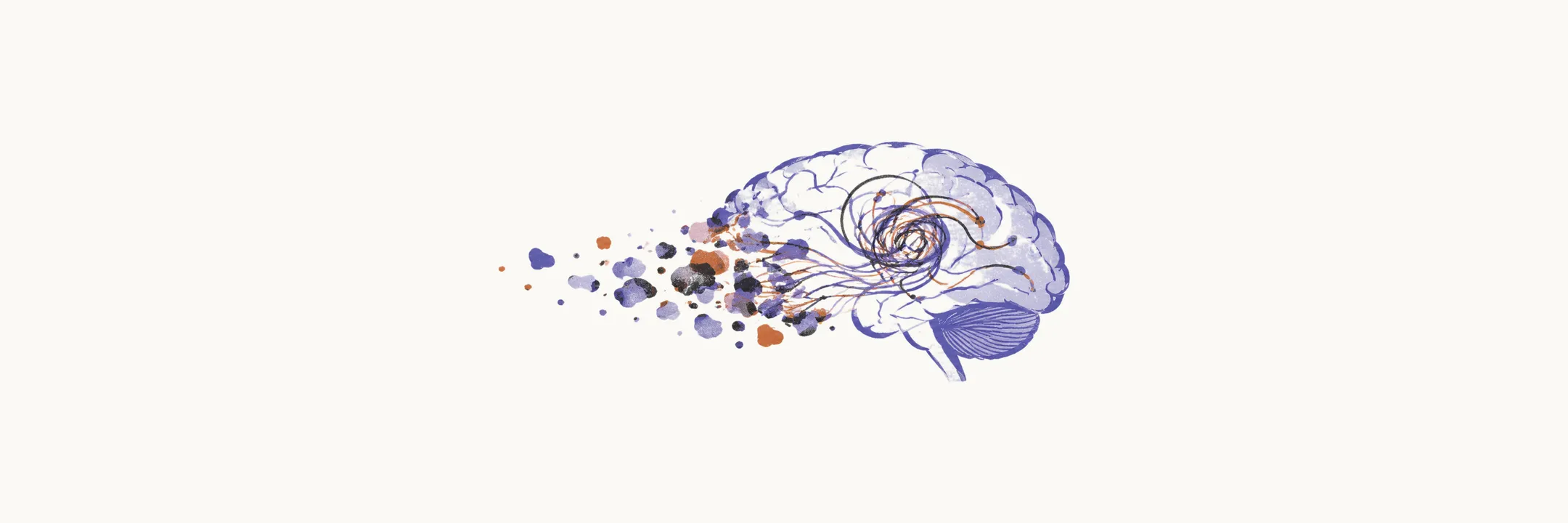
Alzheimer disease is the most common cause of dementia, the acquired and progressive loss of memory and other thinking abilities severe enough to interfere with daily life. It begins insidiously, usually in later life, with a gradual failure to form new memories, and progresses over years to affect language, spatial reasoning, judgment, and eventually basic self-care. There are no early motor signs and no focal neurological deficits. The disease is cortical and degenerative from the start.
The idea that organises the topic is that the pathology explains the clinical course. The pathology is the accumulation of two abnormal proteins, amyloid and tau, which damages neurons. Which brain regions are damaged, and in what order, accounts for why memory fails first, why the picture differs from other dementias, and why each drug does only what it does. The useful sequence is therefore mechanisms first, then the clinical picture, then diagnosis, then treatment.
Choose a route through the topic
The four satellites follow that sequence, and each can also be read alone for the question at hand:
- Alzheimer Disease Pathophysiology: how amyloid, tau, vessel injury, selective atrophy, and transmitter loss produce the memory-first course, and which factors raise risk, including age, sex, and familial forms.
- Alzheimer Disease Clinical Presentation: the order in which cognitive domains fail, the behavioural changes that accompany decline, where mild cognitive impairment ends and dementia begins, and how the bedside pattern differs from other dementias.
- Alzheimer Disease Diagnosis: what must be shown before calling it dementia, how bedside scores and biomarkers each contribute, and the order in which to use them.
- Alzheimer Disease Treatment: what current drugs can and cannot do, how non-drug care carries the day-to-day weight, and which drugs cause harm.