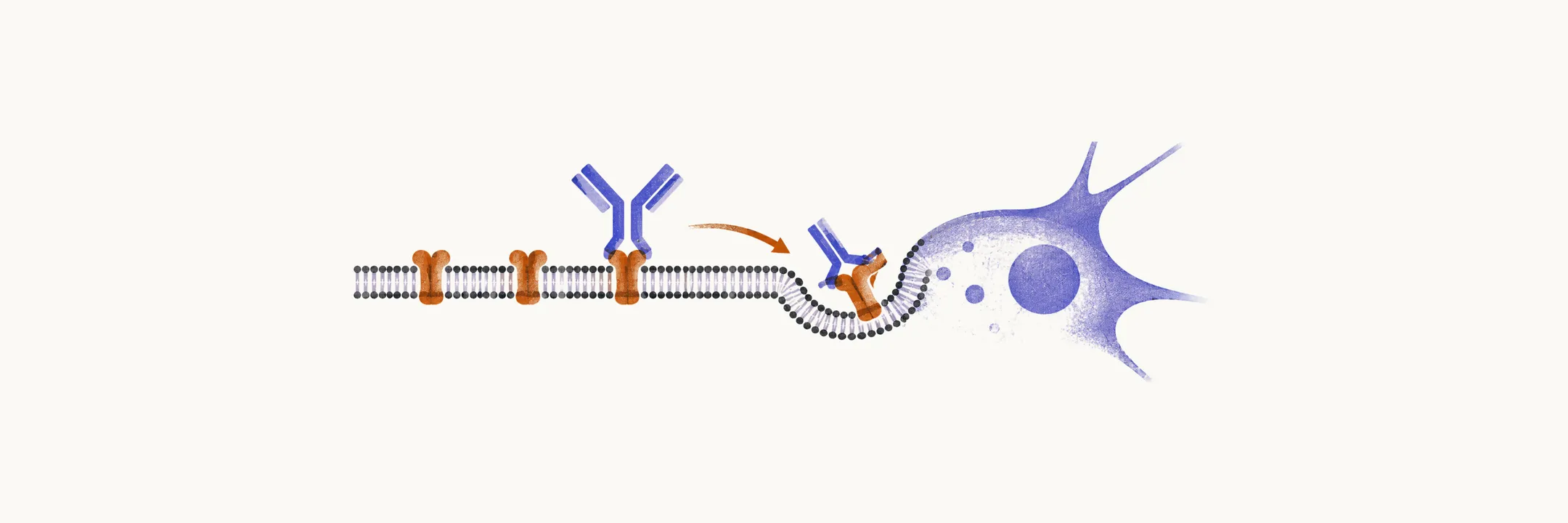
Autoimmune encephalitis means inflammation of the brain caused by an immune attack on neuronal proteins. Antibodies are immune proteins that bind a specific target, and the target’s location matters. The attack takes two different forms, depending on whether the target sits on the neuronal surface or inside the cell. The form determines both the tumour risk and the response to treatment.
Surface antibodies cause the injury directly
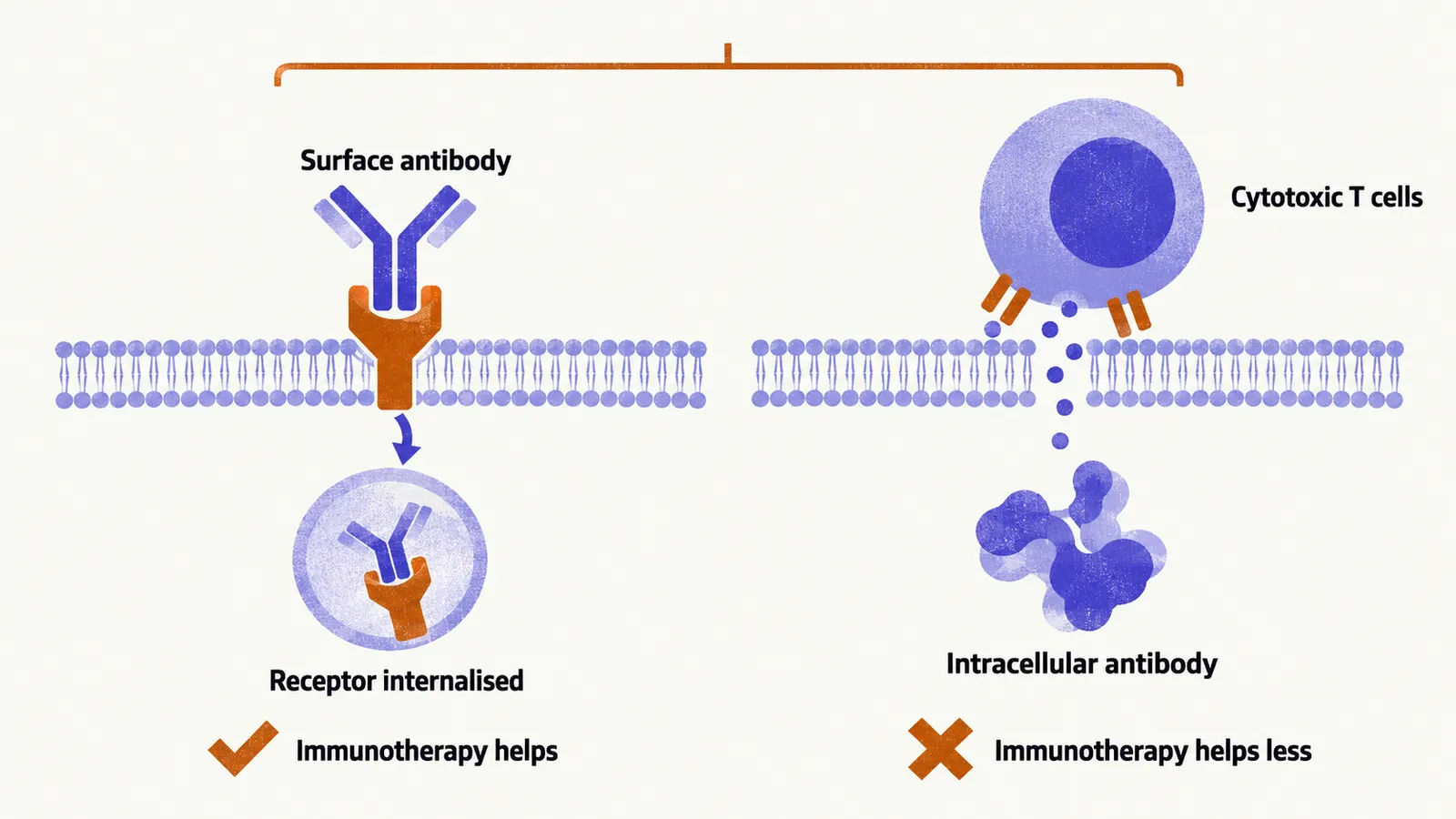
Antibodies against cell-surface targets, such as the NMDA receptor, LGI1, CASPR2, GABA-B receptor, or AMPA receptor, reach their target directly. They disrupt its function by internalising the receptor, blocking it, or interfering with its signalling. Because the antibody itself causes the injury, removing or blocking it with immunotherapy often helps. The outlook is generally better.
Intracellular antibodies mark a T-cell injury
Antibodies against intracellular targets, such as Hu (ANNA-1), Yo, Ri (ANNA-2), or Ma2, mainly mark the injury rather than causing it. The damage comes from cytotoxic T cells, the T cells that kill cells displaying the targeted protein, which are directed at the same proteins. The antibodies arise secondarily to that T-cell damage. Immunotherapy therefore helps less. The tumour association is stronger, and the prognosis is generally worse. This is a pattern across syndromes, not a rule for any individual patient.
GAD antibodies break this grouping. Their target sits inside the cell, yet the syndromes can resemble surface-antibody disease. Treat GAD as its own case rather than forcing it into either class.
The paraneoplastic context and tumour risk
Tumour risk follows the antibody class through the paraneoplastic mechanism. In paraneoplastic disease, a tumour outside the nervous system produces proteins that resemble neuronal proteins. The immune system attacks the tumour and cross-reacts with the brain. Neurological symptoms often appear before the tumour is found, which is why tumour screening continues even after a negative first pass.
Paraneoplastic disease usually involves intracellular antibodies. Surface-antibody syndromes carry variable, antibody-specific tumour risk, generally classed as low to moderate. The antibody result therefore changes the urgency and direction of the tumour search.
How antibodies reach the brain across the blood-brain barrier remains incompletely understood. That gap does not change management.