
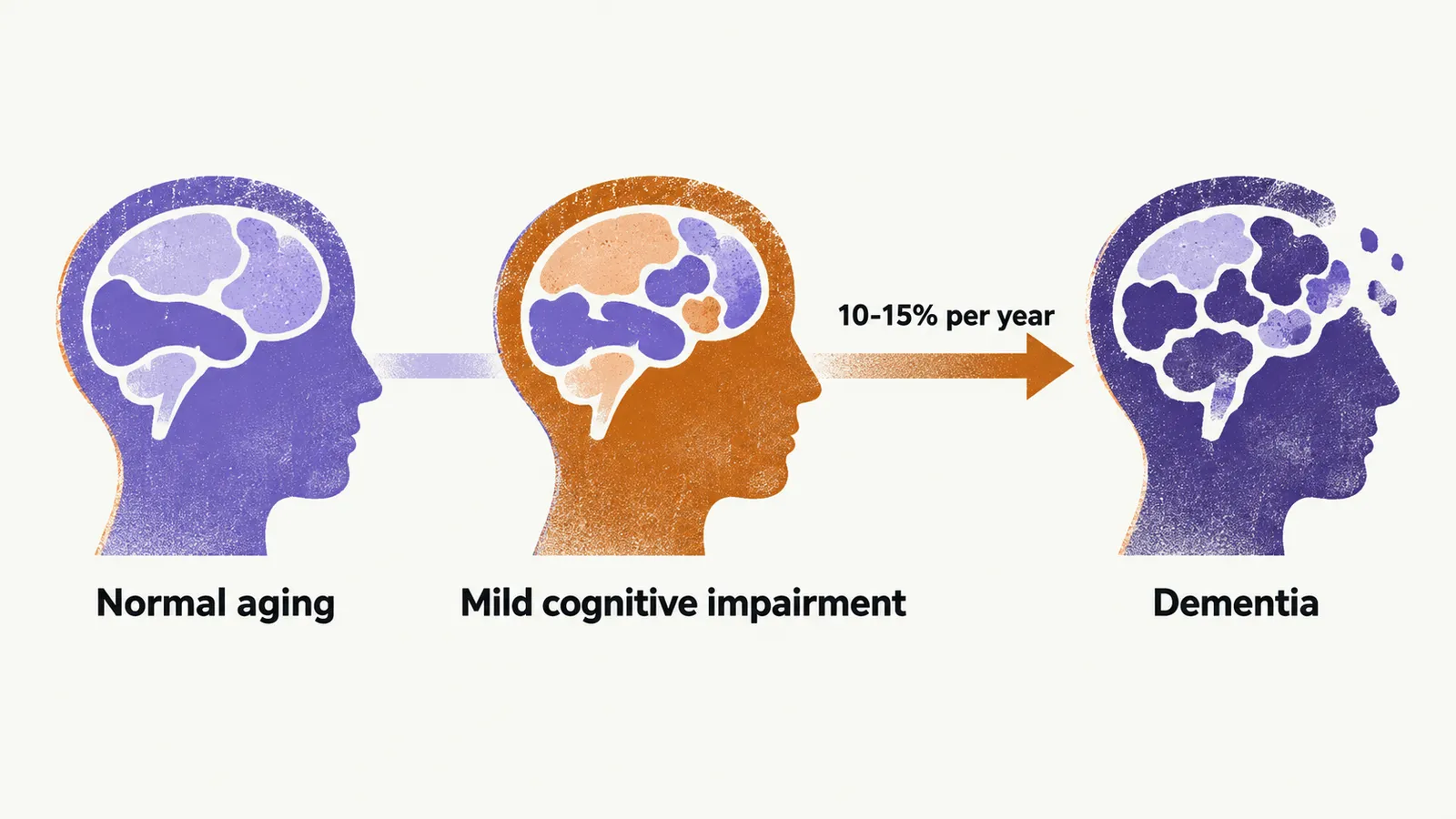
Mild cognitive impairment sits between normal aging and dementia: measurable cognitive decline with daily activities largely preserved. Dementia is diagnosed when decline interferes with those activities. Amnestic presentations, where memory is the main deficit, most often reflect early Alzheimer pathology. Non-amnestic presentations affect other domains such as language or executive function.
Roughly 10–15% of people with mild cognitive impairment progress to dementia per year, so most amnestic cases progress over a decade. Progression is not inevitable: impairment can remain stable for years or revert to normal.
Amyloid PET (positron emission tomography, an imaging test for amyloid deposits) looks for underlying Alzheimer pathology when prognosis matters. A positive result marks mild cognitive impairment due to Alzheimer disease, the group most likely to progress.
Re-evaluation about every six months keeps the staging current. Stability over 6–12 months points back toward mild cognitive impairment or a reversible cause rather than dementia.