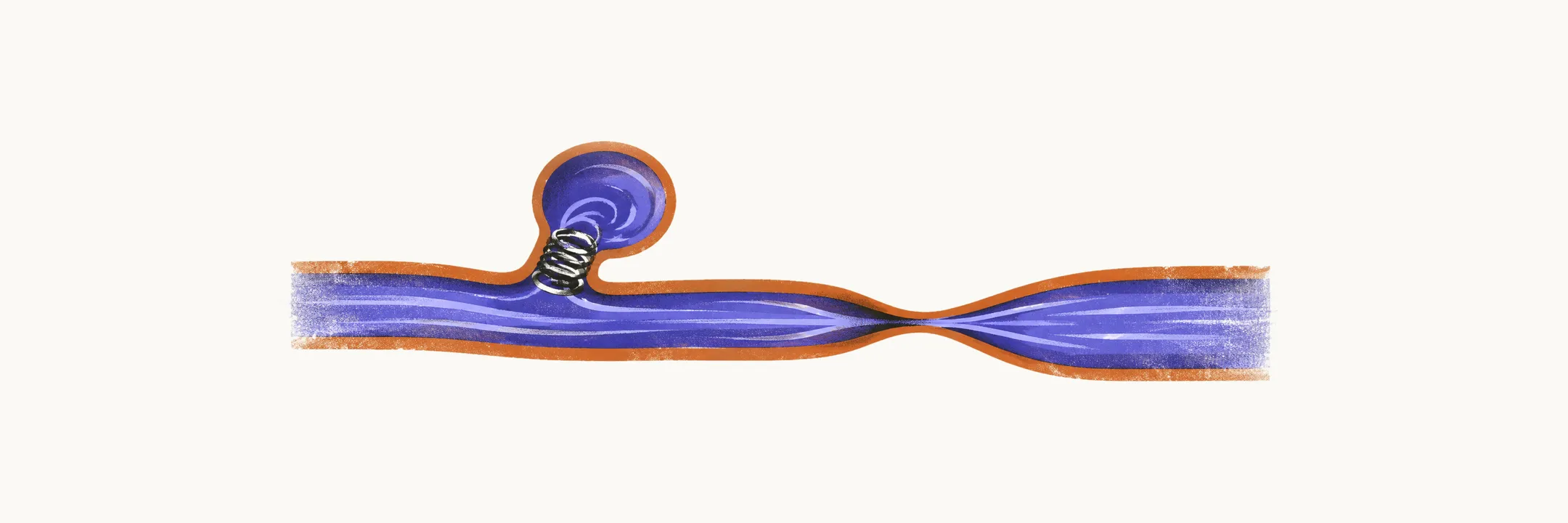
Securing the aneurysm does not end the danger. Blood around the brain surface triggers three problems: rebleeding before the aneurysm is secured, vasospasm with delayed ischemia days later, and hydrocephalus from blocked cerebrospinal fluid flow. Each has its own mechanism and its own management.
Rebleeding
Acute rebleeding worsens mortality and outcome, so the ruptured aneurysm is evaluated and treated promptly, preferably within 24 hours. Routine antifibrinolytic therapy did not improve functional outcomes and must not be presented as protection.
Vasospasm and delayed cerebral ischemia
Vasospasm is narrowing of the cerebral arteries, and delayed cerebral ischemia is the ischemic injury that can follow it. Early enteral nimodipine prevents delayed cerebral ischemia and improves functional outcomes after aneurysmal hemorrhage. Transcranial Doppler, CT angiography, and CT perfusion can detect vasospasm and predict delayed ischemia when performed by trained expert interpreters.
Once delayed ischemia is symptomatic, rescue is blood-pressure elevation with maintained euvolemia, meaning normal circulating fluid volume. Prophylactic hemodynamic augmentation and hypervolemia should not be performed.
Hydrocephalus
Blood that has entered the subarachnoid space can also cause hydrocephalus, the accumulation of cerebrospinal fluid within the ventricles. The blood obstructs cerebrospinal fluid circulation and absorption. Hydrocephalus is managed with cerebrospinal fluid diversion by external ventricular drain. Optimal drain management strategies remain an evidence gap calling for further investigation.
These three complications all follow rupture of an arterial aneurysm. Brain injury can also arise without any ruptured artery: in cerebral venous thrombosis, a clot blocks a venous sinus or vein, so the problem lies in drainage rather than arterial supply or bleeding.