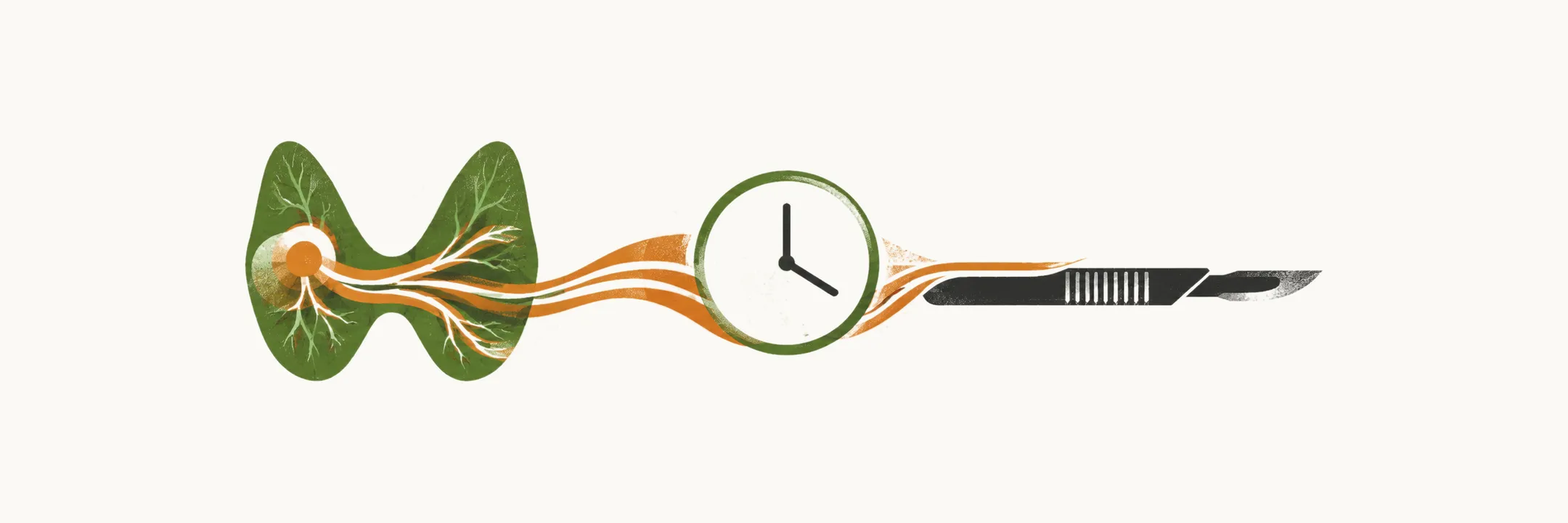
Most thyroid nodules need no treatment at all; the workup exists to find the minority that do. Three questions decide what is offered. Is the nodule benign or malignant? Does it produce thyroid hormone on its own, causing thyrotoxicosis (thyroid hormone excess)? And does it press on the structures of the neck? A benign, silent nodule is watched; an autonomous nodule is treated for its hormone excess; a cancer is treated to remove and control it.
Non-toxic nodules and goiter
A nodule that is benign on cytology (examination of its cells) and causes no symptoms is observed rather than removed. Surgery is reserved for a goiter that compresses — causing dysphagia, breathlessness or venous congestion of the neck — that extends substantially behind the sternum, that is growing or cosmetically troubling, or that is suspicious for malignancy. Because a benign nodule is a structural problem and not a hormonal one, giving levothyroxine (synthetic thyroid hormone) to suppress TSH does not shrink it, and suppressive therapy has no role in the management of a benign nodule. A large non-toxic goiter in a patient who cannot have surgery can be reduced with radioiodine (radioactive iodine, which thyroid tissue takes up), though the effect develops over months.
Autonomous nodules
When a nodule makes hormone on its own, treatment has two aims: settling the thyrotoxicosis and removing its source. Antithyroid drugs (methimazole or propylthiouracil) lower the hormone level, and beta-blockers relieve the tremor, palpitations and tachycardia, but neither cures an autonomous nodule — the hyperthyroidism returns when they are stopped — so they are used to prepare a patient for definitive treatment, or to control the disease while waiting for it. Radioiodine and surgery are the two definitive options. Radioiodine destroys the overactive tissue and cures the hyperthyroidism in the large majority of patients, although a large toxic multinodular goiter may need more than one dose. Surgery — removal of the affected lobe for a toxic adenoma, or of the whole gland for a toxic multinodular goiter — is generally preferred for larger nodules in younger patients, and when the goiter is compressive or needs rapid control.
Thyroid cancer
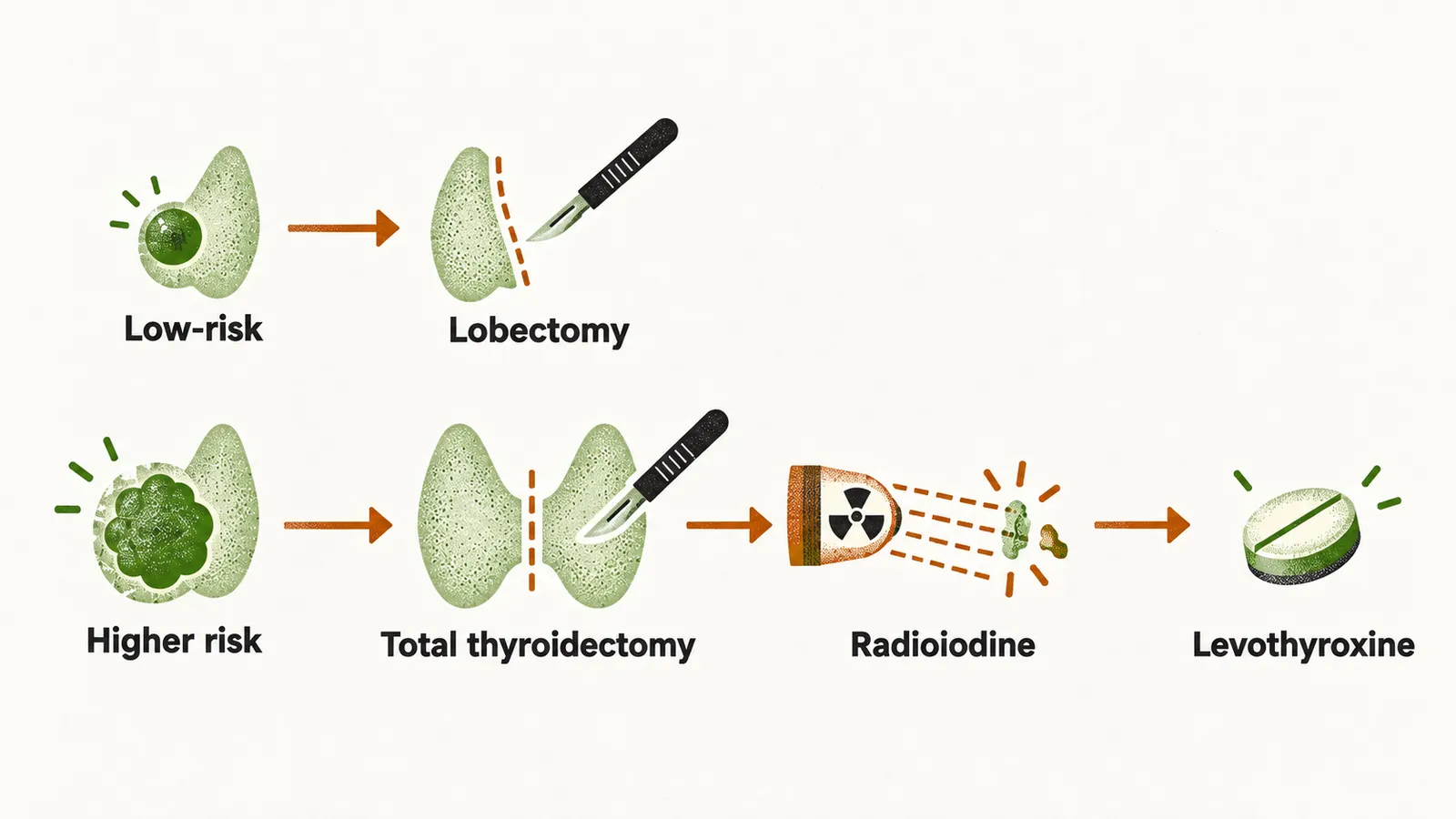
Treatment of differentiated thyroid cancer is built on surgery, and how much is removed follows the risk. A small, low-risk cancer confined to one lobe can be treated by lobectomy; a larger tumour, bilateral disease or suspicious lymph nodes call for total thyroidectomy. When total thyroidectomy is done in higher-risk disease, radioiodine is used for remnant ablation: thyroid cells, normal and malignant alike, take up iodine, so a therapeutic dose destroys the remaining thyroid tissue and any iodine-avid tumour deposits. Levothyroxine then replaces the missing hormone; because TSH is a growth signal for thyroid cells, it is also used to keep TSH suppressed in patients whose cancer carries a higher risk of recurrence.
Follow-up after thyroid cancer treatment
Follow-up looks for residual or metastatic disease. The patient is put into the condition of having a very high level of TSH — by withholding levothyroxine or by giving recombinant TSH — and then two tests are performed. The thyroglobulin (Tg) level is raised only in the presence of residual malignant tissue, and the other is iodine uptake scanning. Both are repeated to measure the response to treatment.