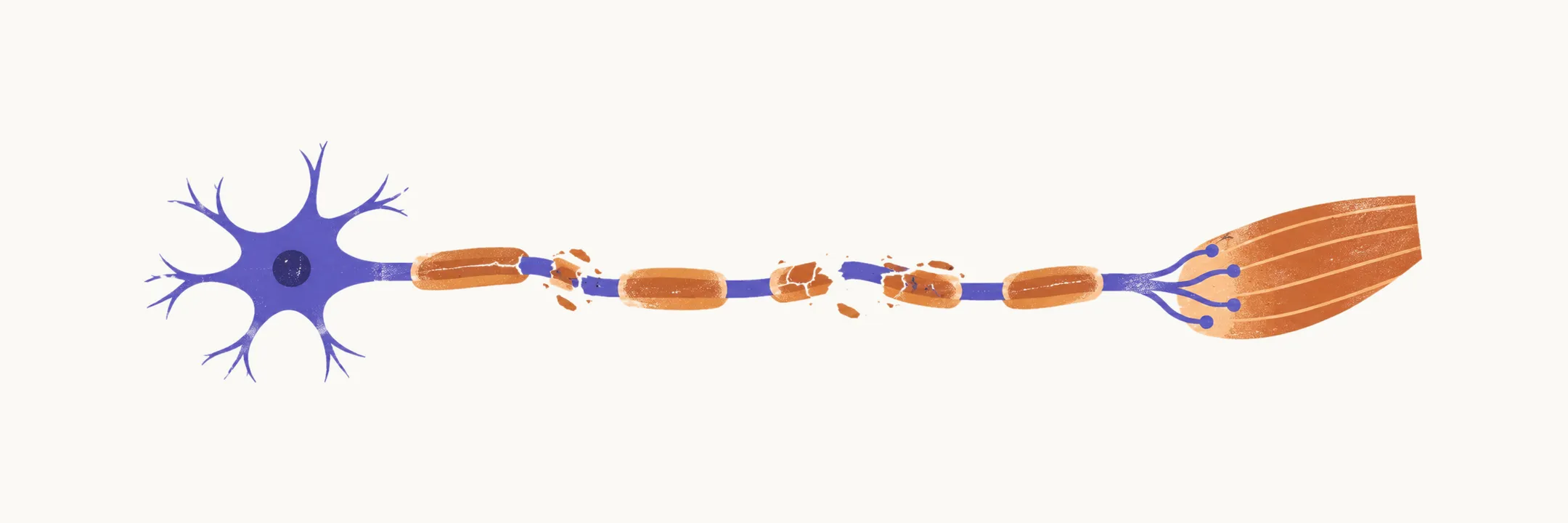
Amyotrophic lateral sclerosis (ALS) is a neurodegenerative disease in which upper motor neurons (UMN) in the motor cortex and lower motor neurons (LMN) in the brainstem and spinal cord degenerate together. Upper motor neuron damage produces spasticity and brisk reflexes, while lower motor neuron damage produces wasting, weakness, and fasciculations (visible muscle twitches). In ALS both appear in the same body region, and that combined pattern is the clinical hallmark. “Motor neuron disease” is the usual umbrella term in the United Kingdom, while “ALS” is more common in the United States.
The disease takes different patterns with different pace, so recognising the pattern matters for prognosis and planning. It is uncommon and usually appears in later adult life. Reported figures vary widely because registries and methods differ, not only because the disease does.
Choose a route through the topic
The topic is easiest to learn in the order a clinician meets it: why the neurons fail, how the disease looks, how it is recognised, and what can be done.
- ALS Pathophysiology explains why motor neurons are vulnerable and how genes and the link with frontotemporal dementia fit together. Start here to understand the mechanisms.
- ALS Clinical Phenotypes explains the main presentation patterns and how the pattern relates to pace and planning.
- ALS Diagnosis explains how combined upper and lower motor neuron involvement is demonstrated and mimics are excluded.
- ALS Treatment explains what modestly slows progression and how symptomatic, respiratory, and nutritional care preserves daily life.
A reader who arrives with a clinical question can go directly to the note that answers it: mechanisms and patterns come first, then diagnosis, then treatment.