
Screening means looking for diabetes and prediabetes (raised glucose that is still below the threshold for diabetes) before they cause symptoms. It matters because type 2 diabetes develops gradually: hyperglycemia, meaning raised blood glucose, can be present for years without producing the classic symptoms, yet it already raises the risk of the acute and chronic complications of diabetes mellitus, and finding it earlier allows treatment to begin earlier.
Symptoms that prompt testing
Any individual with signs and symptoms suggestive of hyperglycemia should be tested for diabetes mellitus, whatever their other risk factors. The main symptoms of hyperglycemia are:
- polyphagia, an increase in appetite
- polydipsia, an increase in thirst
- polyuria, an increase in urination
- unexplained weight loss
- blurred vision
- infections or wounds that heal poorly
- excessive fatigue
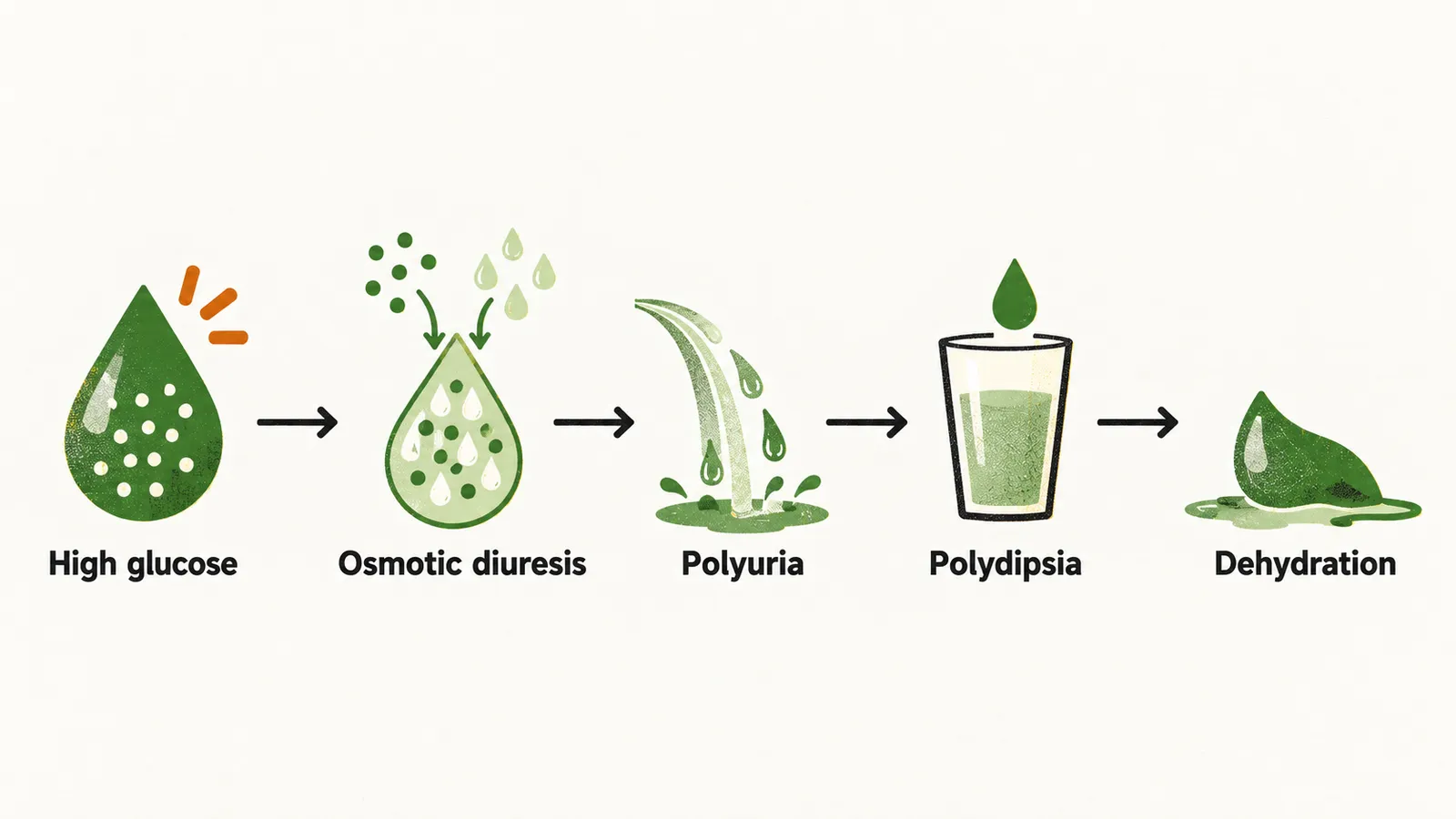
Several of these follow from the glucose level itself. When plasma glucose rises beyond the amount the kidney can reabsorb, glucose passes into the urine and obliges water to follow it, a process called osmotic diuresis. The result is polyuria, and the fluid lost then drives the polydipsia; if the loss continues, dehydration and unexplained weight loss follow.
Routine screening for type 2 diabetes mellitus
The American Diabetes Association (ADA) recommends routine screening for type 2 diabetes mellitus in:
- all adults from the age of 35, repeated at a minimum of every three years
- people who are overweight at any age — a body mass index (BMI) ≥ 25, or ≥ 23 in those of Asian ancestry
- women who are planning a pregnancy
- all pregnant women between the 24th and 28th week of gestation
Before 15 weeks of gestation, pregnant women with risk factors are tested at the first prenatal visit for diabetes that was already present before the pregnancy, using the standard non-pregnancy criteria; testing all pregnant women at that visit may also be considered.
Beyond these general rules, some groups have their own recommendations, either because their risk is particular or because the usual test is unreliable in them.
Women with a history of gestational diabetes mellitus
Women with a history of gestational diabetes mellitus (GDM) are at higher risk of developing diabetes later, so the ADA recommends a 2-hour 75-gram OGTT (oral glucose tolerance test) 4-12 weeks after delivery. If that result is normal, screening should continue every 1-3 years.
Overweight and obese youth
Overweight and obese youth should be screened at least every three years, beginning at the age of 10 or at the onset of puberty, whichever comes first. They should be screened more frequently if their BMI is rising and they have at least one of the risk factors below:
| Risk factors for type 2 diabetes in children and adolescents | |
|---|---|
| Family history | Type 2 diabetes in first- and second-degree relatives |
| Race and ethnicity | Native American, African American, Latino, Asian American, Pacific Islander |
| Signs of insulin resistance | Acanthosis nigricans, hypertension, dyslipidemia, large- or small-for-gestational-age birth weight, polycystic ovary syndrome |
| Maternal history | Diabetes or gestational diabetes during the child’s gestation |
Patients with cystic fibrosis
Patients with cystic fibrosis over 10 years of age should be screened annually. The recommended test is the 2-hour 75-gram OGTT; HbA1c (hemoglobin A1c) should not be used because it is insensitive in this group.
HIV-positive patients
In HIV-positive patients, screening is recommended before starting antiretroviral therapy (ART), when ART is switched, and 3-6 months after starting or switching it. The test of choice is fasting plasma glucose (FPG), because HbA1c can underestimate glycemia in people with HIV; HbA1c should not be used here.
In both cystic fibrosis and HIV, the choice of test is part of the recommendation, because a test that works in the general population can mislead in a particular group.