
Galactorrhea is persistent milk-like discharge from the breast outside pregnancy and breastfeeding, and it is one of the hormone-induced features of a raised prolactin level. The same excess of prolactin also suppresses the gonadal axis, and the two belong together, because that suppression lowers estrogen and can therefore remove galactorrhea even as the prolactin level rises.
Galactorrhea
Galactorrhea is persistent fluid discharge from the breast 6 months after the discontinuation of breastfeeding or childbirth. In both men and women the fluid can vary in form, being transparent, milky or bloody, and it can be either mono-lateral or bi-lateral.
Galactorrhea happens in a patient with hyperprolactinemia only if a minimum level of estrogen can be found in the body. Estrogen primes the breast for milk production, so in patients with hyperprolactinemia with frank hypogonadism galactorrhea is not seen.
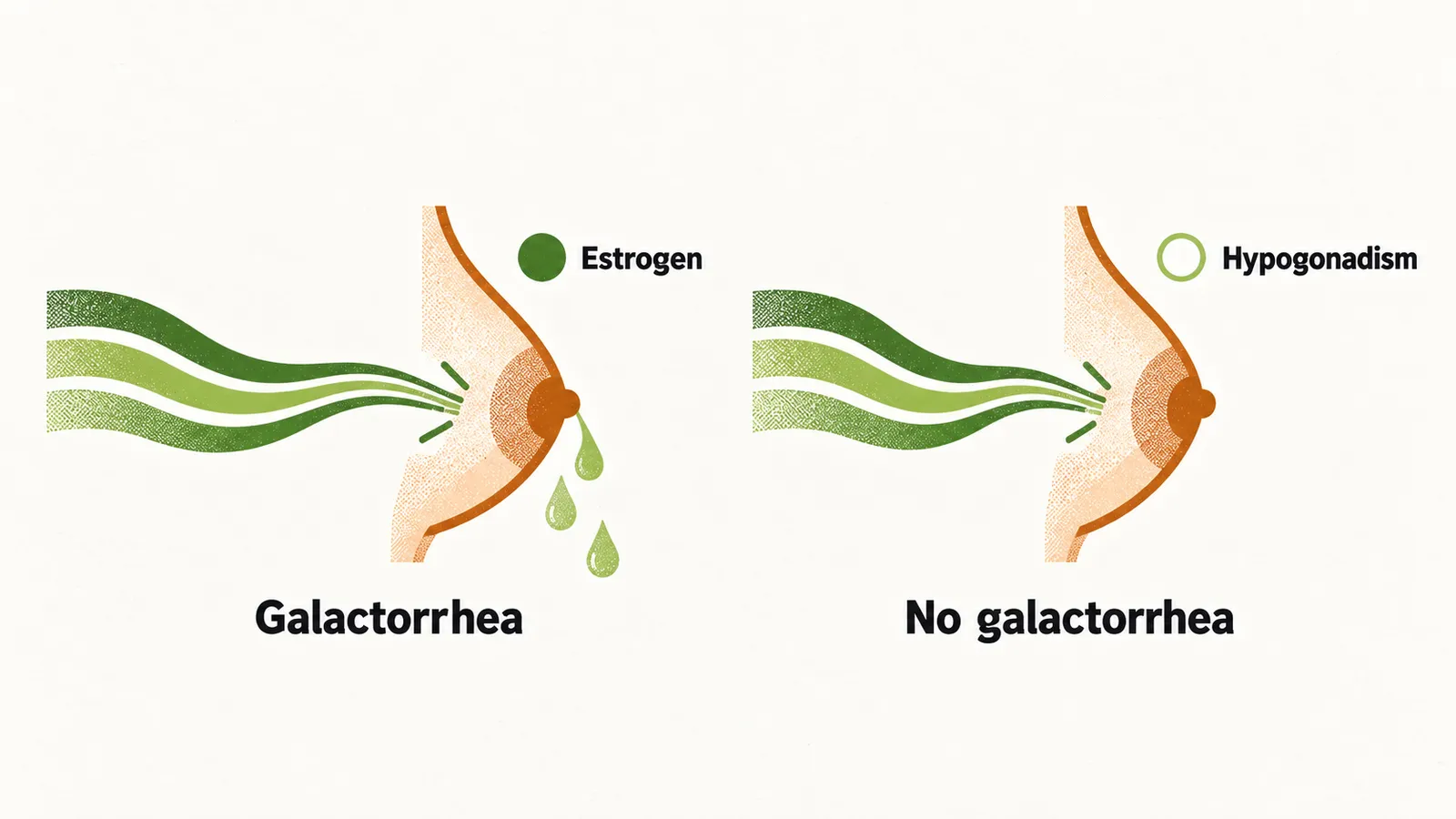
The breast tissue itself shows a related difference. A woman with amenorrhea caused by hyperprolactinemia does not show breast atrophy, in contrast to women who are:
- post-menopausal
- amenorrheic with gonadotropin defects
- in primary ovarian failure
The difference is that prolactin itself keeps the breast tissue maintained, so it protects against the atrophy that follows estrogen loss from other causes.
The incidence of galactorrhea in men, in comparison to women, is very low, occurring in less than 30% of the men with hyperprolactinemia.
In about one third of patients with acromegaly there is galactorrhea, because it is common to have somatotroph adenomas that secrete both GH (growth hormone) and PRL (prolactin).
Hypogonadism caused by hyperprolactinemia
Hypogonadism means reduced function of the gonads, the ovaries or testes, with a low output of sex hormones. The pathophysiology of the hypogonadism caused by hyperprolactinemia is not completely understood; animal model studies show that it could be due to an inhibitory effect of hyperprolactinemia on the kisspeptin release for the pulsatility of the GnRH (gonadotropin-releasing hormone) release. Kisspeptin is the upstream signal that drives the GnRH pulse generator, so when prolactin suppresses it, the pulses of GnRH fall, gonadotropin secretion falls with them, and the gonads are no longer stimulated properly.
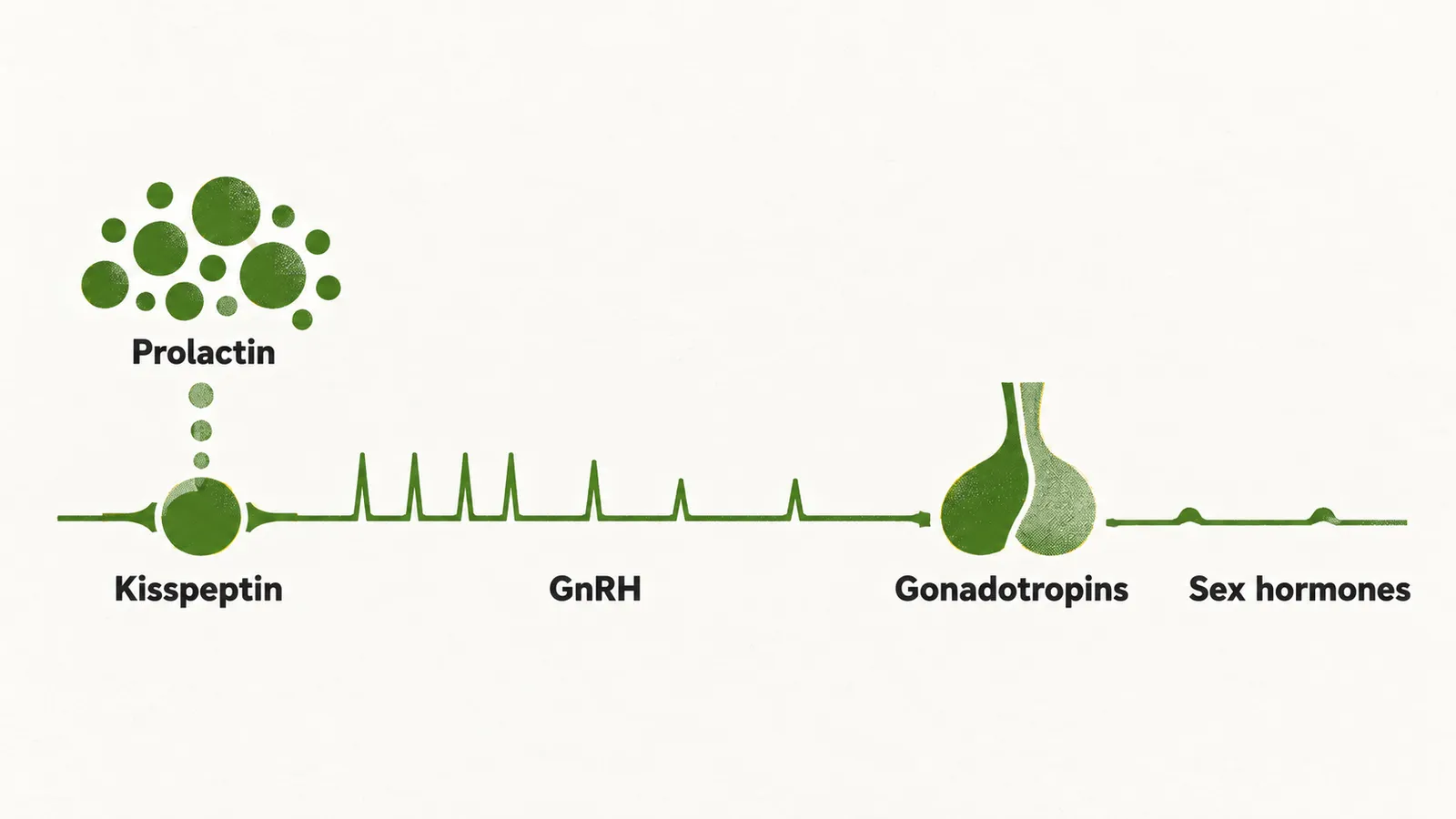
From the sexual hormone point of view, women with hyperprolactinemia hypogonadism usually have a low level of estrogen, while in men it is possible to have a normal testosterone level, but also in men a low level of sex hormones is mostly seen.