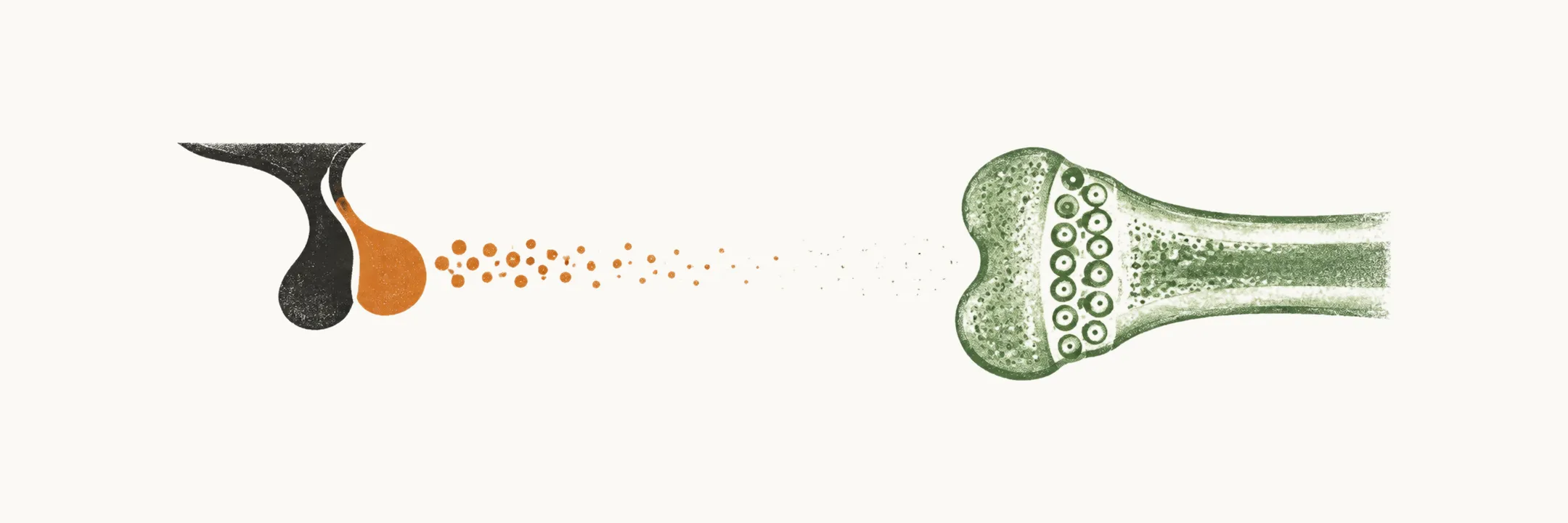
Growth hormone (GH) deficiency presents differently depending on age: it slows growth in children, and in adults it changes body composition and cardiovascular risk. GH is made by the anterior pituitary and acts partly through insulin-like growth factor 1 (IGF-1), which cells produce in response to it.
Growth and the growth plate
Closure of the growth plate depends on several endocrine factors, including GH, IGF-1, sex steroids and TSH, together with paracrine growth factors such as the fibroblast growth factors (FGFs). Other influences act at the same level, among them energy expenditure, nutrition, vitamins and metals. Malnutrition has endocrine effects of its own: it causes resistance to GH at the chondrocytes, a reduced level of IGF-1, and reduced production of IGF-1 binding protein-3 (IGFBP-3).
Growth hormone deficiency in children
Growth during infancy is very rapid and depends mainly on the pituitary gland. After that the average rate of growth is about 6 cm per year, with another peak in mid-puberty, at 12 years of age in girls and 13 in boys.
In all true forms of GH deficiency or GH receptor dysfunction, bone age is delayed compared with the norm for age. Delayed bone age with short stature in children — short stature being a height at the 3rd percentile — therefore suggests GH deficiency. Beyond delayed bone age and short stature, the other features of isolated GH deficiency in childhood are a micropenis, increased fat tissue, a high-pitched voice and a higher chance of hypoglycaemia, which follows from having less of a hormone force opposing insulin.
Several conditions cause GH deficiency in children. Familial inherited forms, autosomal dominant and X-linked, account for about 33% of cases, and mutations in the transcription factors Pit-1 and Prop-1 cause a combined, syndromic deficiency. A recessive mutation in the GHRH receptor causes severe dwarfism, with a low basal GH level, increased susceptibility to insulin-induced hypoglycaemia and anterior pituitary hypoplasia.
GH insensitivity is a different problem: Laron syndrome results from loss-of-function mutations of the GH receptor that leave it partially or completely unresponsive, so GH levels are normal or high while IGF-1 is low, because IGF-1 is normally produced by cells in response to GH acting through that receptor. Besides receptor mutations, GH insensitivity can be secondary to malnutrition, uncontrolled diabetes and chronic renal failure.
Psychosocial deprivation is another cause: emotionally and socially deprived children can show short stature, hyperphagia, delayed speech and an attenuated response to GH administration. Idiopathic GH deficiency is the remainder.
Because GH secretion is pulsatile, the best way to assess the GH level in children is a provocative test — post-exercise, insulin-induced hypoglycaemia or a pharmacological stimulus — in which a normal response raises the GH level above 7 microgram/L. Before testing for GH, it is mandatory to ensure that thyroid and adrenal hormone levels are normal, because both influence GH secretion and would otherwise confound the result.
Growth hormone deficiency in adults
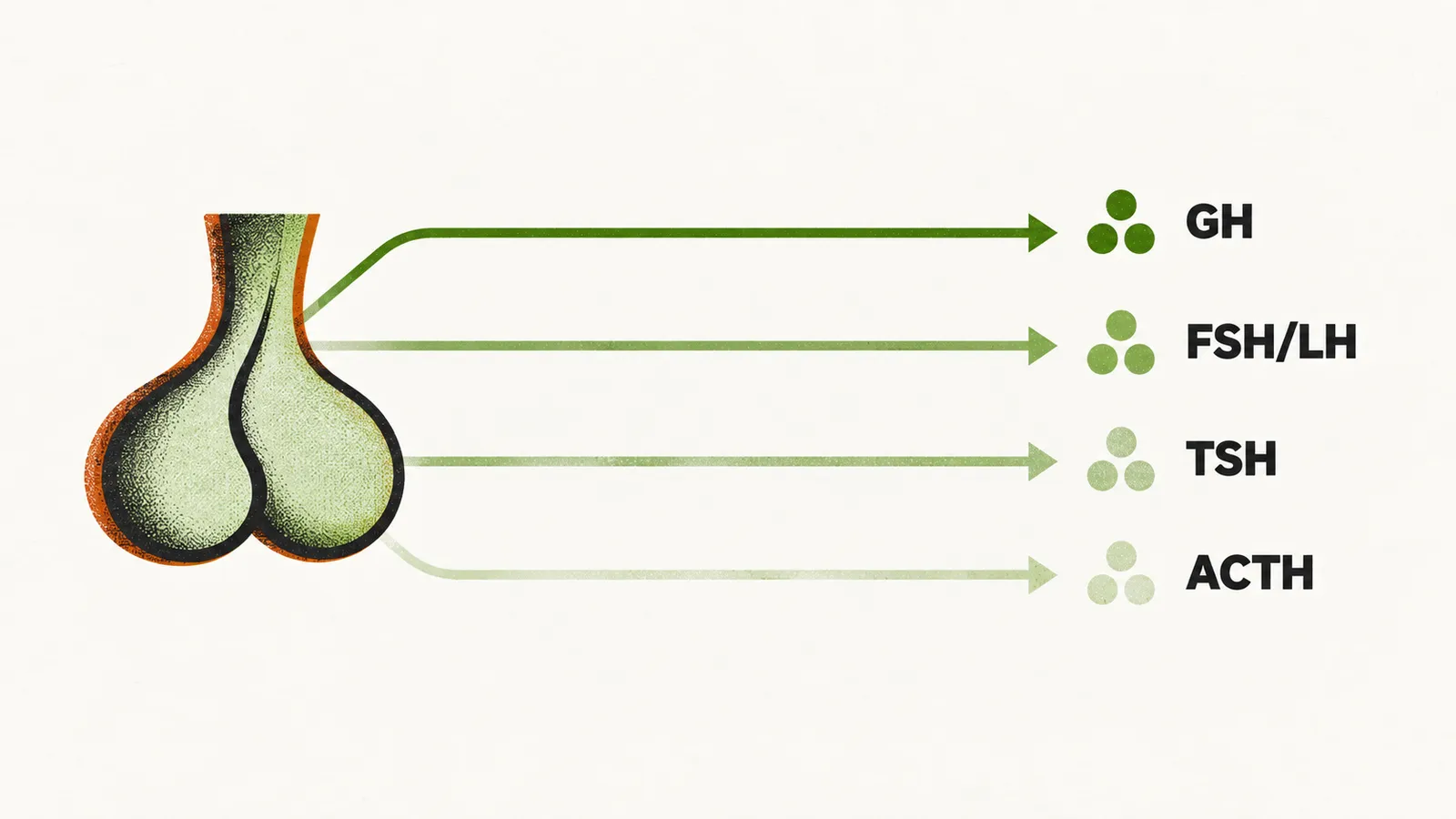
Adult GH deficiency (AGHD) is mostly caused by acquired damage to the hypothalamic or pituitary somatotrope cells, the cells that make GH. Acquired pituitary hormone deficiency normally follows a pattern, with GH failing first and the others in the order GH → FSH/LH → TSH → ACTH. Prolactin deficiency is very rare and is seen mainly in Sheehan’s syndrome.
The main clinical manifestations of AGHD are changes in body composition, cardiovascular effects and psychosocial effects. Body composition changes include decreased lean body mass, increased fat tissue with a particular increase in intra-abdominal and visceral fat, an increased waist-hip ratio, decreased bone deposition and an increased risk of bone fracture. The cardiovascular effects include reduced exercise tolerance, hyperlipidaemia with increased LDL-cholesterol, total cholesterol and apolipoprotein B, left ventricular dysfunction, hypertension and increased plasma fibrinogen, and there is a roughly two-fold increase in cardiovascular mortality in hypopituitarism that is probably mainly related to GH deficiency. The psychosocial effects are an impaired quality of life and impaired general well-being.
Testing for AGHD is recommended only in patients with pituitary surgery, pituitary or hypothalamic tumours or granuloma, a history of cranial irradiation, radiological evidence of pituitary lesions, or a childhood requirement for GH administration. It is not true that a patient who was GH deficient during childhood or adolescence is still GH deficient in adulthood. Retesting is always needed, because in children with idiopathic isolated GH deficiency about three-quarters no longer meet the criteria when they are retested at final height.
The IGF-1 level behaves the same way in both adults and children: in a significant proportion of patients with true GH deficiency the IGF-1 level lies in the lower normal range, so IGF-1 is not an index for diagnosis but is used for the evaluation of treatment.
The most validated test for the diagnosis of AGHD is GH measurement after insulin-induced hypoglycaemia, and AGHD is defined as a peak GH level below 3 microgram/L after a provoking test. Adults with GHD fall into three groups: those with prior childhood GHD, those with adult-onset GHD acquired through structural damage, and the rare idiopathic form, for which the diagnostic criteria are stricter and at least two positive dynamic tests are needed.
Because GH usually fails first, the other axes fail after it in the order given above, and the ACTH and gonadotropin axes are two of them.