
Once hypopituitarism is established it is usually permanent, so treatment means lifelong replacement of the hormones each failing axis can no longer make. With the exception of growth hormone and of fertility treatment, replacement uses the target-gland hormone rather than the pituitary hormone itself: hydrocortisone (cortisol) for the adrenal cortex, levothyroxine (thyroxine) for the thyroid, a sex steroid for the gonads, and desmopressin (a synthetic analogue of antidiuretic hormone) for the kidney in antidiuretic hormone deficiency. Replacement cannot reproduce normal physiology exactly, so doses are adjusted to relieve the symptoms of deficiency without producing the effects of excess.
Glucocorticoid replacement
Loss of the ACTH axis leaves the adrenal cortex unable to raise cortisol in response to stress. Hydrocortisone is the usual replacement, given as 15-25 mg in total each day in two or three divided doses, with the largest dose on waking to imitate the natural early-morning cortisol peak. Prednisolone, 3-5 mg once daily, is an alternative. Mineralocorticoid replacement is not needed, because aldosterone secretion is controlled by the renin-angiotensin system rather than by ACTH and remains intact; this is why the hyperkalaemia of primary adrenal insufficiency does not appear in hypopituitarism.
Replacement only works if the patient can increase the dose during stress. Doses are doubled or tripled during febrile illness; vomiting or diarrhoea means oral hydrocortisone may not be absorbed, so an intramuscular injection is used instead. Patients carry a steroid card or medical-alert identification and an emergency hydrocortisone injection, and they and their families are taught when to use them.
Why cortisol is replaced before thyroid hormone
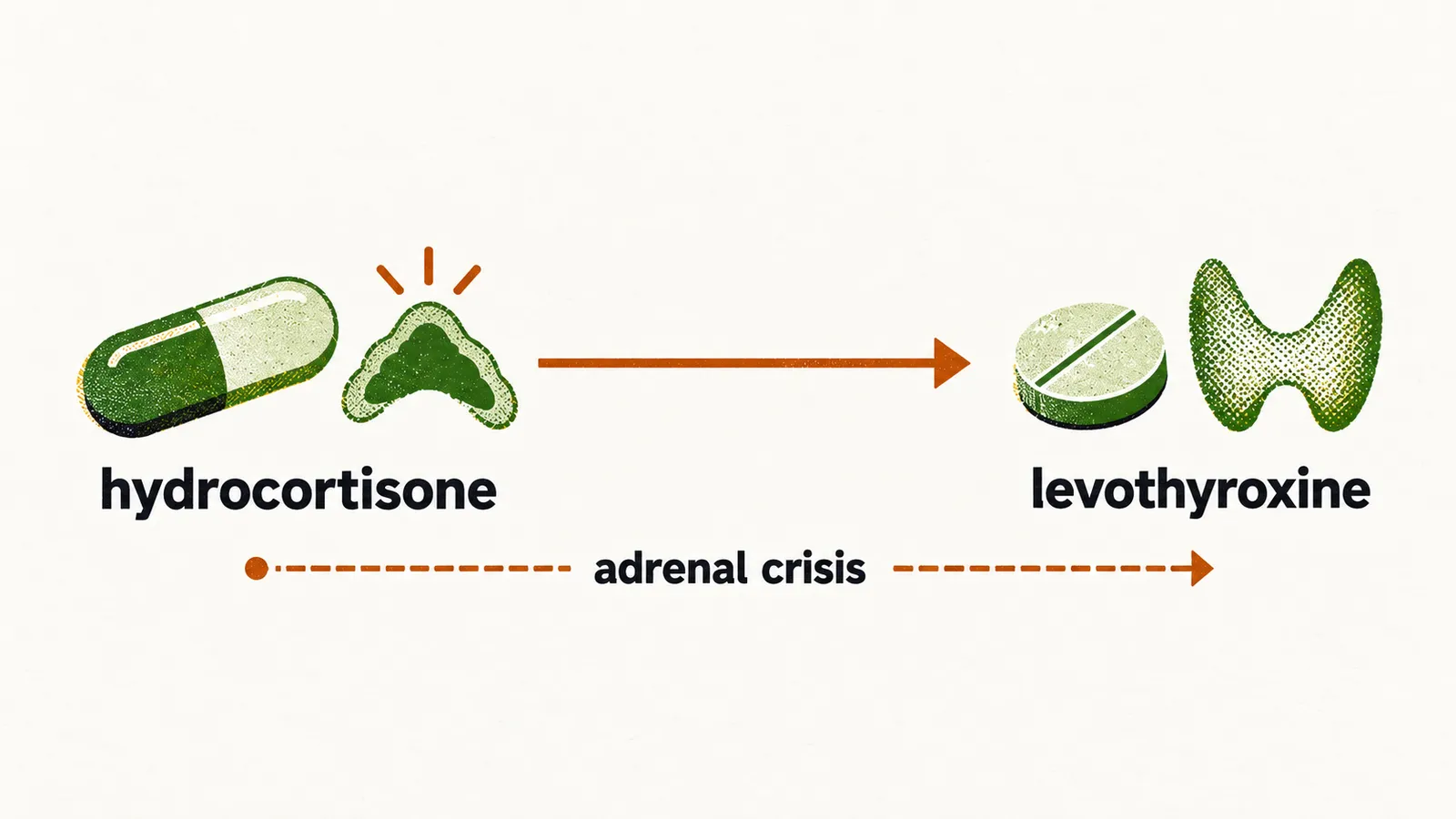
When several axes fail together, hydrocortisone is started before levothyroxine. Thyroid hormone accelerates the metabolism of cortisol, so beginning levothyroxine while the adrenal axis is untreated can provoke an adrenal crisis. The same caution applies to growth hormone, which can unmask central hypothyroidism or an occult ACTH deficiency; the thyroid and adrenal axes are assessed and treated first.
Thyroid hormone replacement
Central hypothyroidism is treated with levothyroxine once daily. Dosing is guided by free T4, not TSH, because TSH cannot report the adequacy of replacement when the pituitary is the failing organ; the target is the upper half of the reference range. Patients with a long history of hypopituitarism, or with ischaemic heart disease, start on a low dose such as 25-50 microgram daily and increase gradually, which reduces the risk of precipitating cardiac events.
Sex steroid replacement
In gonadotropin deficiency the gonads themselves are intact but unstimulated, so sex steroids are replaced directly. Women under 50 are offered oestrogen replacement to relieve the symptoms of oestrogen deficiency and protect bone mineral density, with a progestogen added if the uterus is present to protect the endometrium; transdermal oestrogen is preferred. Men receive testosterone. When fertility is the goal the approach changes: gonadotropin injections or pulsatile gonadotropin-releasing hormone (GnRH) are used to stimulate the gonads rather than to substitute for the end hormone.
Growth hormone replacement
Recombinant growth hormone is used in confirmed growth hormone deficiency, with the dose individualised and monitored through IGF-1 and the clinical response. It is not started in active malignancy.
Antidiuretic hormone replacement
Central antidiuretic hormone deficiency is treated with desmopressin, a synthetic analogue given intranasally, orally or subcutaneously. Over-replacement suppresses urinary water loss while the patient continues to drink, which causes hyponatraemia, so the dose is kept to the smallest that controls the polyuria, including the nocturia.
Emergencies
Two endocrine emergencies arise in this group, and in both glucocorticoid is given immediately.
In adrenal crisis, the acute failure of cortisol that stress dosing is meant to prevent, the patient is given hydrocortisone 100 mg intravenously or intramuscularly without waiting for confirmatory tests, followed by 200 mg over 24 hours together with rapid isotonic saline; untreated, it is life-threatening.
In pituitary apoplexy, glucocorticoid is given immediately and urgent transsphenoidal decompression (surgical decompression through the sphenoid sinus) is considered for severe, persistent or worsening visual loss, because a visual deficit that is not relieved can become permanent.
Monitoring
Follow-up is clinical as much as biochemical. Weight, postural blood pressure, energy and signs of over-replacement guide the glucocorticoid dose; free T4 guides levothyroxine; IGF-1 guides growth hormone. Patients are reviewed at least once a year, and the replacement plan is adjusted for pregnancy, surgery and intercurrent illness.