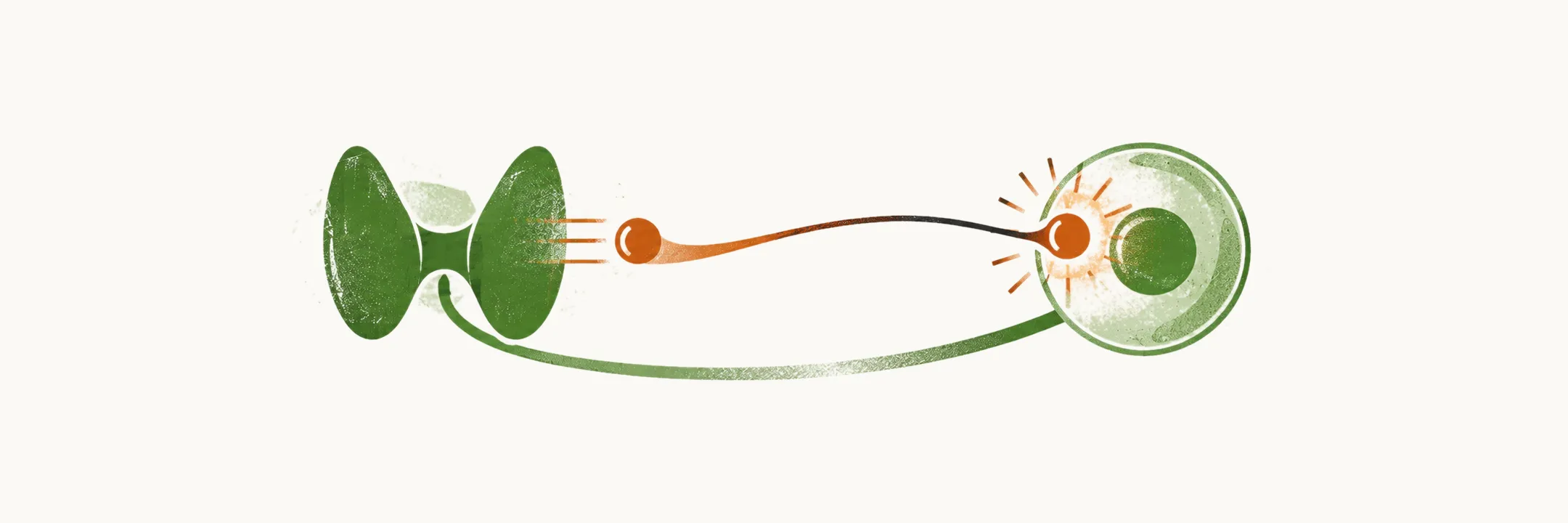
The thyroid gland produces two hormones, thyroxine (T4) and triiodothyronine (T3), which act on cells throughout the body through thyroid hormone receptors. Its output is regulated by the hypothalamic-pituitary-thyroid axis: the hypothalamus releases thyrotropin-releasing hormone (TRH), the anterior pituitary responds with thyroid-stimulating hormone (TSH), and TSH drives the thyroid, whose hormones in turn restrain TSH and TRH by negative feedback.
Thyroid physiology can be followed as one chain: a gland with a particular structure, controlled by TSH, makes and delivers hormone; the hormone acts on cells; those actions shape development and adult tissues; and pregnancy changes the whole system.
Where to start
A reader new to the topic can start with the structure of the gland and the control of TSH, then move down the list, because each topic uses the ideas before it.
- Thyroid gland structure, development and control explains where the gland sits, how it is built and how it forms in the embryo, and how TSH from the anterior pituitary drives and restrains the whole axis.
- Thyroid hormone metabolism and action follows the hormone from iodine uptake and synthesis through its transport in the blood and its conversion to active T3, and then its action in the nucleus, the mitochondria and the heart and vessels.
- Effects of thyroid hormone on development and adult tissues describes what the hormone does to the developing brain and body, and to energy use, the heart, the liver, the nervous system and reproduction after birth.
- Thyroid function in pregnancy explains how pregnancy changes the axis, the normal ranges and the hormone requirement.