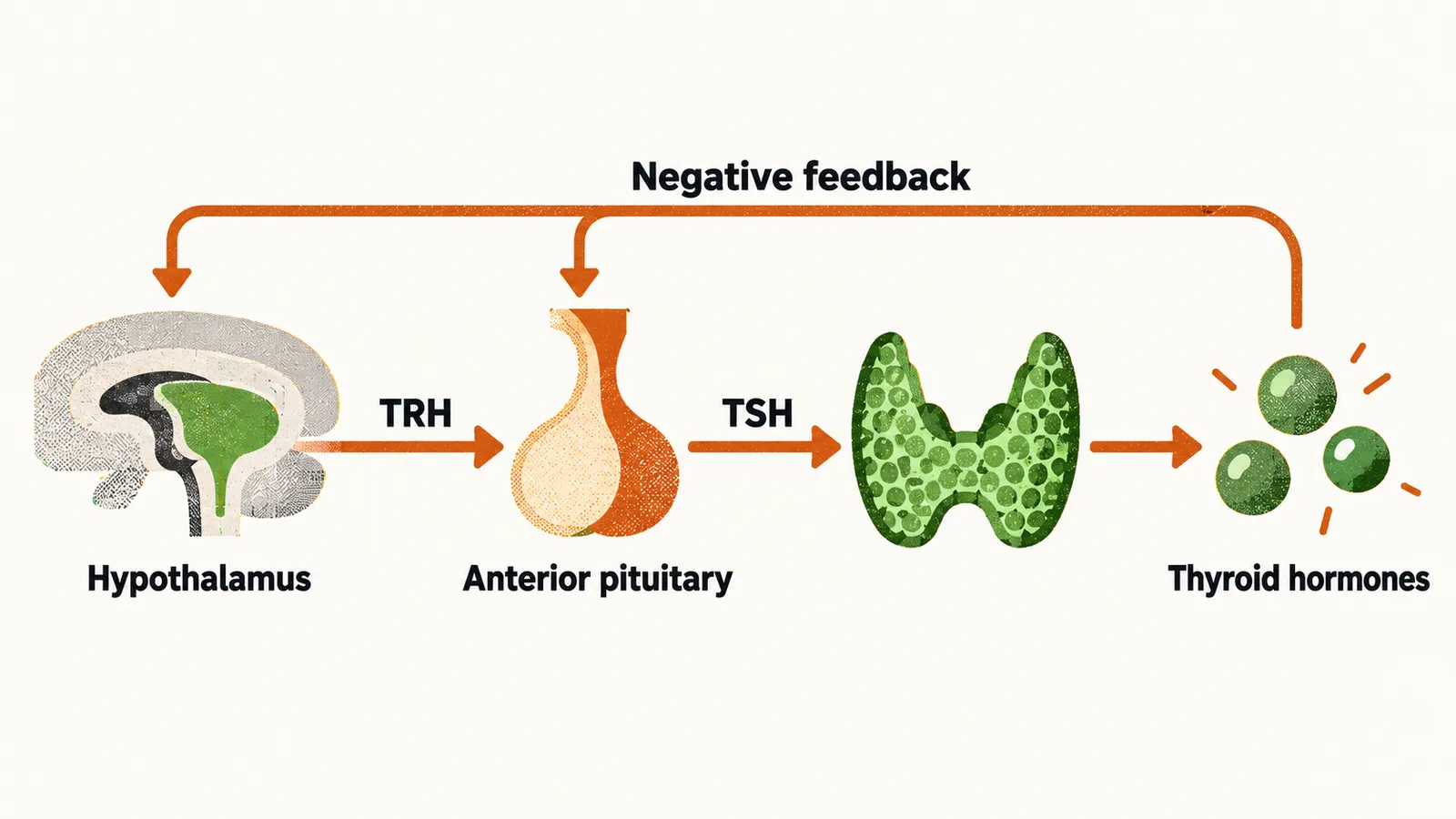
The thyroid gland produces the hormones thyroxine (T4) and triiodothyronine (T3), and its activity is set by thyroid-stimulating hormone (TSH), which the anterior pituitary gland releases under the influence of hypothalamic thyrotropin-releasing hormone (TRH). Knowing where the gland sits, how it is built and how TSH controls it explains how the hormones are made and released.
Position and structure
The gland lies in the front of the neck, anterior to the trachea and between the cricoid cartilage (the ring of cartilage at the lower end of the larynx) and the suprasternal angle. In adults it normally weighs about 12–20 grams. It is highly vascular and soft in consistency. Four parathyroid glands sit posterior to its poles, and the recurrent laryngeal nerve runs close to its lateral borders. That nerve supplies most of the muscles of the larynx, so protecting it during thyroid surgery matters — injury causes vocal cord paralysis.
Development
The gland first produces thyroid hormone during the 11th week of gestation. Its C cells, which produce calcitonin, come from neural crest cells. Development depends on the transcription factors TTF-1, TTF-2 and PAX-8, proteins that switch on genes; these switch on the genes for thyroglobulin (Tg), thyroid peroxidase (TPO), TSH and the TSH receptor (TSH-R). A mutation in the gene for one of these transcription factors, or in one of the genes they control, can therefore cause congenital hypothyroidism, although such cases are rare.
Histology
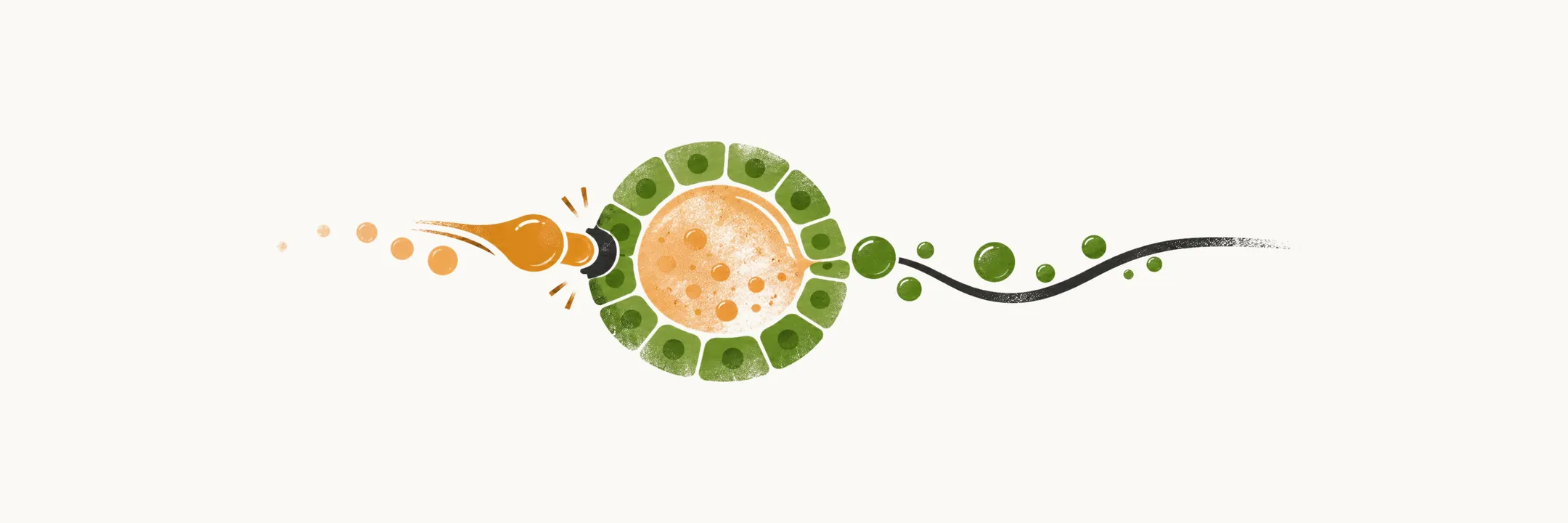
The gland is built from many thyroid follicles, each a ring of follicular cells around a lumen filled with thyroglobulin, the protein precursor of the hormones. When the body needs more hormone, TSH acts on the basolateral surface of the follicular cells — the side facing the blood vessels. The cells take thyroglobulin back in, break it down to release the hormone, and pass it into the bloodstream. Since TSH is what sets this process going, it helps to know where it comes from and what regulates it.
TSH: source and structure
The main controller of the axis is TSH, made by the thyrotropic cells of the anterior pituitary gland. Like the other glycoprotein hormones, TSH has two subunits: an α subunit, shared with human chorionic gonadotropin (hCG), luteinizing hormone (LH) and follicle-stimulating hormone (FSH), and a β subunit that is unique to TSH and gives it its specificity.
Control of TSH secretion
TSH secretion is restrained mainly by negative feedback from the thyroid hormones, which act on the pituitary and the hypothalamus through the TRβ-2 receptor, a subtype of thyroid hormone receptor, to suppress both TSH and TRH. This feedback is the dominant regulator of TSH production. A few other signals can lower TSH when they are present in a pharmacological dose: dopamine, somatostatin and glucocorticoids.
TSH has a long half-life for a pituitary hormone, about 50 minutes. Because of that, its blood level is steady and tracks the hormone level closely, which makes it a very good laboratory target for disorders of the thyroid axis. Once TSH reaches the gland, the follicular cells must take up iodine and build T4 and T3 from it.