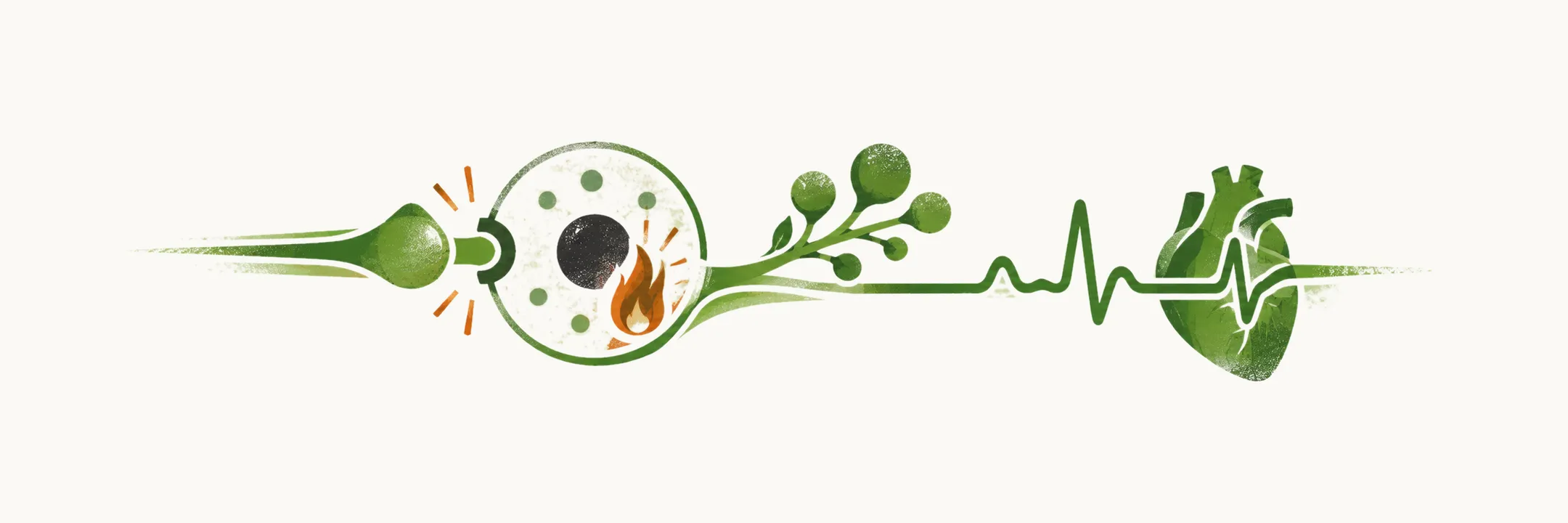
Thyroid hormone reaches almost every cell in the body, and its effects fall into two settings: it directs development before and just after birth, and in adult life it sets the rate at which the body spends energy and the activity of several organs. Most of the signal is delivered by T3, the active form of the hormone, which the tissues make from T4 by conversion. The effects are easiest to follow in the order in which life meets them, beginning with the developing brain and body.
Effects during development
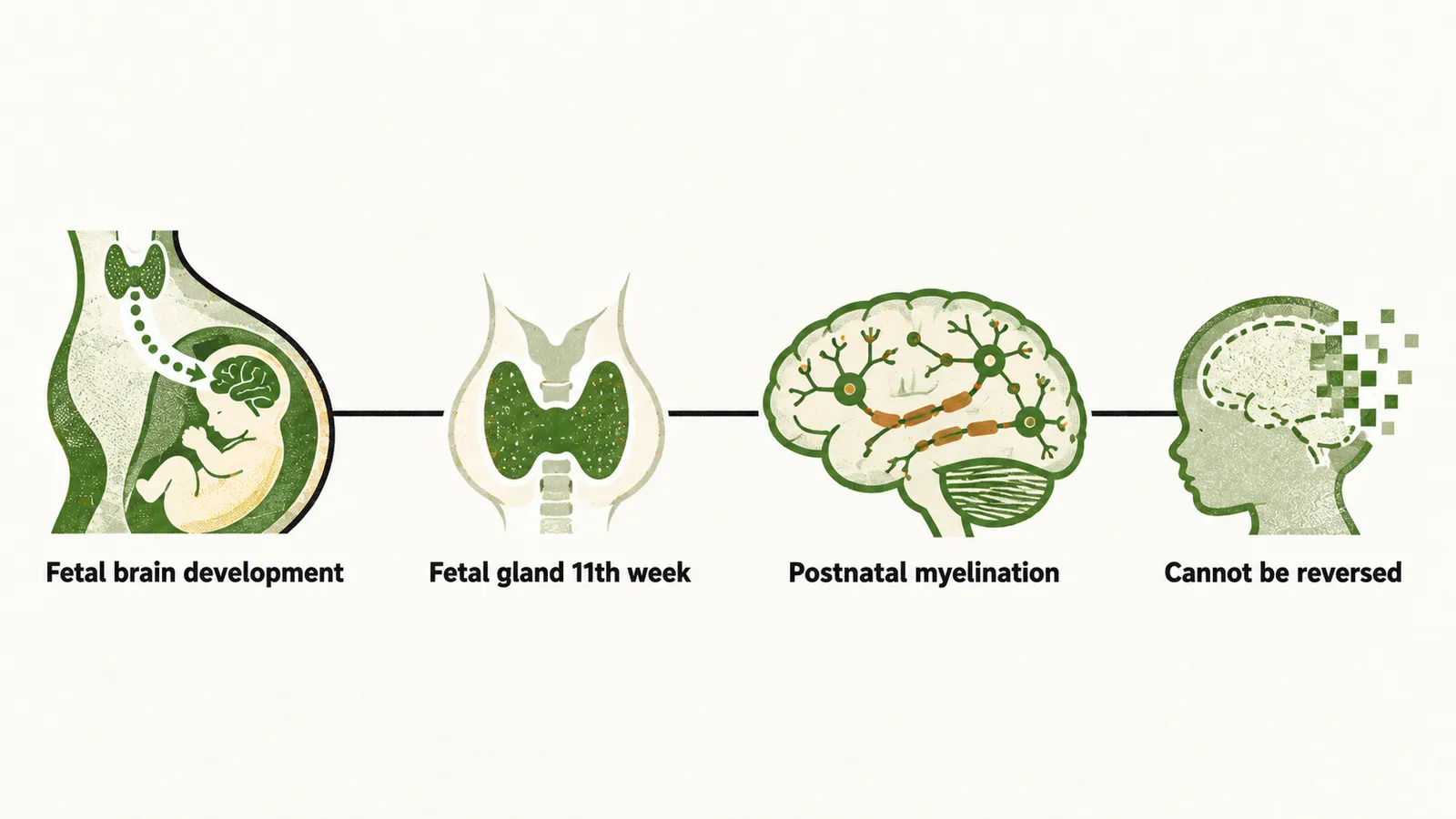
During fetal and early postnatal life, thyroid hormone is required for the brain to develop normally. It drives the production of new neurons, the differentiation and migration of neurons and glial cells, the formation of synapses and the myelination of nerve fibers. Because these steps happen in a fixed window, an inadequate supply at that time leaves a brain that matures poorly, and the resulting intellectual disability cannot be reversed by treatment started later. The fetus depends on the mother for this supply early on, because the fetal thyroid gland begins to produce hormone only around the 11th week of gestation.
The same hormone is required for somatic growth, so a child who lacks it grows poorly. In muscle cells it increases the expression of myosin, one of the proteins that generate force.
Effects during adulthood
Once development is complete, the hormone’s main role shifts to setting the pace of metabolism and the working of individual organs.
Energy use and thermogenesis. The best-known adult action is on the basal metabolic rate. Thyroid hormone raises the rate at which cells consume oxygen and produce heat, so the body spends more energy at rest; this is why the hormone level changes body weight and the tolerance of cold.
Heart and circulation. Thyroid hormone has an inotropic effect on cardiac muscle cells — it increases the force of contraction — and a chronotropic one, increasing the rate. It also relaxes arteriolar smooth muscle, lowering systemic vascular resistance. Together these changes raise cardiac output, the picture seen when the hormone is in excess, and their absence slows the circulation when it is deficient.
Liver and lipid metabolism. In the liver the hormone changes how lipids are handled: it stimulates both the breakdown of fat (lipolysis) and its synthesis (lipogenesis), and it lowers circulating cholesterol, so the lipid profile shifts when the hormone level changes.
Nervous system and mood. Thyroid hormone acts on the nervous system, and an excess or a deficiency typically changes mood and alertness.
Reproduction. The hormone also influences reproductive function. Pregnancy, in turn, changes the thyroid axis itself.