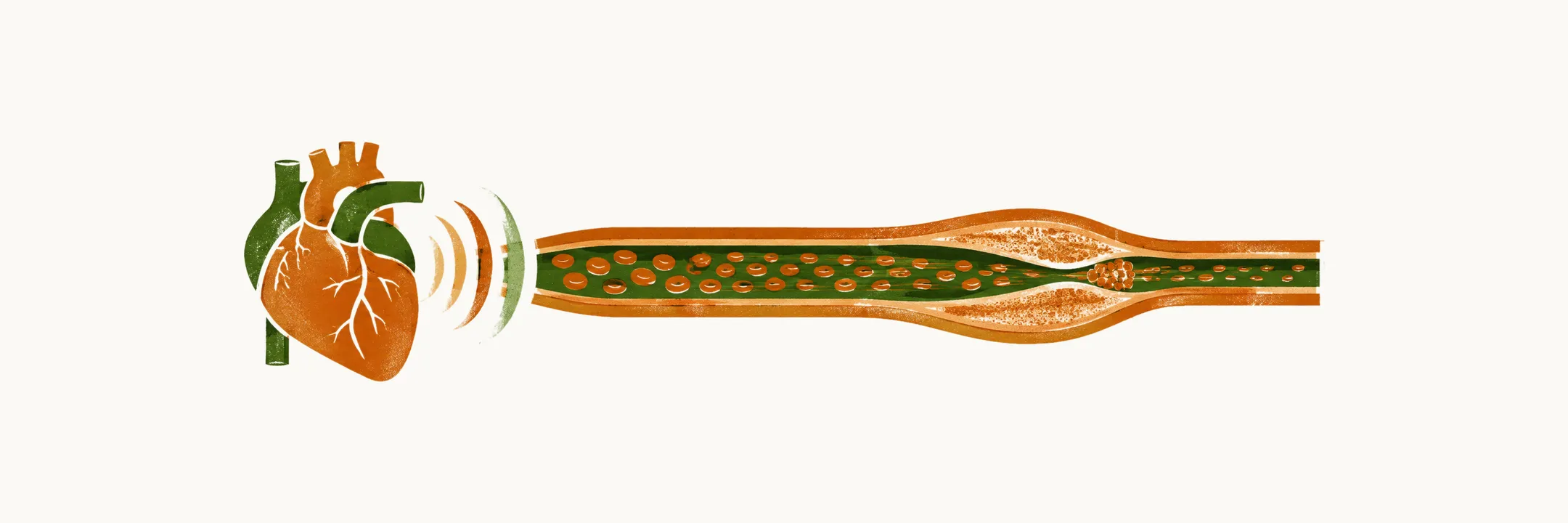
Cushing’s syndrome is a chronic excess of glucocorticoids, and the cardiovascular system is where that excess does most of its lasting harm: cardiovascular complications are the primary cause of death in patients with Cushing’s syndrome. The damage is not limited to the period of active disease, because much of the risk remains raised after the cortisol excess is corrected.
Hypertension
Hypertension is very common in Cushing’s syndrome, and it arises from more than one mechanism. The most specific is mineralocorticoid receptor activation: cortisol normally has the same affinity for the mineralocorticoid receptor as aldosterone, and the kidney protects that receptor by converting cortisol to inactive cortisone with the enzyme 11β-hydroxysteroid dehydrogenase type 2 (11β-HSD2). When cortisol production outruns the enzyme, cortisol reaches the receptor and promotes sodium retention and potassium loss, expanding the extracellular fluid volume and raising blood pressure. Increased peripheral vascular resistance contributes as well.
The heart
Chronic glucocorticoid excess and the accompanying hypertension leave structural and electrical marks on the heart. Left ventricular hypertrophy (thickening of the left ventricular wall) develops as the ventricle adapts to a raised afterload, the pressure it has to pump against, and a prolonged QT interval on the electrocardiogram is a recognised change that carries a risk of ventricular arrhythmia.
Atherosclerosis and metabolic risk
Two metabolic changes add to the vascular burden. Glucose tolerance decreases, in the direction of diabetes, and dyslipidemia (abnormal blood lipids) develops. Together with hypertension these accelerate atherosclerosis, so the cardiovascular risk of Cushing’s syndrome is not only the direct effect of cortisol on the heart and vessels but also the metabolic environment it creates.
The prothrombotic state
Alongside the arterial disease, Cushing’s syndrome causes a hypercoagulable state, so patients are at high risk for deep vein thrombosis and pulmonary embolism. The imbalance is measurable in both directions: hypercortisolemia increases coagulation factors including factor VIII, fibrinogen and von Willebrand factor, and it reduces fibrinolysis by increasing plasminogen activator inhibitor 1 (PAI-1) and antiplasmin, the proteins that restrain clot breakdown. The result is a blood that forms clots readily and dissolves them slowly, and the risk of thromboembolic complications is 18-fold higher than in the normal population.
The prothrombotic state coexists with a fragile, easily bruised skin: the bruising reflects weak vessel walls and a thin dermis rather than a bleeding tendency, so the same patient can bruise easily and still be at high thrombotic risk.
Mortality and residual risk
Through these mechanisms cardiovascular disease becomes the leading cause of death, while a higher risk of infections and of suicide is also reported. The excess risk does not disappear when the hypercortisolemia resolves: the cardiovascular risk tends to remain the same even after the cortisol excess has been treated, which is why cardiovascular follow-up continues after remission. Because the risk is so persistent, recognising the syndrome and proving the cortisol excess reliably is the first task.