
Nephrogenic and dipsogenic diabetes insipidus are the two forms of diabetes insipidus that do not result from damage to the cells that secrete antidiuretic hormone (ADH, also called arginine vasopressin or AVP), and both produce hypotonic polyuria, the passing of large volumes of dilute urine. In nephrogenic disease the hormone is present but the kidney fails to respond; in dipsogenic disease the kidney is responding, but the drinking is excessive.
Nephrogenic diabetes insipidus
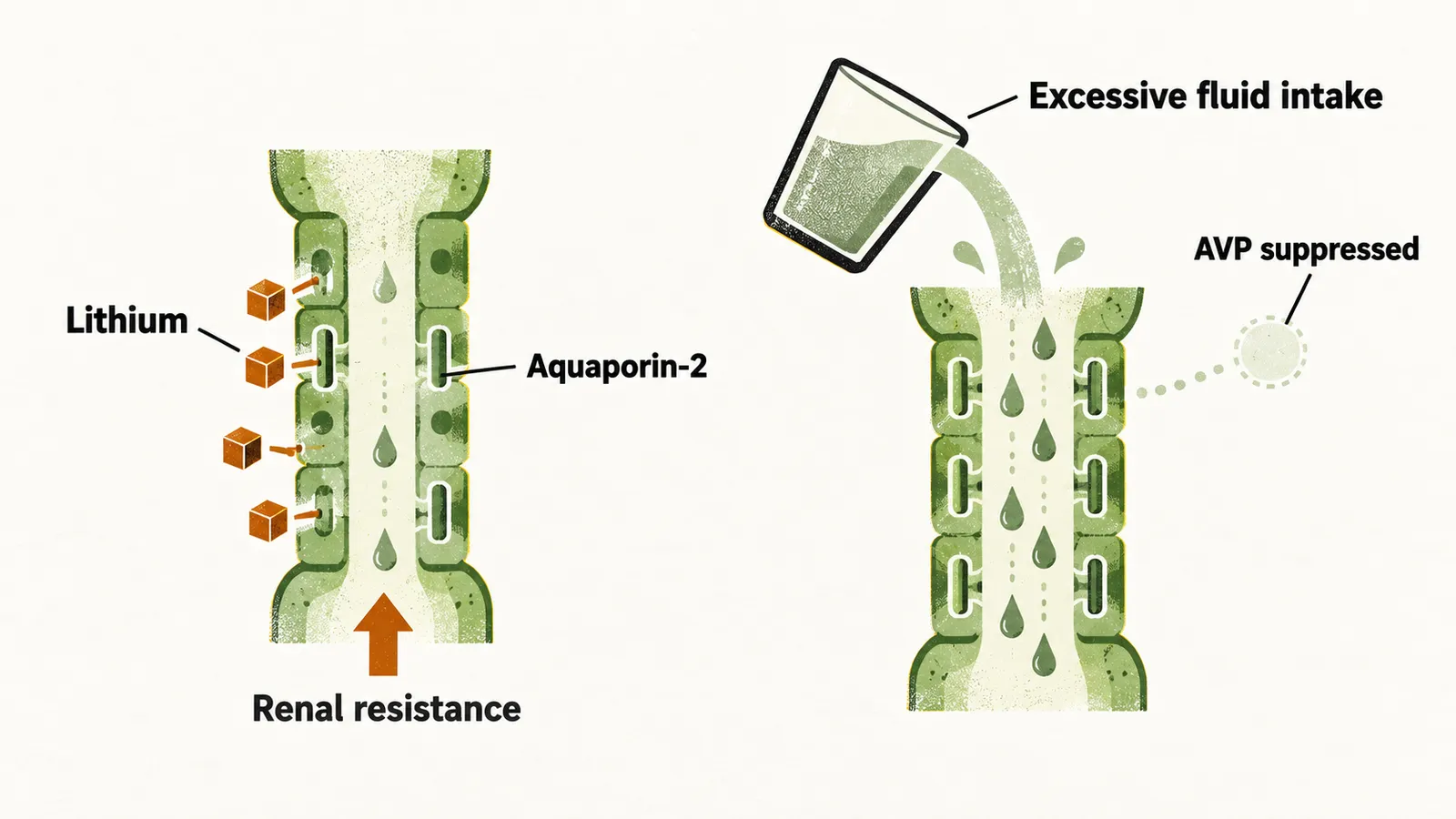
Nephrogenic diabetes insipidus, or NDI, is characterised by normal production and secretion of AVP, with renal resistance to the hormone that leads to hypotonic polyuria.
The most common cause is lithium use, which produces NDI in about 30% of the patients who take it. Lithium enters the principal cells of the collecting duct through the same epithelial sodium channel that amiloride blocks, and inside the cell it reduces the expression of aquaporin-2, the water channel that ADH normally opens. The collecting duct therefore stays impermeable to water even when ADH is present.
NDI caused by lithium can occur in two forms: without interstitial damage, and with interstitial damage, because lithium is able to cause interstitial kidney injury. In most cases NDI induced by lithium resolves only after the drug is stopped.
For reasons that are still unknown, patients who have NDI caused by lithium are more vulnerable to hypernatremia (a raised plasma sodium) than patients with hypothalamic diabetes insipidus (HDI).
Dipsogenic diabetes insipidus
Dipsogenic diabetes insipidus, or DDI, differs from the other forms in that the primary problem is the amount drunk. Anything that exaggerates the thirst response, or lowers the threshold at which thirst is triggered, can produce it through excessive fluid intake.
The link between drinking and dilute urine runs through the osmoreceptors. The magnocellular cells of the paraventricular nucleus (PVN) and supraoptic nucleus (SON) carry osmoreceptors and respond to the tonicity of the plasma: when plasma osmolality falls below about 285 mosmol/kg, AVP release is suppressed. If a person drinks a large amount of fluid, osmolality can be pushed below that threshold, AVP secretion falls, and a large volume of hypo-osmolar urine is produced.
A significant proportion of patients with DDI have a psychiatric condition, and in up to 20% of patients with chronic schizophrenia there is DDI.
All three forms of diabetes insipidus therefore produce dilute polyuria by different routes, and telling them apart depends on the history and on tests that probe the ADH system directly.