Blood pressure is graded by its numbers, and that grading separates hypertension that has no identifiable cause from hypertension that is secondary to a specific condition. Secondary hypertension matters out of proportion to how often it occurs, because it is often correctable: treating the underlying renal or endocrine disease can normalise a blood pressure that medication alone only controls.
Blood pressure classification
Blood pressure is written as systolic blood pressure (SBP), the peak pressure as the heart contracts, over diastolic blood pressure (DBP), the trough as it relaxes. Depending on the consensus followed for the diagnosis, treatment and prevention of hypertension, the cutoff for high blood pressure differs. One of the most commonly used cutoffs in different studies for hypertension is >139/89 mmHg.
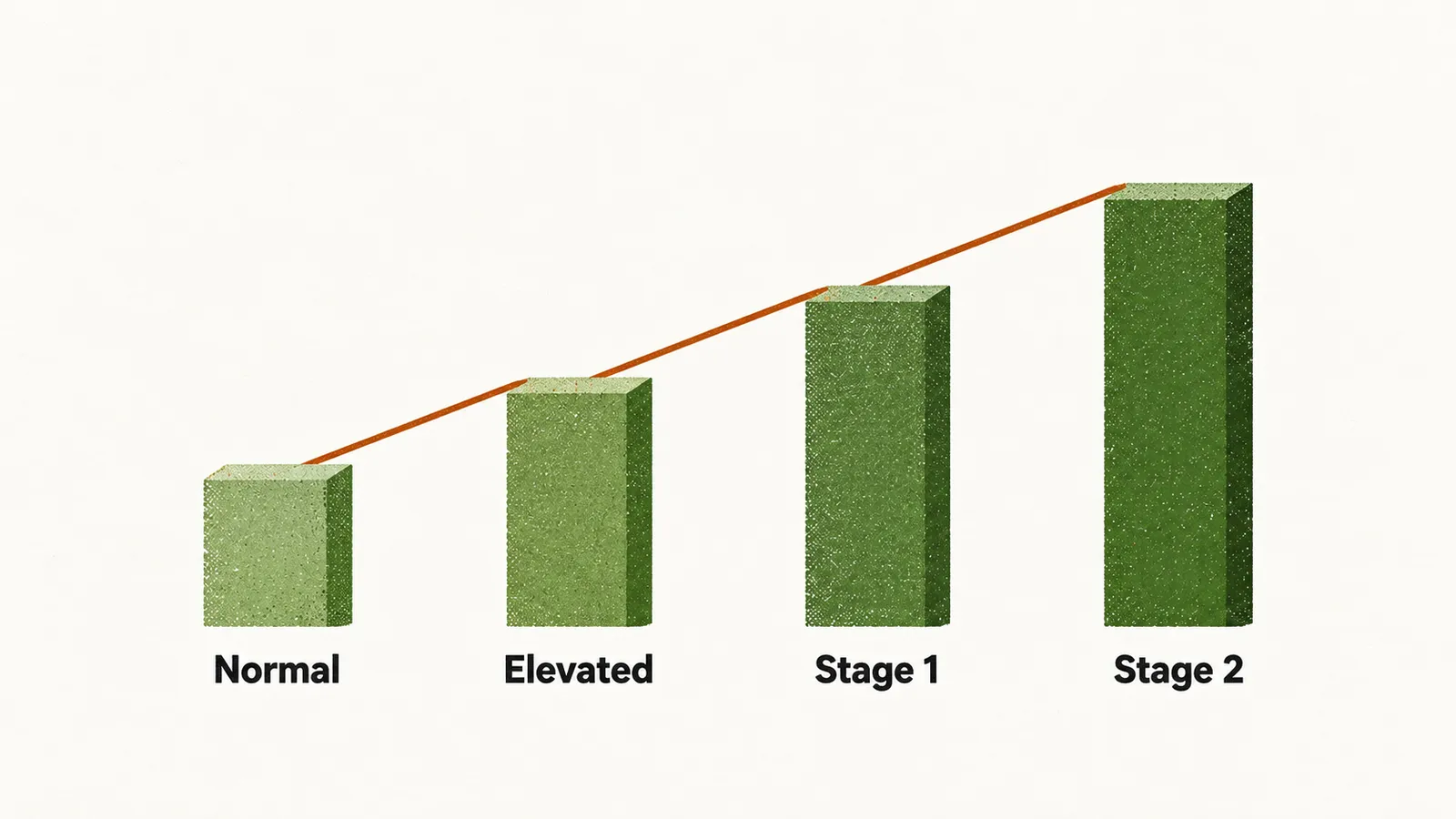
The most common cutoffs used for the classification of blood pressure are:
- normal blood pressure: systolic blood pressure (SBP) below 120 mmHg and diastolic blood pressure (DBP) below 80 mmHg
- elevated blood pressure: SBP between 120 and 129 mmHg and DBP below 80 mmHg
- stage 1 hypertension: SBP between 130 and 139 mmHg or DBP between 80 and 89 mmHg
- stage 2 hypertension: SBP 140 mmHg or higher or DBP 90 mmHg or higher
The categories use and or or deliberately. Normal and elevated blood pressure require both numbers to sit in range, whereas the hypertensive stages need only one of the two numbers to cross the cutoff, so a raised systolic pressure alone is enough for the diagnosis.
How common hypertension is
Hypertension is one of the most common conditions in the USA, affecting about 30% of adults more than 18 years of age, and it is one of the major risk factors for stroke, ischemic heart attack and heart failure. Studies in recent years show that its prevalence has increased in all age groups, and that it rises further with age. Most people diagnosed with hypertension have primary or essential hypertension, high blood pressure with no single identifiable cause.
How common secondary hypertension is
The remainder have secondary hypertension, which is caused by an identifiable renal or endocrine condition. About 5–15% of all hypertensive patients have secondary hypertension, and the proportion is higher in resistant hypertension and in younger or referred patients: in children about 50% of the cases are secondary, and secondary hypertension is also more common in young adults than in older age groups. Recent studies suggest an overall prevalence of endocrine-associated secondary hypertension of about 10%. The younger the patient, the more likely a search for a cause will find one, which is why age by itself raises the suspicion of a secondary cause.
Causes of secondary hypertension
Besides the hormonal causes that this topic is about, secondary hypertension has renal, drug-related, sleep-related and cardiovascular causes. The main causes are primary renal diseases, oral contraceptive use, sleep apnea syndrome, and congenital or acquired cardiovascular diseases, together with hormonal excess.
Endocrine causes of hypertension
Endocrine hypertension is hypertension driven by hormonal excess. The most common endocrine cause is primary hyperaldosteronism, excess aldosterone production by the adrenal gland; other causes include hypercortisolism (excess cortisol), pheochromocytoma (a catecholamine-secreting tumour), acromegaly (excess growth hormone), and hypothyroidism and hyperthyroidism (too little or too much thyroid hormone). They raise blood pressure through different mechanisms — sodium retention, vasoconstriction, increased cardiac output — so each cause carries its own clinical clues and its own treatment.
Endocrine and non-endocrine causes compared
The table groups the endocrine causes by the gland that produces the excess hormone and the other causes by the system involved, so that the two sets can be read side by side.
| Endocrine causes | Other causes |
|---|---|
| Adrenal-dependent causes: pheochromocytoma and sympathetic paraganglioma; primary aldosteronism; hyperdeoxycorticosteronism; congenital adrenal hyperplasia; 11β-hydroxylase deficiency; 17α-hydroxylase deficiency; deoxycorticosterone-producing tumor; Chrousos syndrome; Cushing syndrome; apparent mineralocorticoid excess | Renal causes (2.5–6%): polycystic kidney disease; chronic kidney disease; urinary tract obstruction; renin-producing tumor; Liddle syndrome |
| Parathyroid-dependent causes: hyperparathyroidism | Renovascular causes: renal artery stenosis; fibromuscular dysplasia; atherosclerosis |
| Pituitary-dependent causes: acromegaly; Cushing disease | Vascular causes: coarctation of aorta; vasculitis; collagen vascular disease |
| Thyroid-dependent causes: hypothyroidism; hyperthyroidism | Neurogenic causes: brain tumor; autonomic dysfunction; sleep apnea; intracranial hypertension |
| Other endocrine: secondary hyperaldosteronism; vitamin D deficiency | Drugs and toxins: alcohol; cocaine; cyclosporine, tacrolimus; NSAIDs; erythropoietin; adrenergic medications; decongestants containing ephedrine; herbal remedies containing licorice or ephedrine; nicotine |