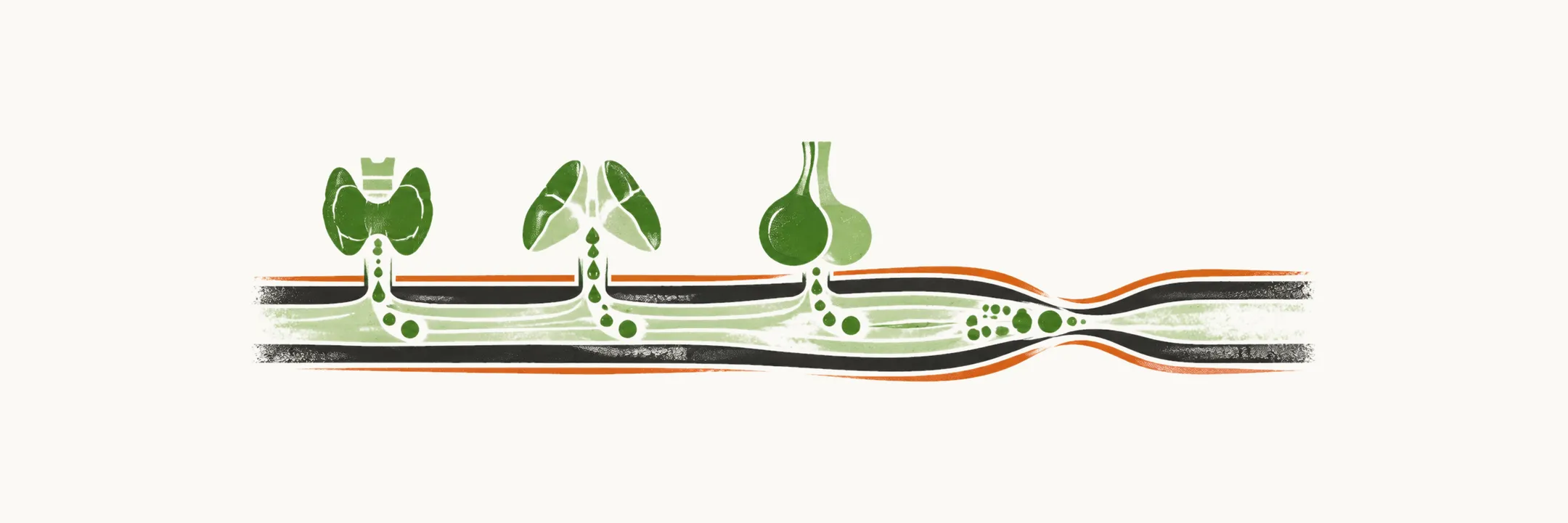
Primary aldosteronism, pheochromocytoma and hypercortisolism are three hormonal causes of hypertension, each driven by a different hormone. For each, the facts that matter when the patient’s problem is hypertension are how often the cause is found, which patients are at higher risk, and how the hormonal excess raises blood pressure.
Primary aldosteronism
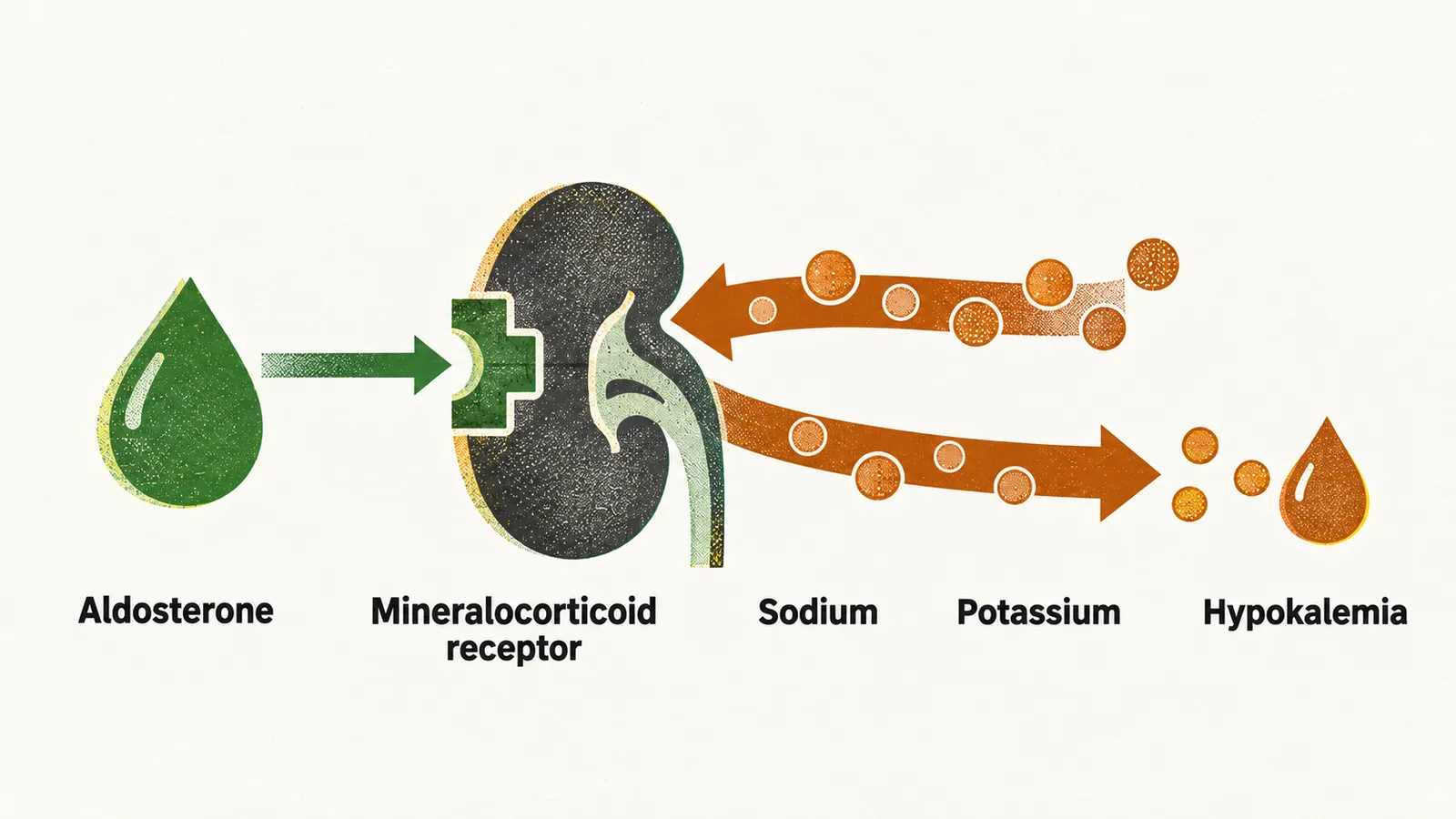
Primary aldosteronism, also called primary hyperaldosteronism, is aldosterone production that the renin–angiotensin system no longer restrains. Aldosterone normally acts on the mineralocorticoid receptor in the distal nephron, where it reclaims sodium and secretes potassium; produced in excess, it expands the circulating volume and raises blood pressure, and the potassium loss can produce hypokalemia. Aldosterone also acts directly on the heart and blood vessels, where it promotes inflammation and fibrosis, which is why the cardiovascular harm outlasts the pressure itself.
The prevalence of primary hyperaldosteronism among patients with mild to moderate hypertension without hypokalemia is about 3%. Because it is easy to miss, certain groups are worth monitoring, since the prevalence is higher in them:
- patients with resistant hypertension, in whom the prevalence is about 20%
- patients with diuretic-induced hypokalemia
- patients with spontaneous hypokalemia
- patients with a family history of early-onset hypertension and stroke
- patients with concomitant hypertension and adrenal incidentalomas
- patients with concomitant hypertension and sleep apnea
Another important fact that underlines the importance of early diagnosis of primary aldosteronism is that patients with primary aldosteronism run a higher risk of cardiovascular events than patients with essential hypertension matched for blood pressure level, and studies show that early diagnosis of primary aldosteronism reverses the excessive cardiovascular morbidity.
Pheochromocytoma
Pheochromocytoma is a tumour of the chromaffin cells of the adrenal medulla that releases catecholamines, mainly adrenaline and noradrenaline, either continuously or in bursts. The hormones raise blood pressure in two ways: they constrict blood vessels through alpha receptors, and they increase the heart’s rate and contractility through beta-1 receptors. Because the release is often paroxysmal rather than steady, the classic picture is episodic — headaches, palpitations and profuse sweating — rather than a uniformly high reading.
Pheochromocytoma is uncommon among hypertensive patients, with a prevalence of about 0.2%. Also, about 15% of patients with pheochromocytoma are normotensive, so a normal blood pressure does not exclude the tumour.
Hypercortisolism
Hypercortisolism, excess cortisol as in Cushing syndrome, is a common cause of secondary hypertension. About 80% of adults and half of the children with hypercortisolism manifest hypertension, and after treatment of hypercortisolism in Cushing syndrome about 30% of the patients have persistent hypertension.
Cortisol raises blood pressure through several mechanisms acting together. It can occupy the mineralocorticoid receptor and mimic aldosterone — retaining sodium — whenever it overwhelms the enzyme that normally inactivates it in the kidney. It increases the liver’s production of angiotensinogen, the substrate of the renin–angiotensin system, so the system runs at a higher level. It raises cardiac output through a direct glucocorticoid effect, and it reduces the production of vasodilator prostaglandins by inhibiting phospholipase A.