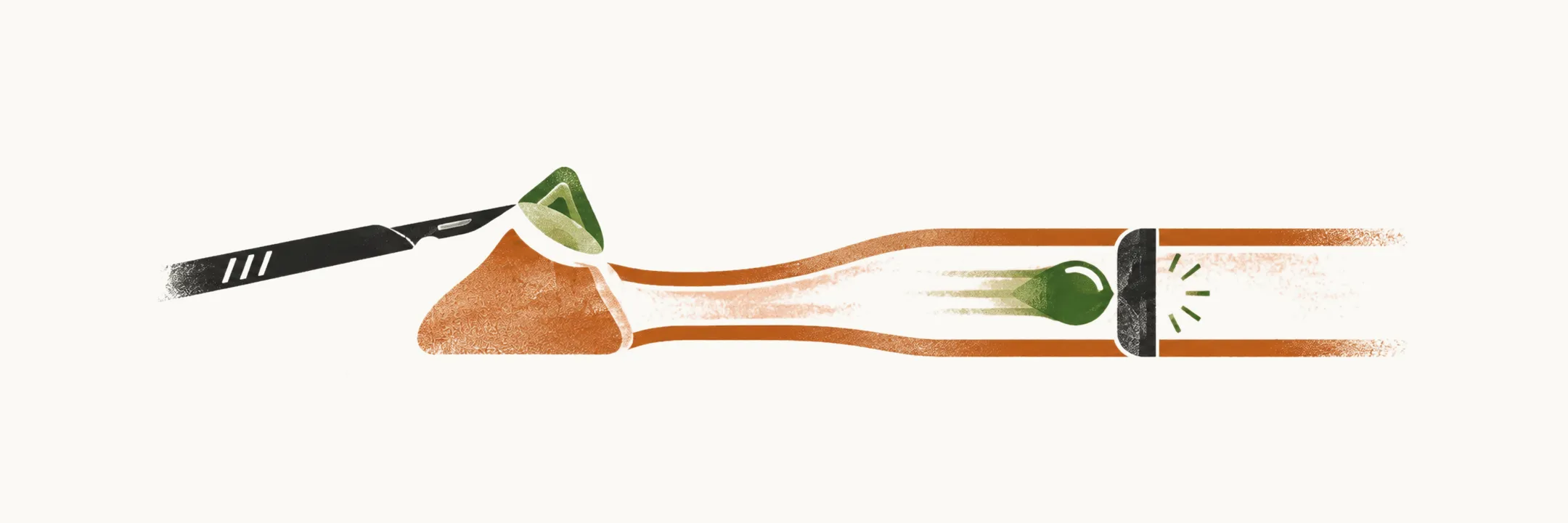
Endocrine hypertension is treated by removing or blocking the hormonal excess that raises the blood pressure, so the choice of treatment follows from which cause has been found. For some causes surgery is curative; for others medical treatment is definitive; and for several, the two are used together.
Primary aldosteronism
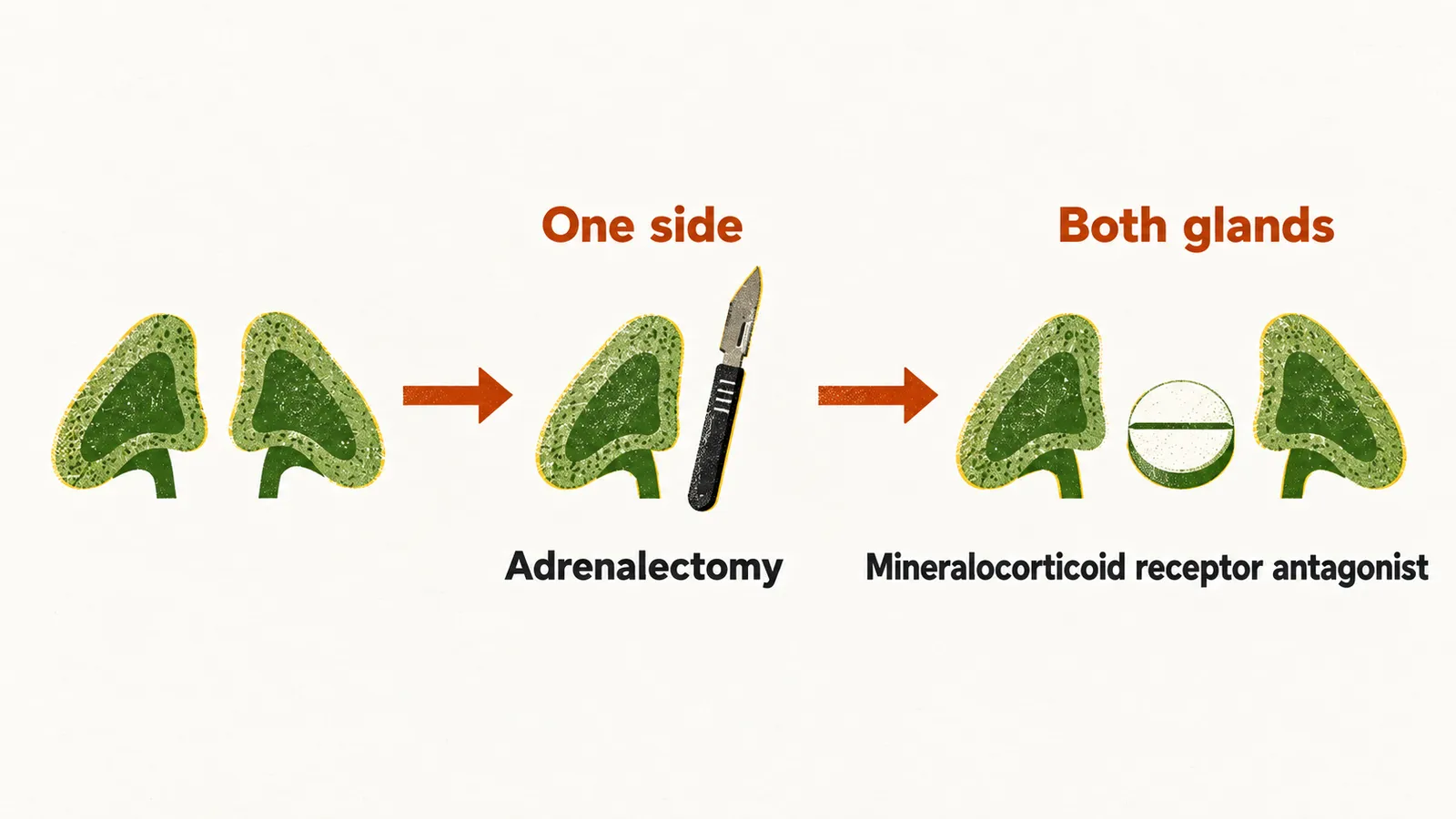
Treatment depends on whether one adrenal gland or both are overproducing aldosterone. When the disease is on one side — an aldosterone-producing adenoma or unilateral hyperplasia — laparoscopic adrenalectomy is recommended, and adrenal venous sampling is used beforehand to confirm which side is responsible so that the correct gland is removed. When both glands are involved, surgery is not recommended; the patient is treated medically with a mineralocorticoid receptor antagonist, with spironolactone preferred and eplerenone as an alternative when spironolactone is not tolerated. Blocking the receptor at the kidney prevents aldosterone from retaining sodium, so both the blood pressure and the potassium fall back toward normal.
Pheochromocytoma and paraganglioma
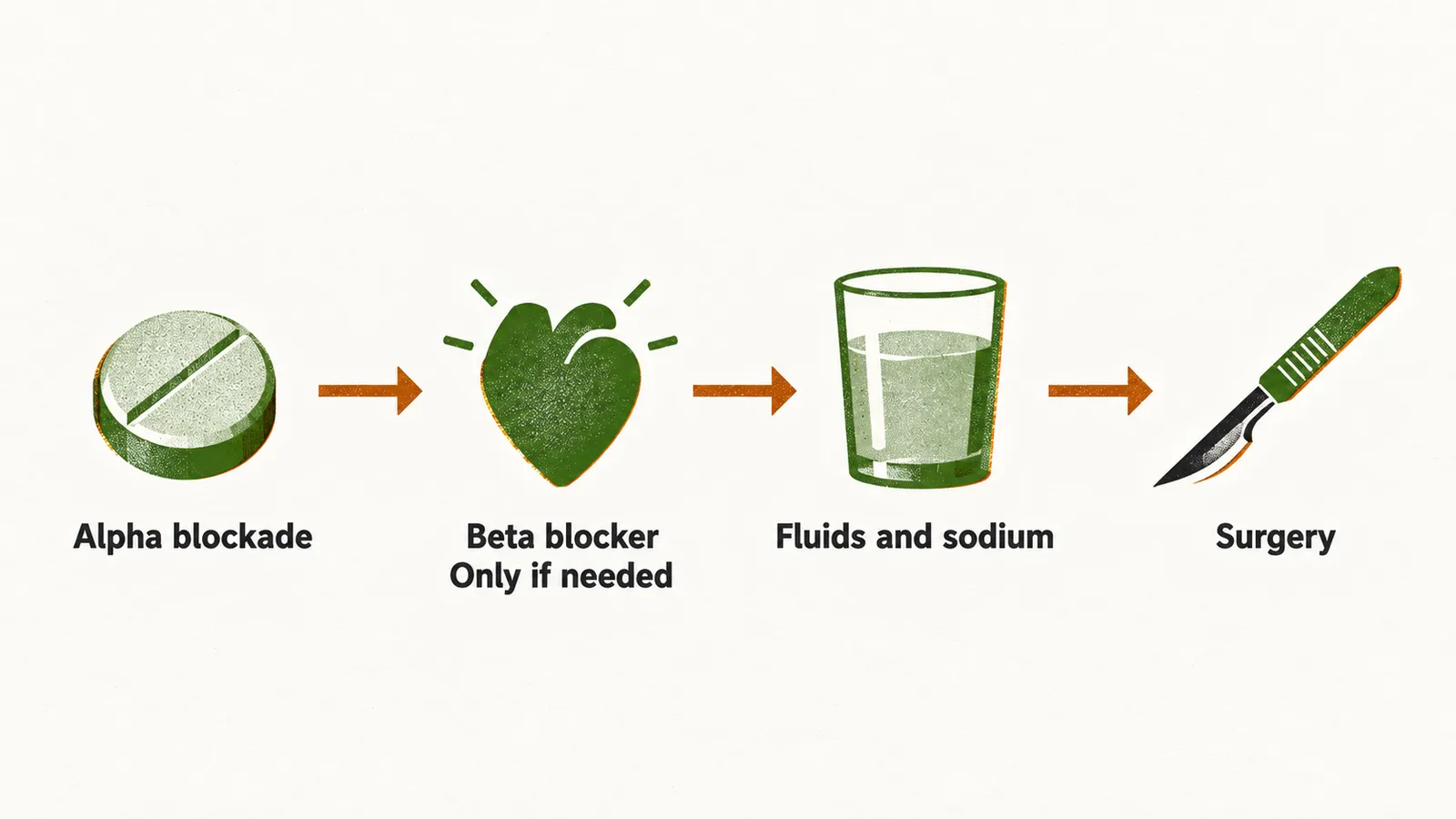
Surgery is the definitive treatment, but it has to be prepared for. Long-standing catecholamine excess, from pheochromocytoma (a catecholamine-secreting adrenal tumour) or the related paraganglioma, leaves the circulation volume-contracted and the blood vessels primed to constrict, so handling the tumour during the operation can release a surge of catecholamines and cause a hypertensive crisis. Every patient with a functional pheochromocytoma or paraganglioma is therefore given preoperative alpha blockade — phenoxybenzamine, or doxazosin as an alternative — together with a high-sodium diet and a generous fluid intake to refill the contracted circulation.
A beta blocker is added only after alpha blockade is established, and only if it is needed for tachycardia. Giving a beta blocker first is dangerous: it removes beta-mediated vasodilation while leaving alpha-mediated vasoconstriction unopposed, which can precipitate the very crisis the preparation is meant to prevent. Most pheochromocytomas are then resected by minimally invasive adrenalectomy, while most paragangliomas need open resection.
Hypercortisolism
In hypercortisolism, meaning excess cortisol as in Cushing syndrome, the aim is to normalise cortisol, usually by treating the underlying cause — surgery on the pituitary or adrenal source, and medical therapy or radiotherapy when surgery is not possible or not curative. Blood pressure falls in most patients once the cortisol excess is corrected, but it often does not normalise completely, so the hypertension itself still needs treatment and the cardiovascular risk that accompanies Cushing syndrome needs ongoing management.
Thyroid disease and acromegaly
Hypothyroidism and hyperthyroidism are endocrine causes of hypertension that are less common than primary aldosteronism, and the treatment is the treatment of the thyroid disorder: correcting the hormone level usually corrects the blood pressure as well. In acromegaly, excess growth hormone and IGF-1 raise blood pressure partly by retaining sodium and expanding plasma volume; transsphenoidal surgery is the first-line treatment, and blood pressure improves to some degree when growth hormone excess is controlled, although the hypertension may not fully reverse.