An endocrine cause of hypertension is uncommon among all hypertensive patients, but finding it changes how the patient is treated, so a few clinical situations and clues decide who is investigated further.
Why early diagnosis matters
Early diagnosis of an endocrine cause is important because it changes management, not just the number on the cuff. It allows:
- avoidance of inappropriate treatment — for instance, in pheochromocytoma, giving a beta blocker before an alpha blocker can predispose the patient to a hypertensive crisis, because beta blockade removes beta-mediated vasodilation and leaves alpha-mediated vasoconstriction unopposed
- the best choice of treatment, which could be surgery or pharmacological
- normalisation of blood pressure and prevention of complications related to cardiovascular risk
Resistant hypertension
Resistant hypertension is defined as blood pressure that remains above goal (>140/90 mmHg) despite concurrent use of 3 or more antihypertensive agents of different classes, with one of them being a diuretic, and all agents prescribed at optimal doses. This also includes patients whose blood pressure is controlled but who require 4 or more medications to achieve target values. Resistant hypertension matters clinically because endocrine causes are more common among these patients — primary aldosteronism alone accounts for about 20% — than among hypertensive patients overall.
Who to suspect
Hypertension in young patients, prepubertal and younger than 30 years of age, and hypertensive patients with resistant hypertension should raise the suspicion of secondary hypertension. Suspicion should also be raised in patients who present with hypertension together with:
- orthostatic hypotension associated with severe hypertension, palpitation and sweating
- complete reversal or suppression of the blood pressure circadian rhythm
- hypertension plus the signs and symptoms of hypercortisolism
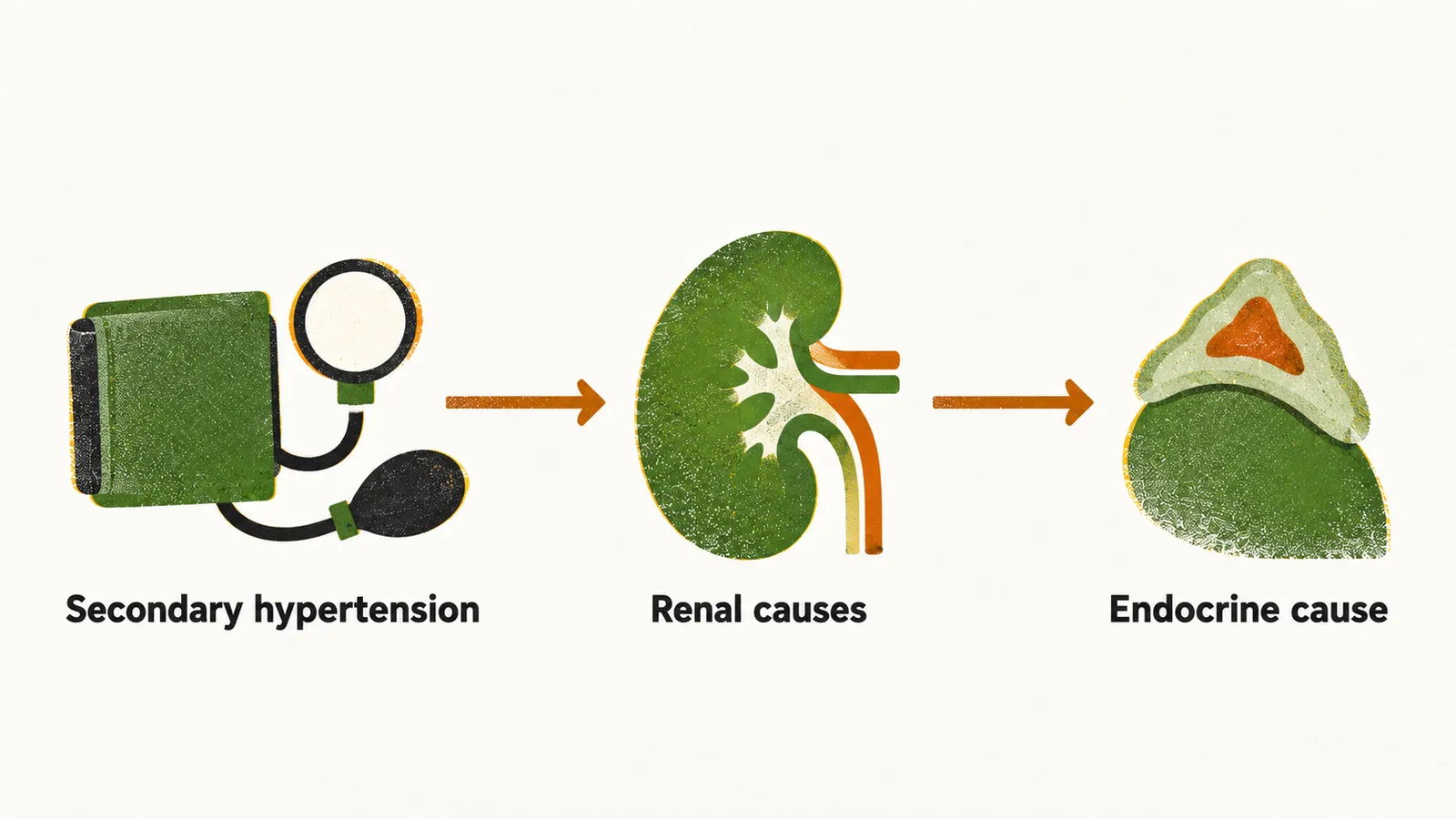
In this group of patients suspected of secondary hypertension, all the renal-associated secondary causes of hypertension have to be ruled out first, before reaching the endocrine-associated secondary hypertension.
Clues and tests by cause
Once secondary hypertension is suspected and the renal causes have been considered, the clinical picture and a specific test point toward each endocrine cause. The table lists them by the gland involved.
| Cause | Clinical presentation | Diagnostic tools |
|---|---|---|
| Adrenal-dependent causes | ||
| Pheochromocytoma | Headaches, palpitations, anxiety-like attacks, profuse sweating | Free plasma or fractionated urinary metanephrine |
| Primary aldosteronism | Polyuria, myopathy, cardiac dysrhythmias in severe hypokalemia | Increased aldosterone/renin ratio, suppressed plasma renin activity (PRA), increased aldosterone, low potassium |
| 11β-hydroxylase deficiency | Increased androgen production, prenatal virilization in females, pseudoprecocious puberty in males | Increased 17-OH progesterone, deoxycorticosterone (DOC), 11-deoxycortisol, androstenedione, testosterone, dehydroepiandrosterone sulfate (DHEA-S), germline mutation testing |
| 17α-hydroxylase deficiency | Pseudohermaphroditism in XY males, sexual infantilism and primary amenorrhea in females | Low or low-normal androstenedione, testosterone, DHEA-S, 17-hydroxyprogesterone, aldosterone and cortisol, germline mutation testing |
| Hypercortisolism | Weight gain, insomnia, depression, easy bruising, fatigue, acne, hirsutism, hyperglycemia | 24-h urinary free cortisol excretion, suppressed adrenocorticotropic hormone (ACTH), 1 mg overnight dexamethasone suppression test |
| Parathyroid-dependent causes | ||
| Hyperparathyroidism | Hypercalcemia, hypercalciuria, nephrocalcinosis, cortical bone loss, proximal myopathy, weakness, depression | Intact parathyroid hormone (PTH), increased serum calcium concentration |
| Pituitary-dependent causes | ||
| Acromegaly | Enlargement of the lower lip and nose, prognathism, mild hirsutism, sweating, oily skin, diabetes mellitus | Insulin-like growth factor 1 (IGF-1) |
| Cushing disease | Weight gain, insomnia, depression, easy bruising, fatigue, acne, hirsutism, hyperglycemia | 24-h urinary free cortisol, high or increased ACTH, dexamethasone suppression test, pituitary MRI |
| Thyroid-dependent causes | ||
| Hypothyroidism | Fatigue, weight gain, bradycardia, loss of appetite | Increased thyroid-stimulating hormone (TSH), low free triiodothyronine (FT3) and free thyroxine (FT4) |
| Hyperthyroidism | Nervousness, anxiety, palpitations, hyperactivity, weight loss, tachycardia | Low TSH, increased FT3, FT4 |