Obesity is common, and its distribution is not uniform: prevalence varies by sex, race, education and income, and it has risen sharply over recent decades. Prevalence is reported against BMI (body mass index), a measure of body weight in relation to height, with cut-offs of 30 and 40 used below.
Prevalence in adults
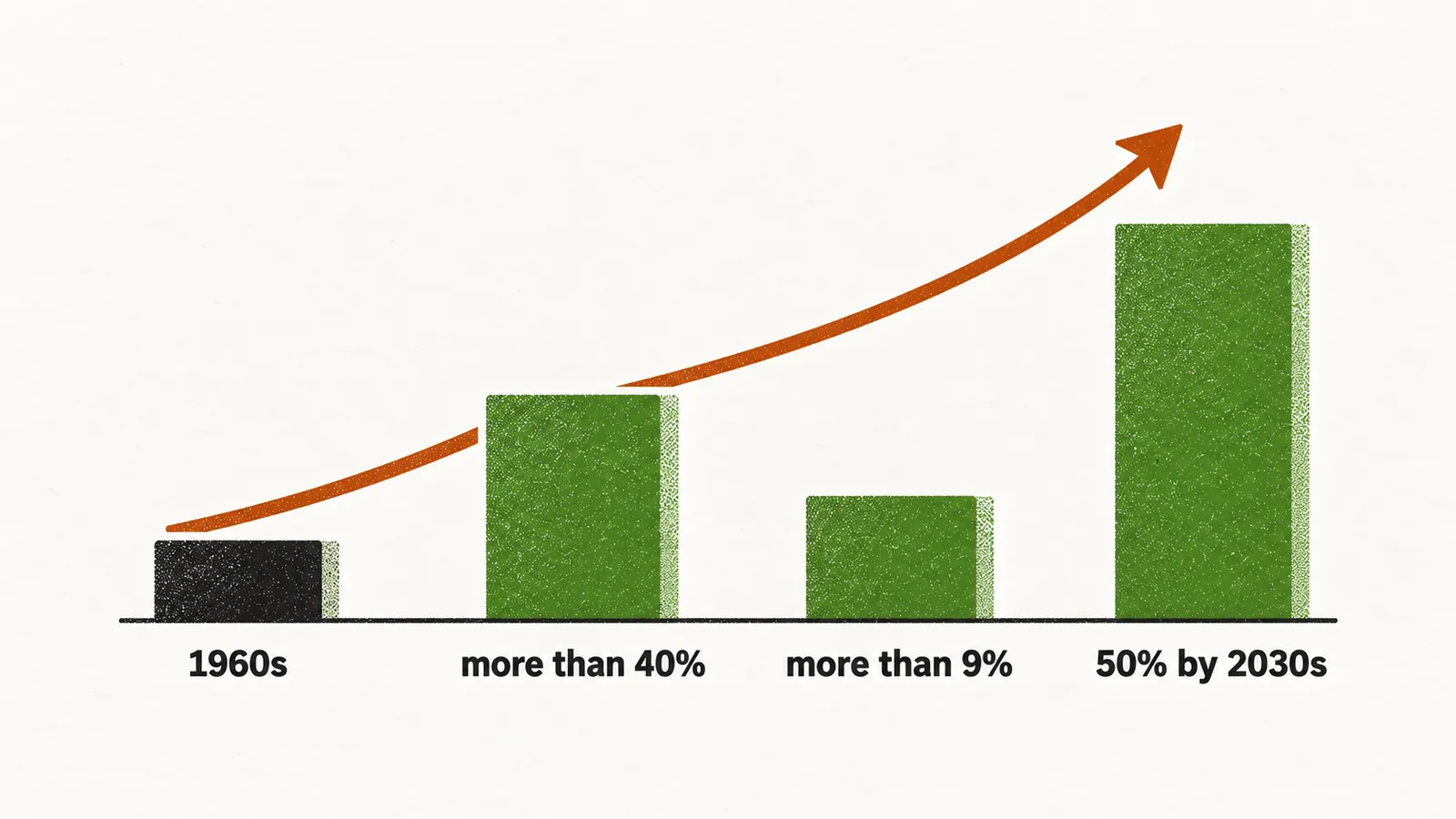
Recent studies in the USA show that more than 40% of the adult population have obesity, defined as a BMI greater than 30, and more than 9% have severe obesity, defined as a BMI greater than 40. Compared with the data from the 1960s, this is roughly a threefold increase, which supports the idea of an obesogenic environment — a modern way of life whose food supply and activity patterns favour weight gain. Only about 30% of the adult US population fall in the normal BMI range of 18.5 to 24.9.
Trends in children and worldwide
Pediatric obesity is a risk factor for adulthood obesity. Like the adults, children have shown an approximately threefold increase, and projections point to a total prevalence of 50% obesity in the USA in the 2030s. Other countries and regions of the world show the same direction: in recent years both total prevalence and incidence there have been increasing.
Who is affected: sex, age and race
Women have an equal or slightly higher prevalence of obesity than men, although central obesity — fat concentrated in the abdomen and trunk — is less common in women. The distribution of obesity between men and women has been becoming more similar in recent years, and the peak age of occurrence is in middle age, between 40 and 60 years. There is also a significant difference between races, with the highest occurrence in Black women and in Hispanic men and women.
Education and income
Social circumstances also shape who is affected. Obesity prevalence is lower among college graduates than among people with a lower educational level. The relation to income is not uniform: prevalence is lower in the highest income group among Hispanic and Asian men only, and it does not differ by income among non-Hispanic Black girls.
These figures depend on how obesity is defined, and the BMI cut-offs behind them are not the same for every population, which raises the question of how body fat and BMI are actually measured and interpreted.