
Obesity is a chronic disease, so its treatment is long-term: the aim is sustained weight loss that improves health, not a single episode of loss. Treatment runs from lifestyle change, through pharmacotherapy, to metabolic and bariatric surgery, and it is combined with the prevention and treatment of the complications the patient already has.
Lifestyle change
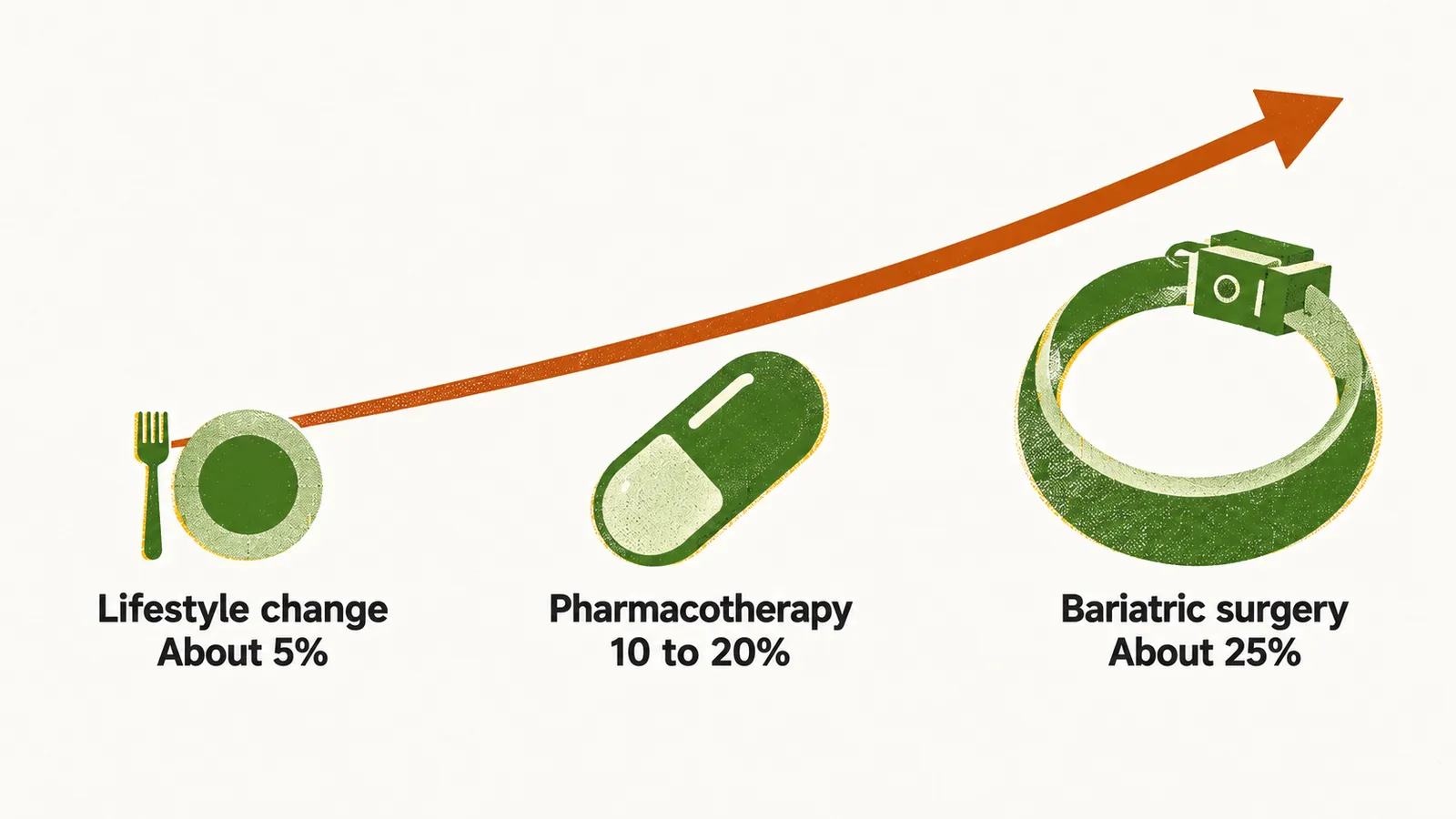
Lifestyle modification is first-line therapy for overweight and obesity. The most effective approach combines a moderately reduced-calorie diet, increased physical activity and behavioural strategies that help a person keep to the plan. For substantial health benefit, adults should reach at least 150 to 300 minutes a week of moderate-intensity aerobic activity, or 75 to 150 minutes a week of vigorous-intensity activity. Weight loss from lifestyle change alone, however, averages about 5%, which is often not enough to give most patients lasting improvement. This is the reason pharmacotherapy and surgery exist as further steps.
Targets of weight loss
The benefit of weight loss is progressive. A reduction of 5% to 10% improves blood pressure, triglycerides, LDL cholesterol, blood glucose and sleep apnoea, and 5% is the accepted marker of clinically meaningful loss. A patient who needs to resolve a weight-related comorbidity — cardiovascular disease, sleep apnoea or steatotic liver disease — should aim for at least 10%.
Pharmacotherapy
Pharmacotherapy fills the gap between lifestyle change and surgery: lifestyle alone often fails to produce durable loss, while surgery is highly effective but invasive and often not desired. In 2025 the WHO issued recommendations for three agents for the long-term treatment of obesity in adults. Liraglutide and semaglutide are GLP-1 receptor agonists, drugs that act on the receptor of GLP-1 (glucagon-like peptide-1), the gut and brain hormone that reduces appetite. Tirzepatide is a dual GIP/GLP-1 receptor agonist, acting on the receptors for GLP-1 and for GIP (glucose-dependent insulinotropic polypeptide).
Current pharmacotherapy can produce 10% to 20% weight loss, with improvement in steatotic liver disease, type 2 diabetes, obstructive sleep apnoea and cardiovascular events. It is used together with behaviour change, individualised to the patient, and taken long term, because weight regain after stopping is expected. Measures of central adiposity, ethnicity-specific BMI and the presence of adiposity-related complications guide the decision to start it, rather than BMI alone.
Metabolic and bariatric surgery
Metabolic and bariatric surgery achieves about 25% weight loss and reduces all-cause mortality as well as other cardiovascular consequences of obesity. It is recommended for a BMI of 35 kg/m² or more regardless of comorbidity, and considered for a BMI of 30 to 34.9 kg/m² with metabolic disease such as type 2 diabetes, hypertension, cardiovascular disease, obstructive sleep apnoea, asthma, steatotic liver disease, chronic kidney disease, polycystic ovary syndrome or gastro-oesophageal reflux disease. In Asian populations the thresholds are lower, and a BMI of 27.5 kg/m² or more should be offered surgery. Appropriately selected adolescents may also be considered.