
A sellar mass is any tumor located in the sella turcica, the bony concavity that holds the pituitary gland. The gland and the adjacent structures of the sellar region can be affected by a wide variety of disorders, and pituitary adenomas are the most familiar of them.
Disorders of the sellar region
These disorders include:
- neoplasms of the adenohypophysis with endocrinological manifestation, such as Cushing disorder and acromegaly
- cysts or neoplasms derived from the remnants of Rathke’s pouch
- tumors of the neurohypophysis and pituitary stalk
- neoplasms of the parasellar bones
Where sellar masses arise
Sellar masses can arise from brain, hypothalamus, or pituitary tissue, and each of these has a specific magnetic resonance imaging (MRI) pattern that can help in the differential diagnosis of the origin of the mass.
Pituitary adenomas
Pituitary adenomas are benign neoplasms of the neuroendocrine epithelial cells of the adenohypophysis. Although pituitary adenomas are called benign, they can be locally invasive and destructive.
The adenohypophysis can be affected by primary tumors or by secondary, metastatic tumors; most of the time the tumors in the adenohypophysis are adenomas, and in very rare cases there can be carcinomas as well.
Size and invasion
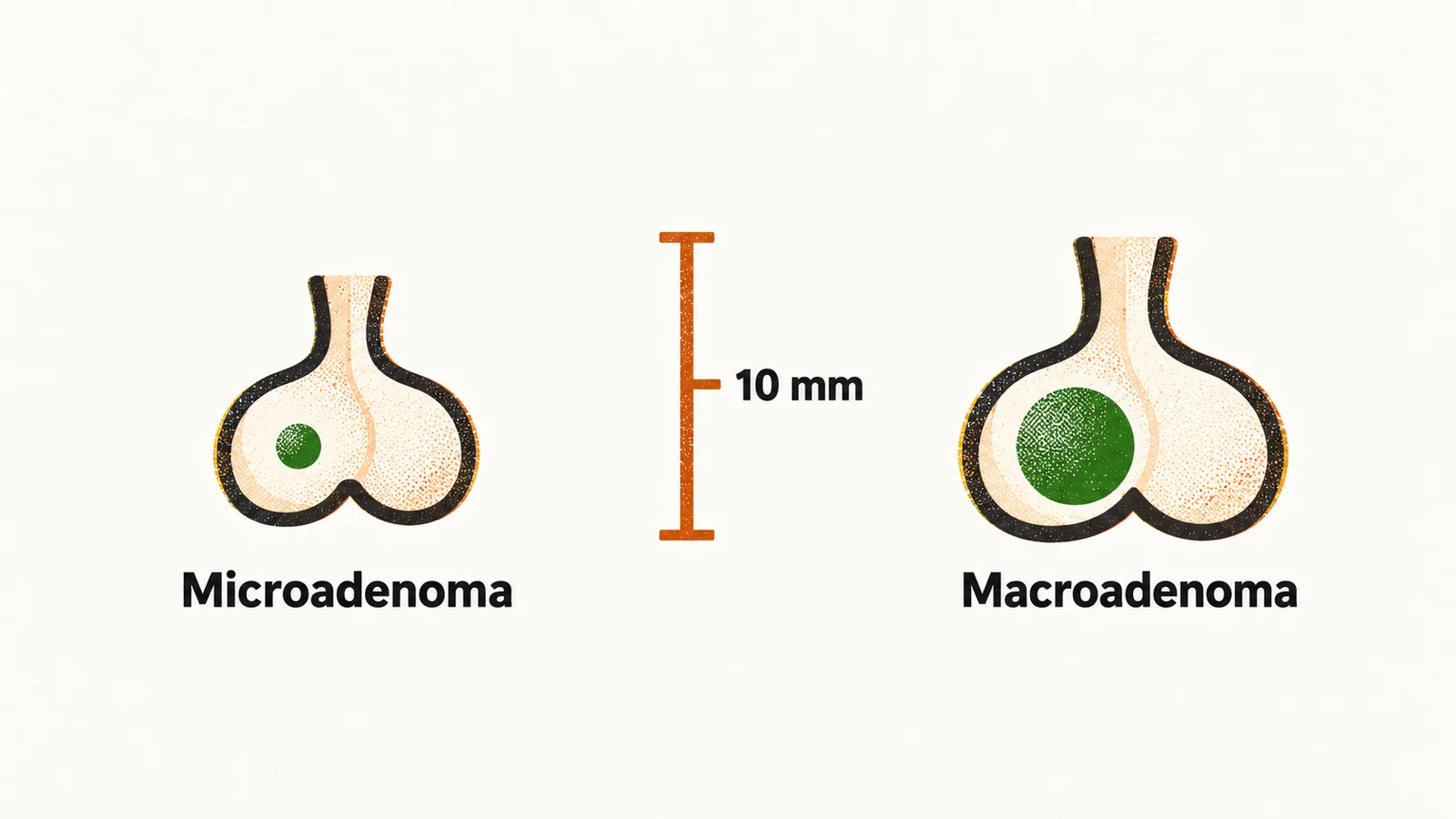
Pituitary adenomas are divided by size into microadenoma and macroadenoma, with a size of more than 10 mm as the cut-off between them. If the tumor in the pituitary gland invades the surrounding tissues, it is called invasive.
Origin
The origin of pituitary adenomas can be sporadic, which is most of the cases, or familial. Familial pituitary tumors can present as isolated tumors, found only in the hypophysis, or as part of a syndrome in which several tumours appear across the body (see Genetic syndromes associated with pituitary tumours).
Effects on pituitary function
The effect of sellar and suprasellar masses on the pituitary gland can be variable. A mass can leave the gland underactive (hypopituitarism, as in the case of craniopharyngiomas), make it overactive (hyperpituitarism, as in the case of Cushing’s disease), or be non-functional, with no hormonal effect. For adenomas, the cell type they came from is what sets the hormonal picture.