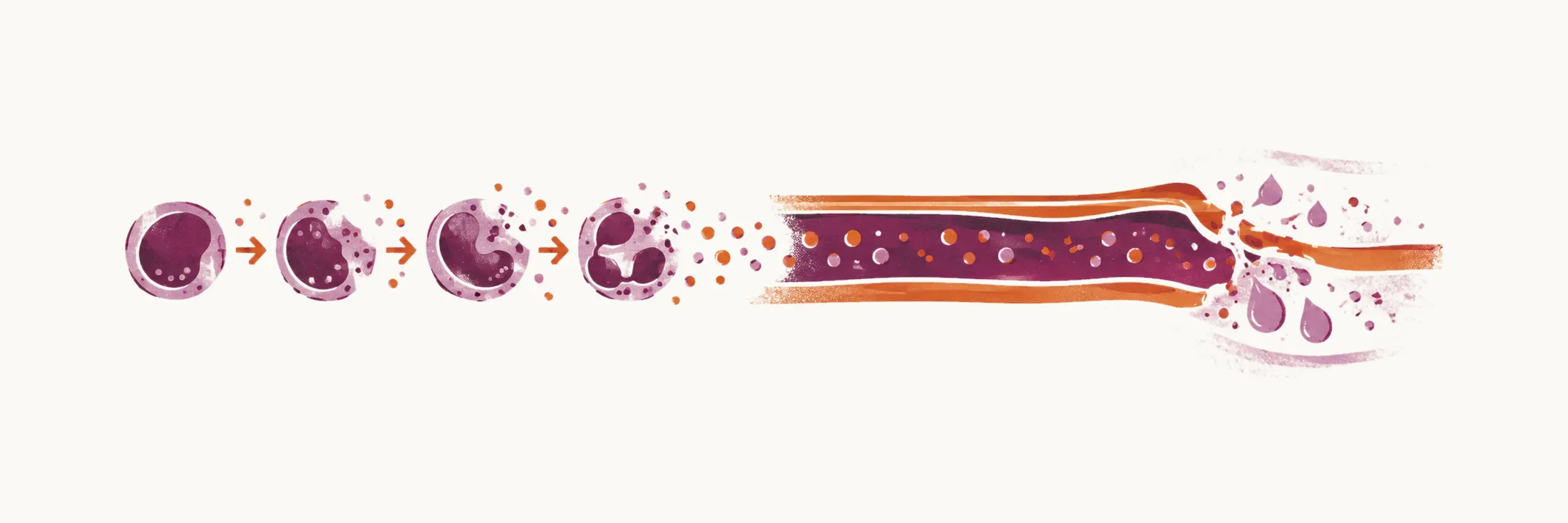
Differentiation syndrome is a complication of treating acute promyelocytic leukemia with ATRA, the drug that forces the leukemic promyelocytes to mature. The treatment itself is not toxic to the cells; the harm comes from the maturing cells, which release cytokines that make capillaries leak. Because the syndrome develops within weeks of starting treatment and can progress to respiratory and renal failure, it is watched for from the beginning of therapy.
Cytokines from maturing cells
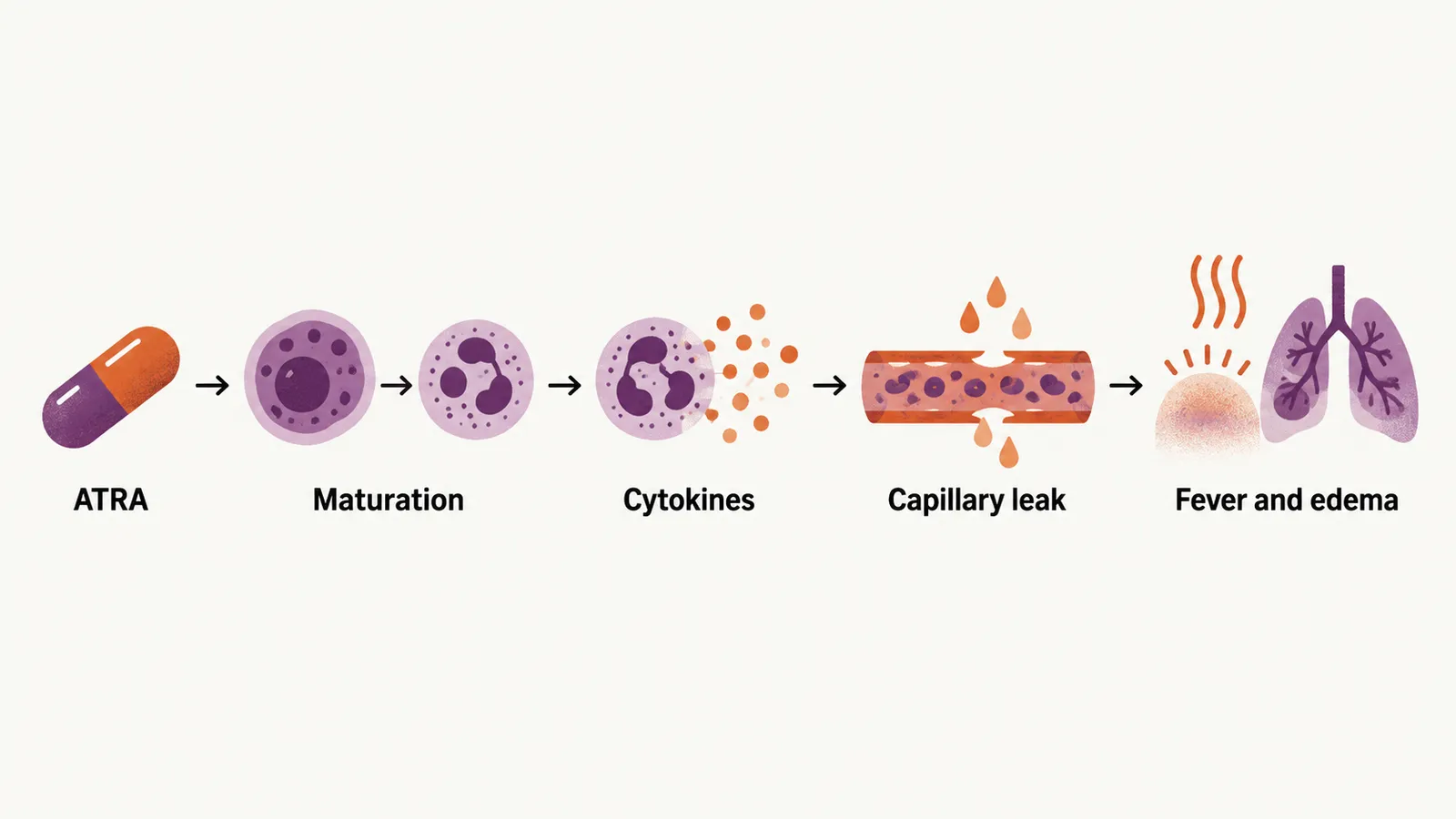
ATRA works by releasing the block on differentiation, so the promyelocytes that were arrested in the leukemic state mature into neutrophils. As that maturation happens, the cells release large amounts of vasoactive and inflammatory cytokines. Those cytokines increase capillary permeability, so fluid leaves the vessels and collects in the tissues and the lungs. The peripheral blood white-cell count rises as the mature cells appear, and the patients at greatest risk are those whose neutrophil count was already high before treatment began. In some patients fluid also collects in the pleural and pericardial spaces.
Presentation
The main signs and symptoms are fever, hypotension, edema and pulmonary infiltrate, and the picture commonly includes unexplained fever, breathlessness, weight gain and a rising white-cell count. The onset is usually within the first few weeks of treatment, so the syndrome is watched for throughout induction.
Differential diagnosis
Differentiation syndrome resembles several other conditions, which is why its differential diagnosis must be considered explicitly. Fever, breathlessness and pulmonary infiltrate can suggest heart failure, thromboembolism, pneumonia or sepsis, so the diagnosis depends on remembering that the patient is in the first weeks of treatment for APML.
Treatment
The syndrome is treated with high-dose corticosteroids. Dexamethasone 10 mg intravenously twice daily is given as soon as differentiation syndrome is suspected, continued until the symptoms resolve and then tapered, because rapid withdrawal of the steroid can cause a rebound. ATRA can be continued in mild episodes while the syndrome is treated, but it must be discontinued when the syndrome is severe — for example when there is pulmonary infiltrate together with pulmonary hemorrhage — and restarted once the syndrome has resolved.
Treatment of leukemia can harm the patient in another way as well: chemotherapy that removes leukemic cells also removes normal ones, among them the neutrophils that defend against infection.