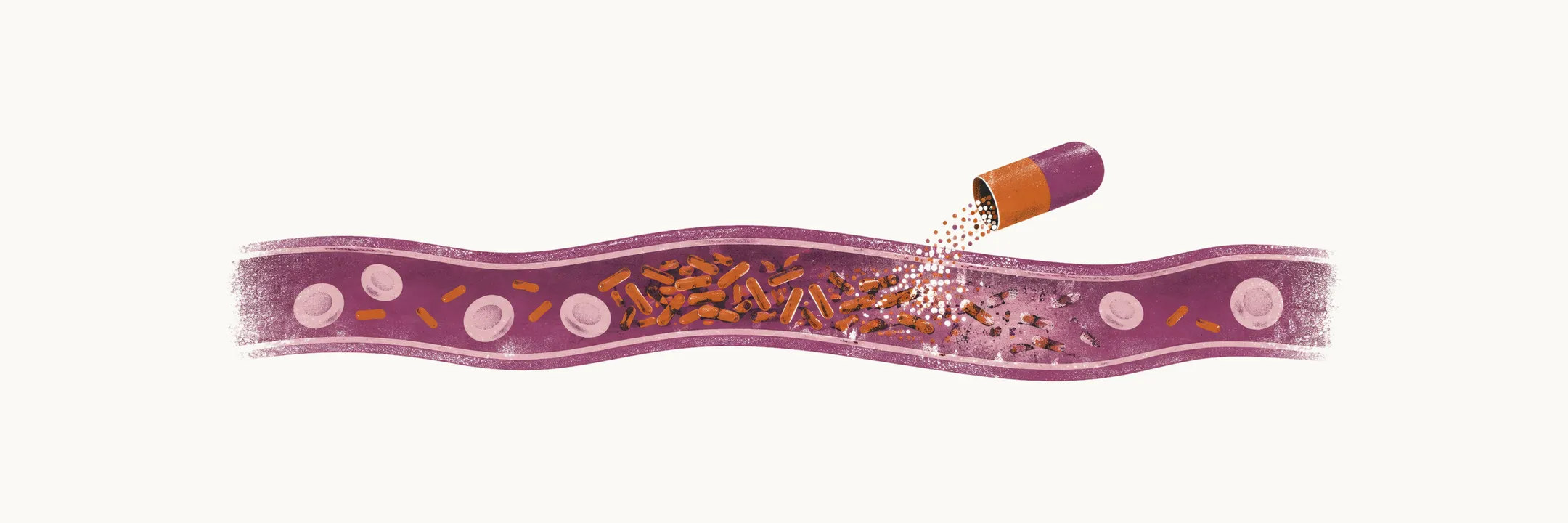
Neutropenic fever is fever in a neutropenic patient, that is, a patient with a low count of neutrophils, the white blood cells that are the first defense against bacteria and fungi. It is managed as a bacterial emergency. The fever may be the only sign of an infection that is already spreading, because the neutrophils that would normally produce pus, localizing signs and an inflammatory response are missing.
Definition and thresholds
As its name suggests, neutropenic fever has two parts:
- fever over 38.3 °C, or a fever over 38 °C sustained for at least one hour;
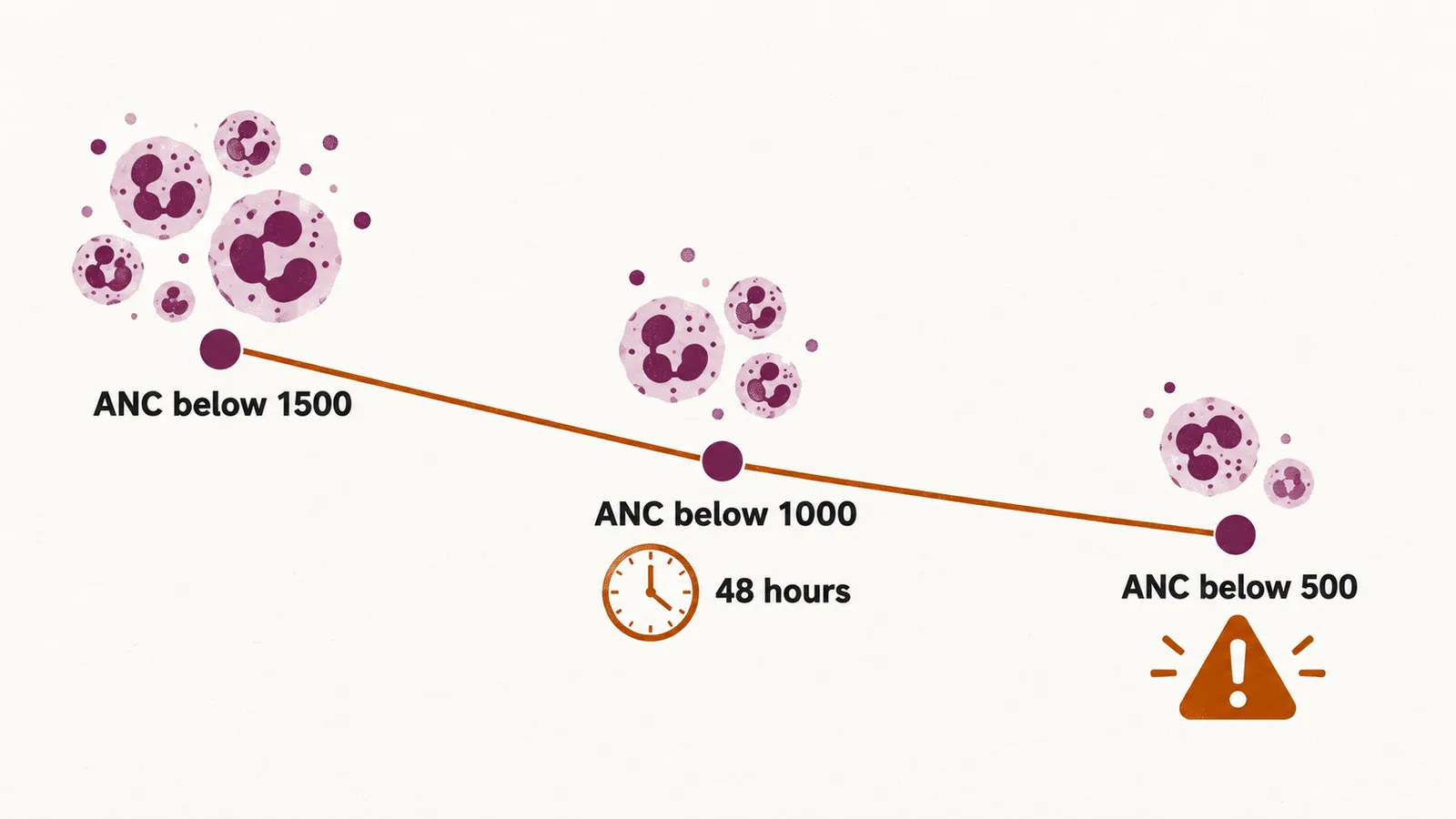
- neutropenia, with an ANC (absolute neutrophil count) below 1500 per microliter — the general definition of a low neutrophil count.
Neutropenia is graded by depth, and the risk of infection rises as the count falls. Serious infections become likely once the count drops below 500 per microliter, so the emergency is defined at an ANC below 500, or below 1000 when the count is expected to fall below 500 over the next 48 hours.
Why chemotherapy causes an abrupt neutropenia
Neutrophils are short-lived cells: their half-life in the blood is about 7–10 hours, so the bone marrow has to replace them continuously. A chemotherapy drug that stops the marrow from producing them therefore empties the blood much faster than it empties the marrow, and the count can fall within days of a cycle. Because neutrophils are the first barrier of the immune system against bacteria and fungi, the chance of bacterial and fungal infections in a neutropenic patient is much higher than the chance of viral infections.
The main bacterial infections to keep in mind are Gram-negative bacteria such as P. aeruginosa and E. coli.
Treatment
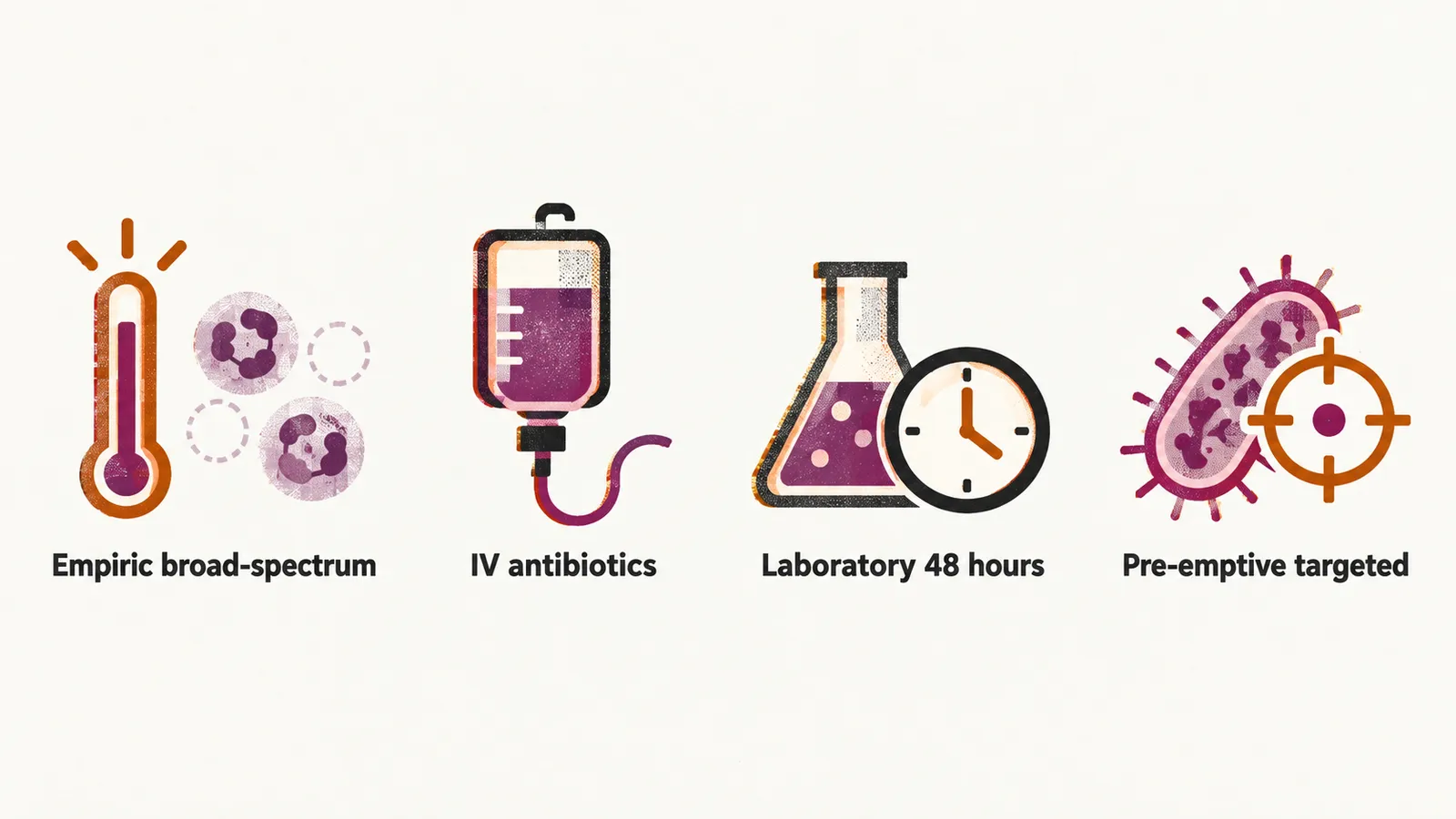
The antimicrobial treatment of neutropenic fever has some important considerations. Empiric treatment means treatment started before the causative organism is known, and pre-emptive treatment means treatment directed at an organism once it has been found.
- use broad-spectrum antimicrobial agents, because the organism is not yet known and the patient cannot localize the infection;
- use bactericidal agents, not bacteriostatic agents, because the patient’s own neutrophils cannot finish the job;
- use IV antibiotics;
- initiate the empiric treatment as soon as possible and do not wait for the laboratory testing process, which needs at least 48 hours, because the infection is severe enough to kill the patient within some hours;
- after starting empiric treatment, use the laboratory results to begin the pre-emptive treatment directed at the specific germ found in the blood culture or in the BAL (bronchoalveolar lavage) of the patient.
The core of empiric treatment is an anti-pseudomonal beta-lactam, such as piperacillin-tazobactam, cefepime or meropenem; the choice between them depends on local resistance and on the toxicity of each agent.