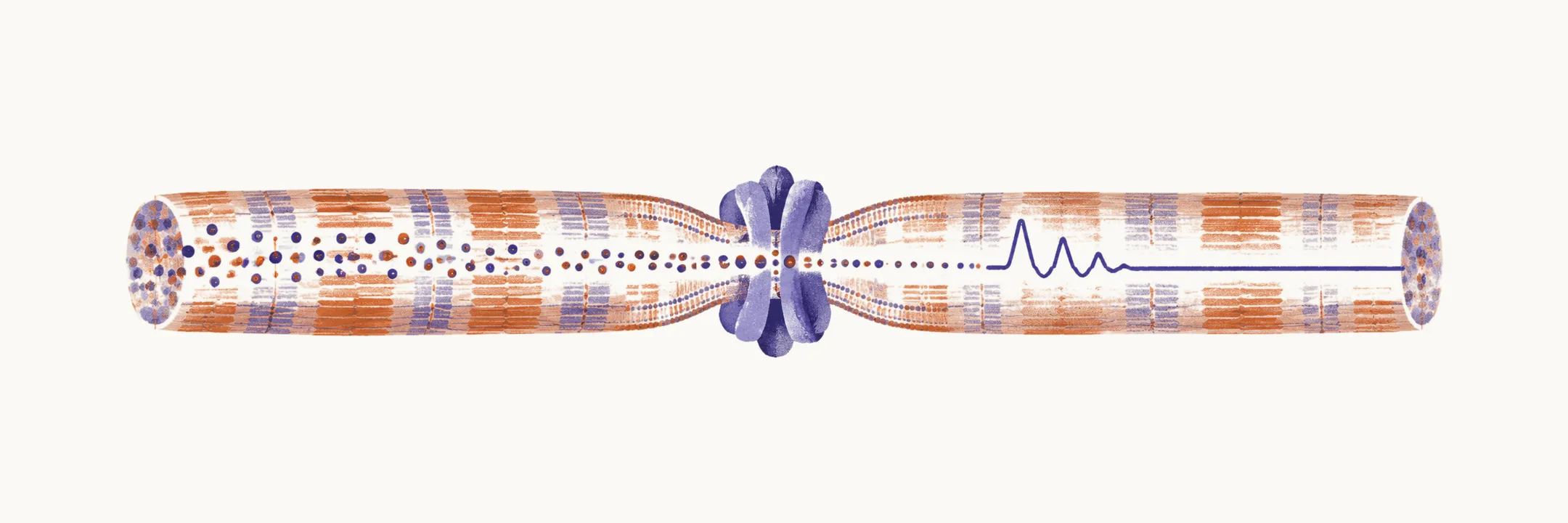
Channelopathies are disorders of voltage-gated ion channels in the muscle membrane. Mutations change how sodium, calcium, potassium, or chloride channels open and close, so the fibre cannot hold a stable resting potential. Excessive depolarisation makes the fibre inexcitable and produces episodic paralysis; unstable repolarisation produces myotonia, delayed relaxation after contraction. Because the defect is electrical rather than structural, attacks come and go and often respond to treatment, which sets these disorders apart from the steady progression of muscular dystrophy.
Hypokalaemic periodic paralysis
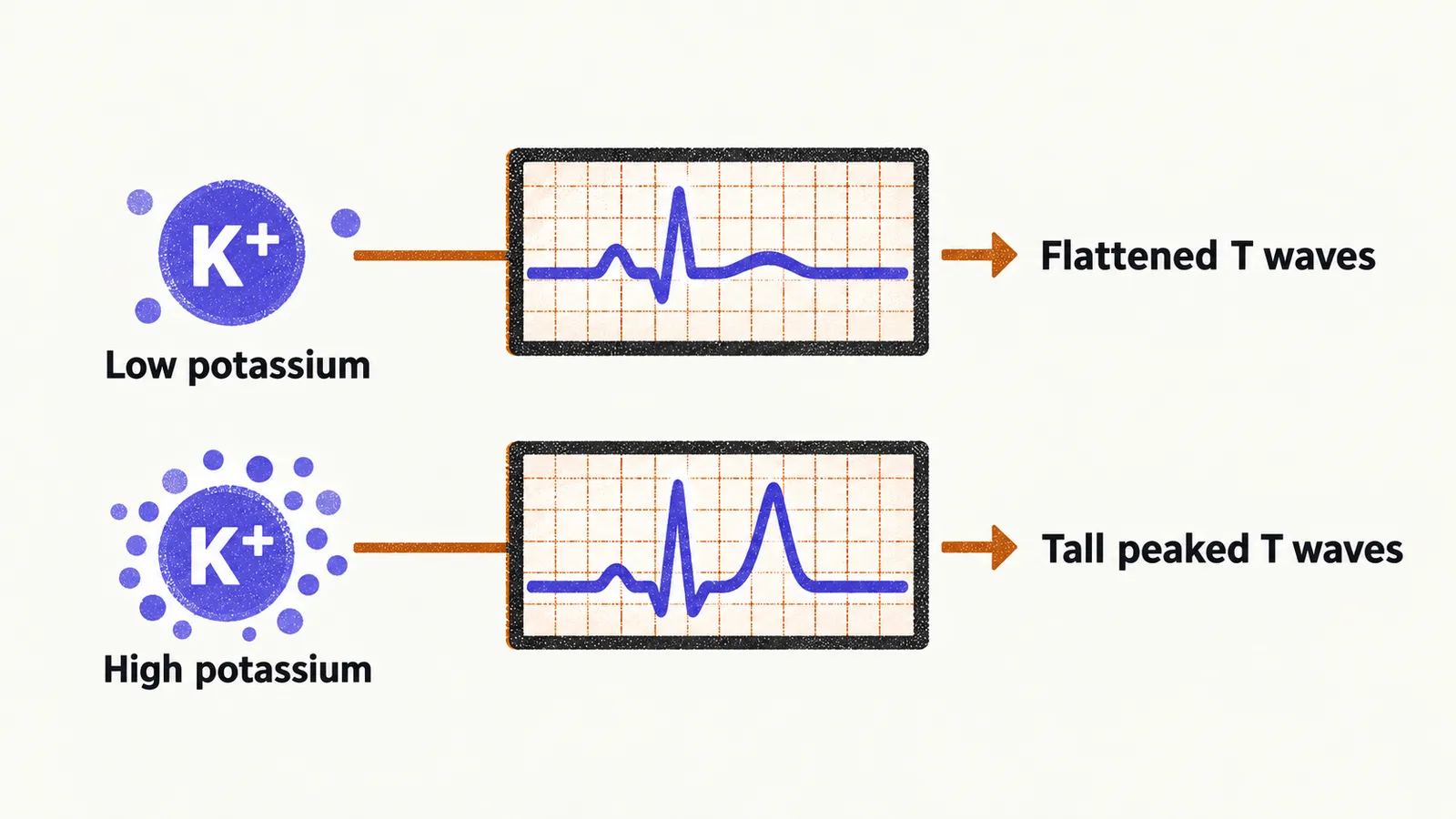
This form most often comes from calcium-channel mutations, with some cases from sodium-channel variants. A carbohydrate-rich meal releases insulin, drives potassium into cells, and the resulting low serum potassium depolarises vulnerable fibres into inexcitability, so the patient may wake unable to move. Onset is usually in early childhood, reflexes vanish during attacks in a peripheral pattern, and the electrocardiogram flattens its T waves. Potassium replacement restores strength and confirms the physiology.
Hyperkalaemic periodic paralysis
Here sodium-channel mutations make attacks follow raised rather than lowered potassium, after exercise, fasting, or potassium-rich meals. Episodes tend to be briefer, minutes to hours, and the electrocardiogram shows tall peaked T waves instead. The potassium level during the attack and the tracing together separate the two forms. Cardiac arrhythmia is uncommon in either, because the mutant channels sit in skeletal rather than cardiac muscle and the shifts are transient.
The two forms compare as follows.
| State during attack | Potassium | Electrocardiogram |
|---|---|---|
| Hypokalaemic paralysis | Low | Flattened T waves |
| Hyperkalaemic paralysis | High | Tall, peaked T waves |
Andersen-Tawil syndrome
This distinct channelopathy combines episodic paralysis with cardiac arrhythmia risk and dysmorphic features such as low-set ears, small jaw, and wide-set eyes. Potassium can swing in either direction, and both extremes can provoke ventricular arrhythmia, so regular potassium monitoring and cardiac surveillance are part of care from diagnosis.
The nondystrophic myotonias
Myotonia congenita comes from chloride-channel mutations and produces stiffness that eases with repeated contraction, the warm-up phenomenon. Patients compensate for years, so diagnosis is often delayed into adolescence. Paramyotonia congenita comes from sodium-channel mutations and behaves oppositely: stiffness worsens with repeated exercise and cold, a paradoxical myotonia. Neither carries systemic disease, which is the point of the comparison below.
| Feature | Nondystrophic myotonia | Myotonic dystrophy |
|---|---|---|
| Genetic cause | Chloride or sodium channel mutation | Repeat expansion with toxic RNA effects |
| Muscle disease | Myotonia without progressive weakness | Myotonia with progressive weakness |
| Systemic features | None | Cataracts, endocrine disturbance, cardiac arrhythmia |
| Electromyography | Waxing-waning discharges | Waxing-waning discharges |
Myotonia on electromyography plus cataracts, endocrine, or cardiac involvement therefore means myotonic dystrophy, not a simple channelopathy.
Treatment
Acetazolamide, a carbonic anhydrase inhibitor, reduces attack frequency in many patients with either hypo- or hyperkalaemic paralysis. Its effect runs through pH-dependent changes in channel gating rather than direct potassium correction, which explains why one drug helps opposite potassium shifts. Benefit is reported in roughly half of treated hypokalaemic patients, there is no standardised regimen, and some sodium-channel genotypes may worsen, so genotype informs the choice. Dosing is individualised, typically in the low-to-moderate daily range in divided doses. Potassium management and trigger avoidance accompany drug therapy, and Andersen-Tawil disease adds cardiac follow-up.