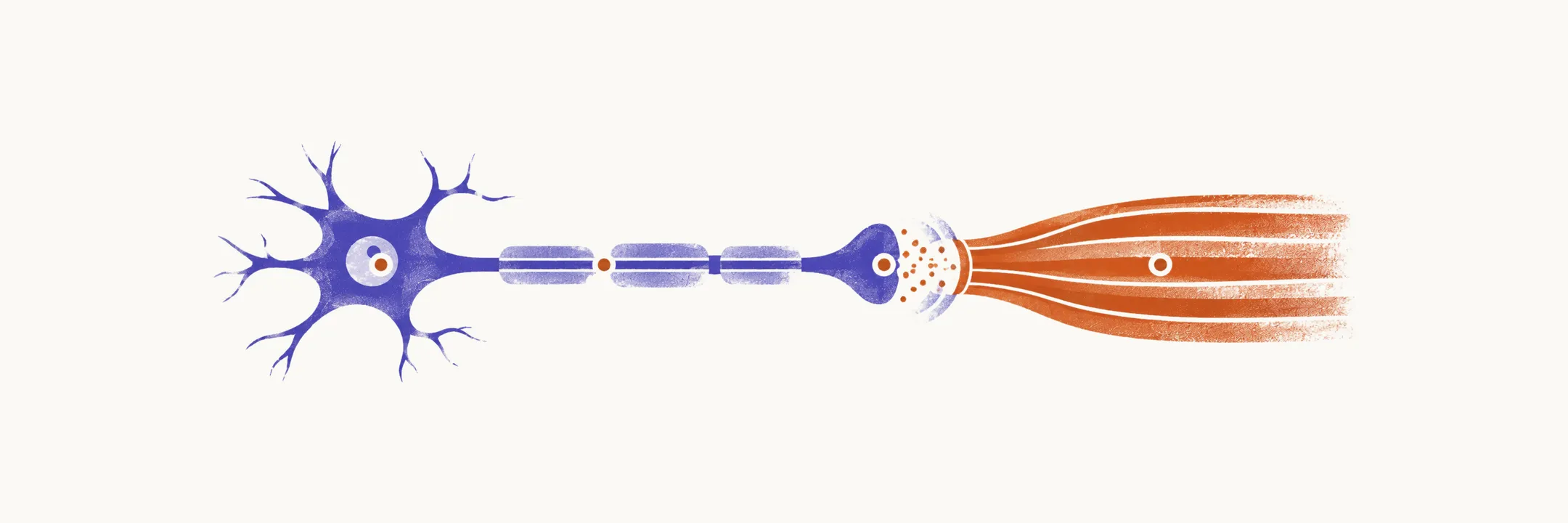
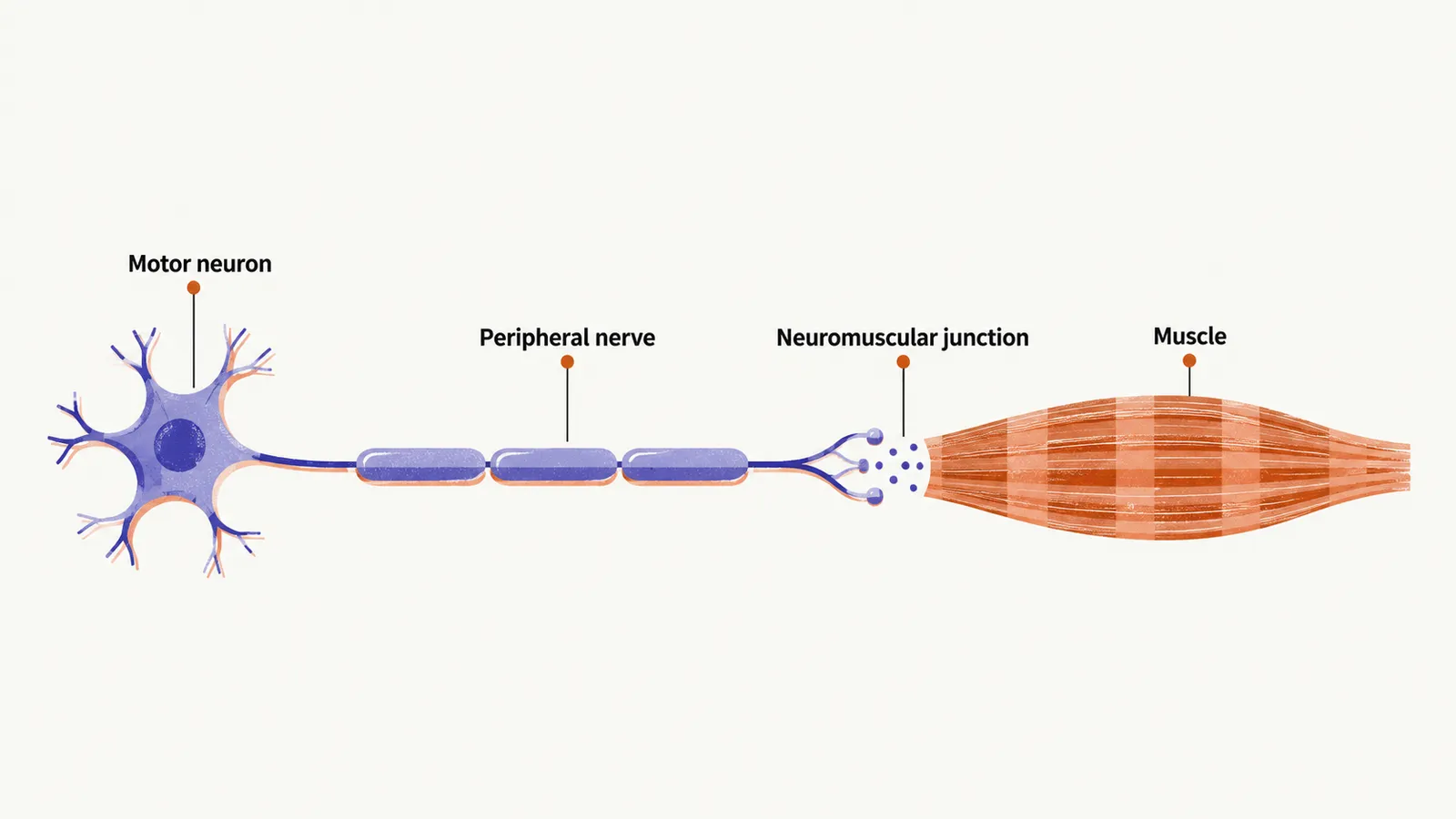
A myopathy typically produces proximal (near the trunk), symmetric weakness with preserved sensation and normal or reduced reflexes. Getting up from a chair, climbing stairs, or lifting the arms overhead becomes difficult while hand dexterity and feeling remain intact early on. Weakness that looks muscular can also come from the neuromuscular junction (where a nerve signal is passed to the muscle), from motor neuron loss, or from an acute peripheral neuropathy, so the pattern of weakness, the behaviour of the reflexes, and the sensory examination are what place the problem in the muscle rather than beside it.
Guillain-Barre syndrome: the emergency to exclude first
Guillain-Barre syndrome can present with rapidly ascending weakness, sometimes with tingling or pain, and may reach cranial and respiratory muscles. Rapid progression with areflexia (absent reflexes) points toward the peripheral nerve rather than the muscle and changes management entirely, so it belongs at the front of the assessment.
Myasthenia gravis
Myasthenia gravis sits at the junction rather than in the fibre. Its signature is fatigable weakness: muscles weaken with repetition and recover with rest, often with ocular or bulbar symptoms (drooping eyelids, double vision, speech or swallowing that fades through a meal) while reflexes and sensation stay normal. Recovery after rest is the feature that points away from the muscle itself.
Lambert-Eaton myasthenic syndrome
Lambert-Eaton myasthenic syndrome is the presynaptic counterpart. Strength may briefly improve with repeated effort rather than fade, autonomic symptoms such as dry mouth can accompany the weakness, and the electrical response grows with rapid stimulation instead of shrinking. An underlying small cell lung cancer is found in a substantial proportion of cases, so the diagnosis prompts a search for malignancy.
Motor neuron disease
Motor neuron disease weakens through a different route again. Amyotrophic lateral sclerosis combines upper and lower motor neuron signs in the same body segment: a wasted, fasciculating (visibly twitching) limb with brisk reflexes, for example. Myopathy does not produce that combination, so reflex behaviour helps separate the two at the bedside.