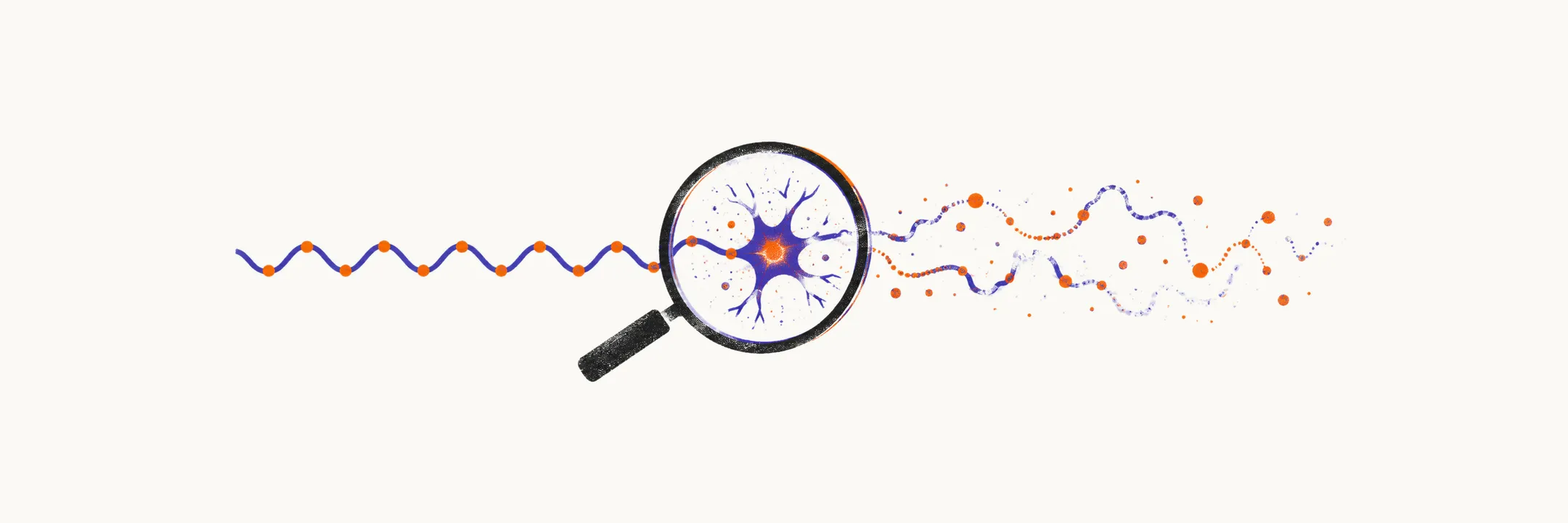
A seizure is excessive synchronous neuronal activity. A non-epileptic event is anything that looks like one without that mechanism. Causes include cerebral hypoperfusion in syncope, functional mechanisms in psychogenic non-epileptic seizures (PNES), metabolic disturbance, movement disorders, sleep events, or panic physiology. The body may shake, fall, stare, or go unresponsive in all of them. The label never comes from the drama of the event but from its pattern.
Patterns favouring epileptic seizure
Epileptic seizures are stereotyped: each attack resembles the last. An aura such as epigastric rising, an odd smell, deja vu, fear, or a sensory march opens many focal seizures. Automatisms such as chewing, swallowing, lip-smacking, or picking follow. A tonic-clonic sequence with postictal sleep, confusion, or amnesia closes the picture. An electroencephalogram (EEG, the scalp recording of brain electrical activity) showing focal spikes or matching epileptiform abnormalities corroborates the story but never replaces it.
Patterns favouring mimics
Syncope announces itself with presyncopal symptoms: dizziness, pallor, sweating, nausea, heat, pain, or a standing trigger. Loss of consciousness is brief with fast recovery once perfusion returns. The fall starts hypotonic rather than tonic-clonic. Older patients with a murmur, arrhythmia, or coronary disease without prodrome raise the cardiogenic variant.
PNES runs the opposite course to epilepsy. Events are long and fluctuating with semiology, the observable pattern of the event, that changes between attacks. Features include forcefully closed eyes or resistance to passive eye opening, asynchronous side-to-side movements rather than stereotyped rhythm, and sometimes partial responsiveness through a prolonged episode. Video-EEG, which records the event on video alongside the EEG, capturing a typical event without ictal epileptiform activity settles PNES.
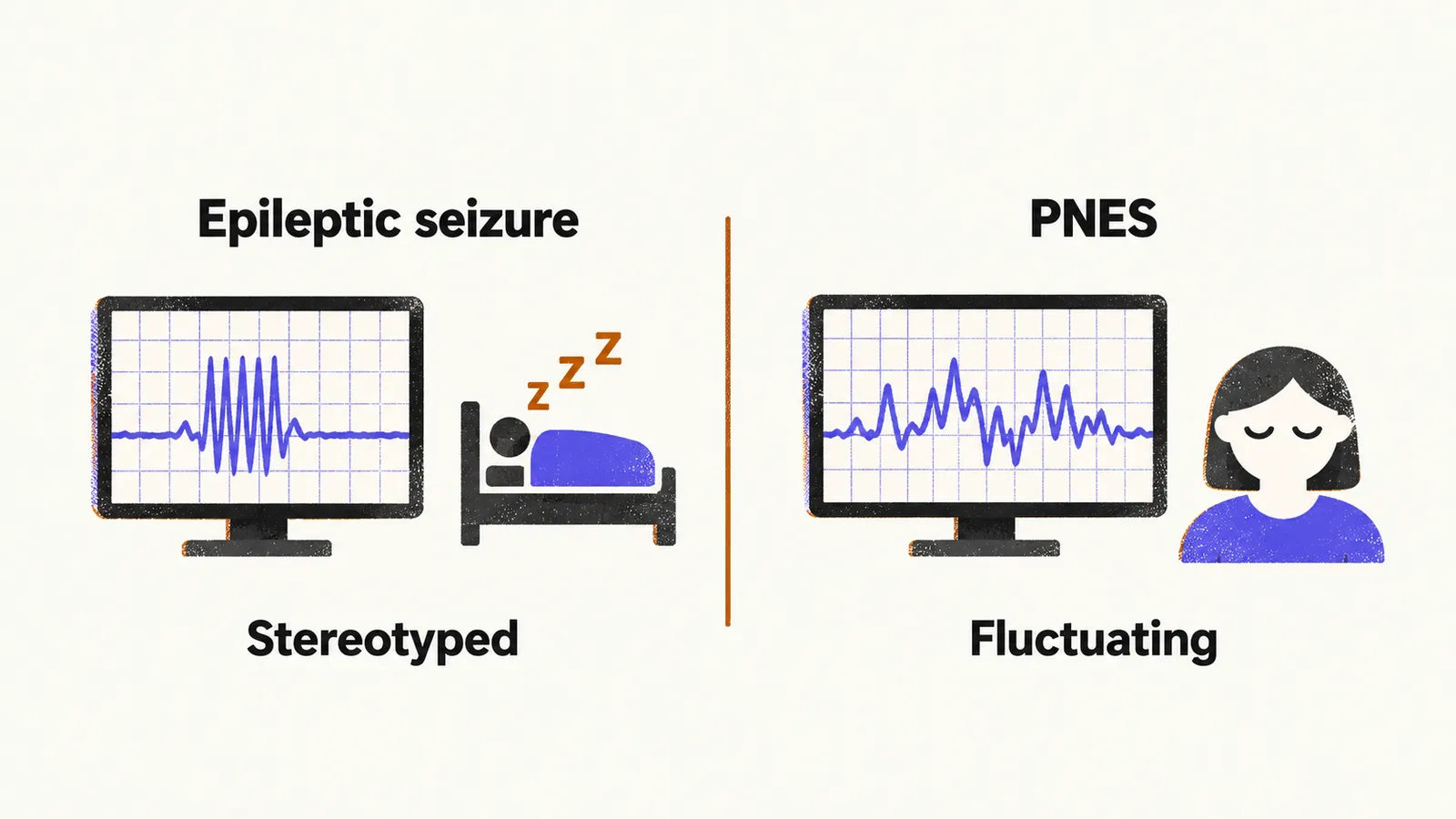
Metabolic, sleep, and movement mimics each carry their own context: a toxic or deranged milieu, a sleep-bound timing, or a movement pattern without awareness change.
What not to over-trust
Tongue biting, urinary incontinence, and jerking are not passwords for epilepsy. Prolonged syncope can produce all three, including brief convulsions, when hypoperfusion lasts long enough. Judge the sequence and the recovery, not the isolated sign.
Why the distinction matters
Mislabeling a mimic as epilepsy exposes the patient to unnecessary antiseizure drugs and delays the real treatment, whether cardiological, psychiatric, or metabolic. Mislabeling epilepsy as a mimic leaves the patient exposed to recurrence, injury, driving risk, and status epilepticus. The bedside method is to ask for the movie rather than the label. What happened before, during, and after, every time.