
Amenorrhea is treated according to its cause, so management begins only once the cause has been located. Most cases fall into one of three groups: an anatomical problem with the uterus or outflow tract, ovarian failure, or chronic anovulation, in which the ovary is intact but ovulation is blocked by an endocrine disturbance and which includes , polycystic ovary syndrome (PCOS) and hyperprolactinemia (an elevated prolactin level).
Anatomical causes
When the uterus or the genital outflow tract is the problem, treatment is often structural, and it depends on which structure is affected. Pregnancy and lactation are normal causes and need no treatment.
In Müllerian agenesis or dysgenesis the uterus is absent or underdeveloped, because the Müllerian ducts, the embryonic structures that form the uterus, cervix and upper vagina, have not formed normally. The vagina can be created or widened with progressive dilators or surgery; menstruation does not occur, and pregnancy requires a gestational carrier, a woman other than the patient who carries the pregnancy.
(Asherman syndrome) are scar bands inside the uterine cavity that prevent the endometrium from responding. They are divided hysteroscopically, through a hysteroscope passed into the uterus, and estrogen is sometimes given to help the endometrium regrow. Outflow obstruction, such as an imperforate hymen, a transverse vaginal septum or cervical stenosis, blocks the menstrual blood and is relieved surgically.
Ovarian failure and primary ovarian insufficiency
In ovarian failure the ovary can no longer supply estrogen, so management replaces what is missing, addresses fertility and looks for associated disease. These three tasks are taken in that order.
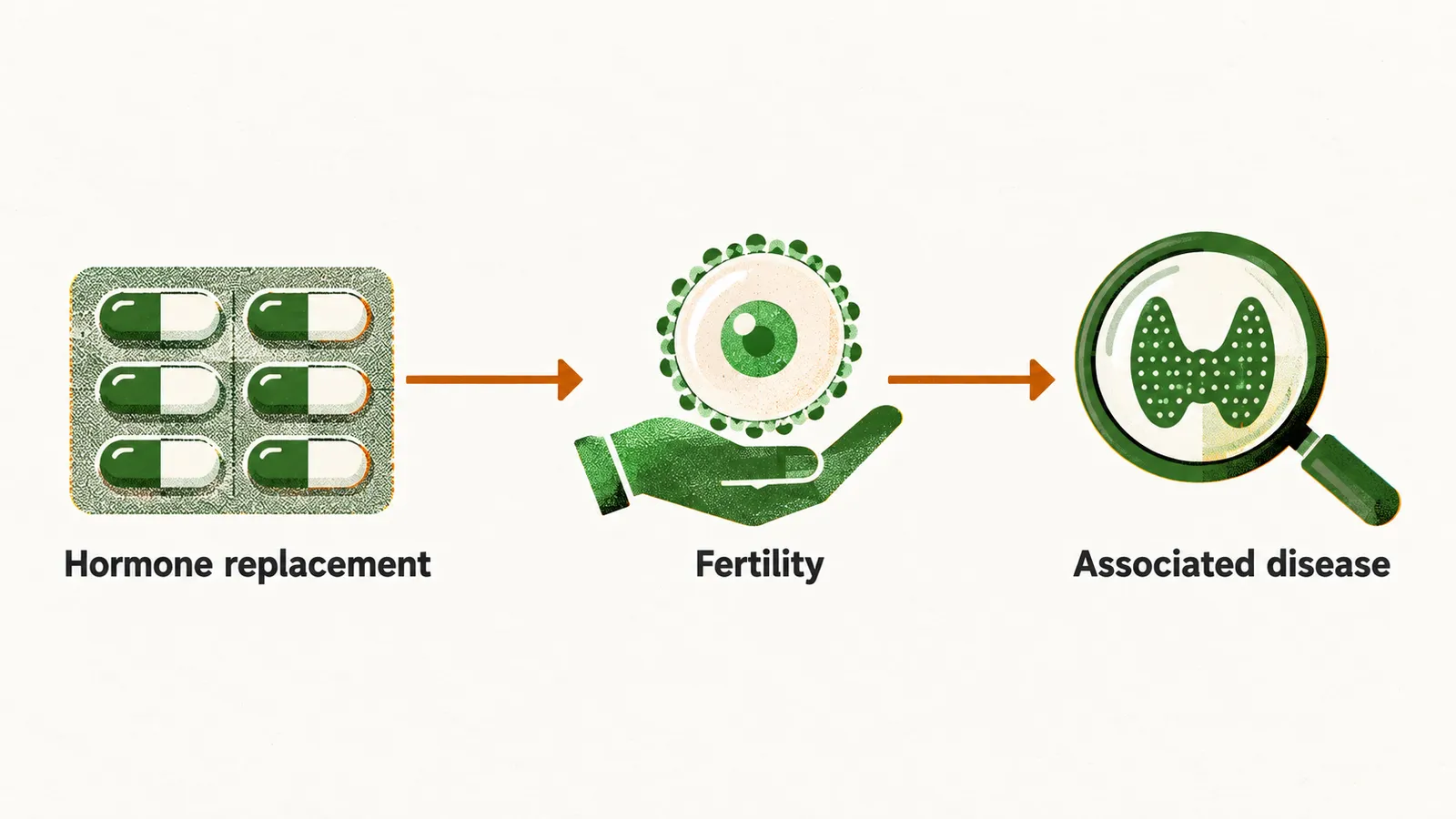
Hormone replacement with estrogen and a progestogen supplies the missing estrogen and should continue until around the average age of natural menopause, age 50–51 years, because losing estrogen early raises the long-term risk of osteoporosis and cardiovascular disease.
Fertility is a separate question from replacement. Oocyte donation is the only proven treatment; a small proportion of women with (5–10%) conceive spontaneously, and when ovarian failure is anticipated — for example before gonadotoxic treatment — oocyte or ovarian tissue cryopreservation can be offered.
Finally, because ovarian failure can accompany other conditions and estrogen loss affects the skeleton, associated autoimmune disease, such as thyroid or adrenal disease, is looked for, and bone density is monitored.
Chronic anovulation
Here the cause is an endocrine disturbance rather than a damaged gonad, and it is usually reversible, so treatment is aimed at the disturbance itself. Each cause has its own treatment, taken in turn below: functional hypothalamic amenorrhea, PCOS, hyperprolactinemia and thyroid dysfunction.
Functional hypothalamic amenorrhea
Functional hypothalamic amenorrhea results from an energy deficit: the hypothalamus slows its gonadotropin-releasing hormone (GnRH) output in response to weight loss, stress or excessive exercise. Treatment therefore corrects the energy imbalance — more calories, less exercise and often weight gain — together with psychological support such as cognitive behavioural therapy.
Combined oral contraceptives are not recommended for the sole purpose of regaining menses or protecting bone in this condition, but estrogen replacement may be considered when bone density is low after 6 to 12 months of these measures.
PCOS
PCOS is managed first with lifestyle change and weight management; combined oral contraceptives regulate cycles and protect the endometrium; metformin helps when insulin resistance is present; and when pregnancy is desired, ovulation is induced, with letrozole used first.
Hyperprolactinemia
Hyperprolactinemia is treated with a dopamine agonist such as cabergoline, a drug that acts on dopamine receptors and lowers prolactin secretion. A persistently elevated prolactin level should be investigated with pituitary MRI, because a pituitary adenoma is found in 50–60% of persistent cases.
Thyroid dysfunction
Thyroid dysfunction is treated directly; restoring a euthyroid state, meaning normal thyroid function, usually restores spontaneous menses.
Protecting the endometrium
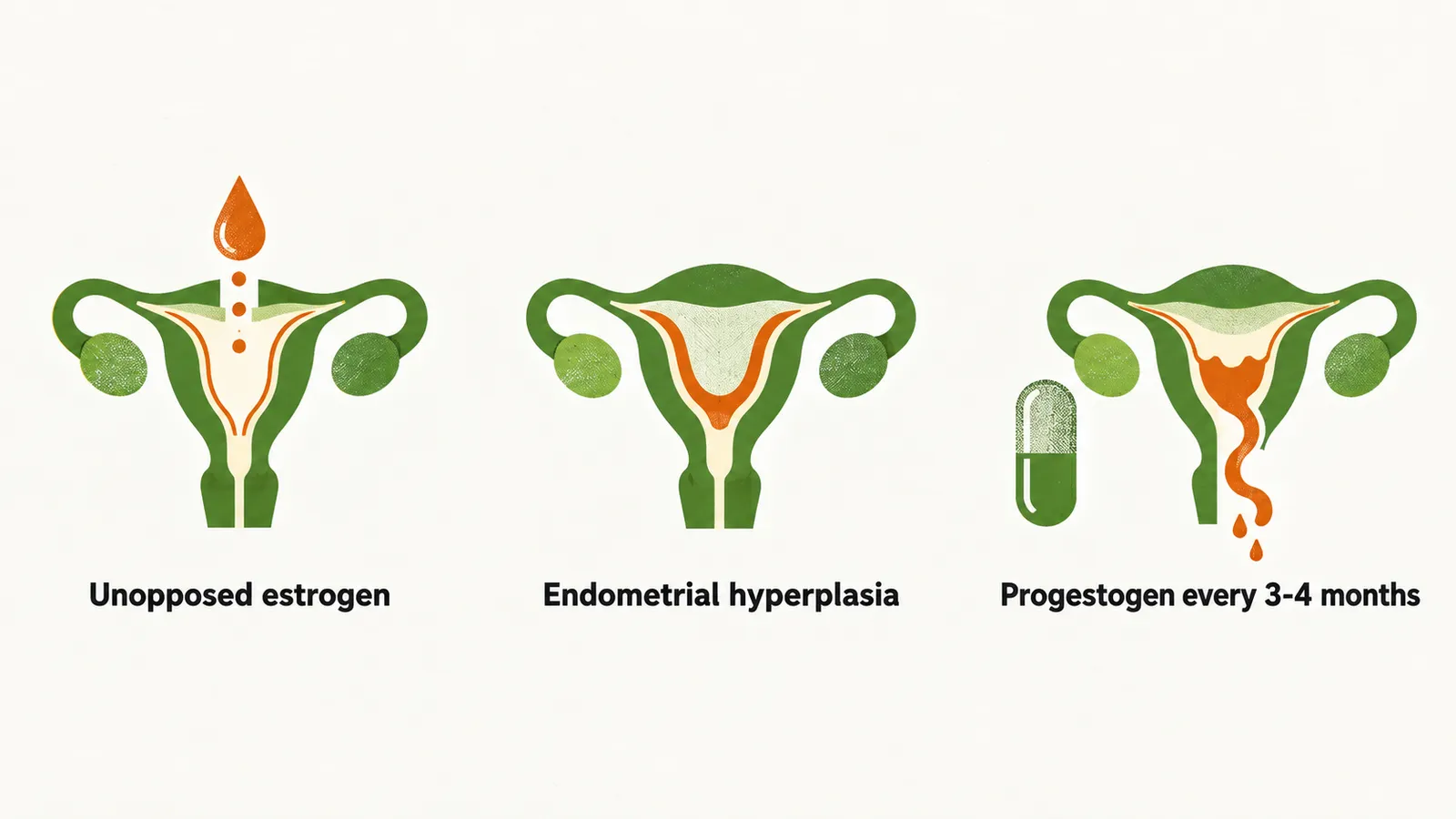
When amenorrhea is caused by chronic anovulation in a woman who still produces estrogen, as in PCOS, the endometrium is exposed to estrogen without the progesterone that a normal cycle provides. This unopposed estrogen raises the risk of endometrial hyperplasia and cancer, so a withdrawal bleed is induced with a progestogen every 3 to 4 months, or a combined oral contraceptive is used.