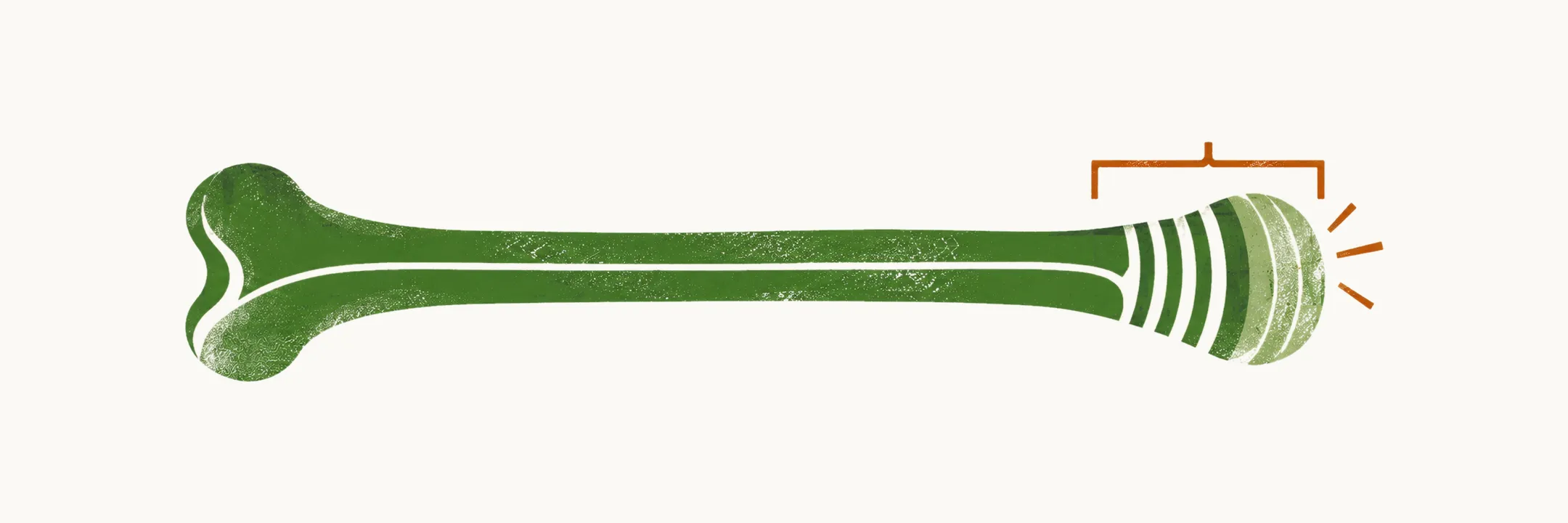
The first phase of puberty is somatic growth, the increase in body size. Somatic growth is under the influence of genetic, nutritional, environmental and hormonal factors, and the genetic and hormonal determinants have a particular physiological importance: the genes set how much growth is possible at all, and the hormones decide when and how fast it happens.
Genetic determinants of stature
Adult height is determined largely by the genes that act on the growth plate, the layer of cartilage at the ends of the long bones where new bone is laid down. More than 50 loci (positions on the chromosomes where such genes lie) have been linked to the determination of height, and the sex chromosomes are especially informative because they carry the same height-determining genes in different numbers of copies.
People with different numbers of sex chromosomes show a consistent ordering of stature, from tallest to shortest: XYY > XY > XXX > XX > X. Every extra sex chromosome adds height, with one striking exception — XY is taller than XXX even though it carries one copy of the gene fewer.
Both observations follow from a single gene, SHOX (short stature homeobox), which lies in the pseudoautosomal region (PAR), a short stretch present on both the X and the Y chromosome. SHOX encodes a transcription factor, a protein that switches other genes on or off, and it is expressed in the chondrocytes of the growth plate, the cartilage cells that produce new bone; the dose of working SHOX protein therefore sets how much long-bone growth the plate can sustain. Two features of the PAR explain the ranking:
- SHOX escapes X-chromosome inactivation. In females one of the two X chromosomes is largely silenced in each cell, but the pseudoautosomal region escapes that silencing, so SHOX is expressed from both X chromosomes. Each extra sex chromosome adds SHOX dose, and with it height.
- The SHOX copy on the Y chromosome is expressed more potently than the copy on the X. This explains why XY, with one copy of the gene fewer than XXX, is taller than XXX, which carries three X copies but no Y.
A lower dose of working SHOX shortens the long bones. Loss of a single SHOX copy accounts for most of the short stature of Turner syndrome, and it produces disproportionate short stature of its own when it occurs without other Turner features.
Hormonal determinants
The hormones that matter in puberty and in somatic growth are growth hormone, thyroid hormones and sex steroids. Growth hormone and thyroid hormones support growth throughout childhood; the pubertal growth spurt is driven mainly by sex steroids, which act on the growth plate in two opposite directions at once. They initiate the pubertal growth spurt, and they also advance the maturation of the growth plate toward closure. Because both effects travel together, the timing and the amount of sex-steroid exposure decide how much linear growth is banked before the epiphyses, the growing ends of the long bones, fuse.
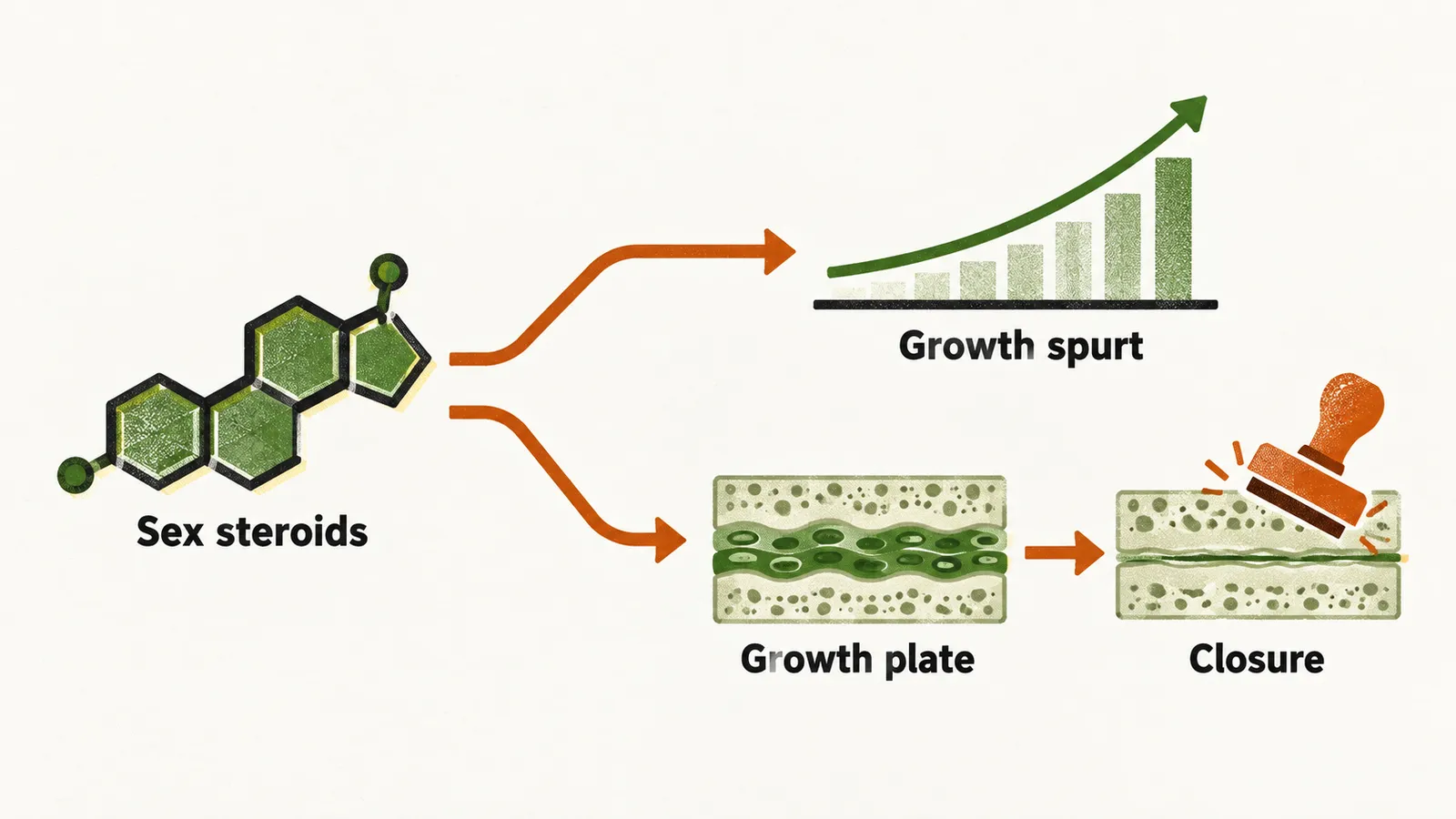
The consequences are clearest when sex-steroid exposure is itself abnormal:
- A premature increase in sex steroids, as in congenital adrenal hyperplasia (CAH), where the adrenal glands produce excess androgens, brings both effects early: growth accelerates sooner, but the growth plates also fuse sooner, so the child is “taller than other children, but shorter than other adults”.
- A congenital lack of sex steroids leaves the growth plates open, so linear growth of the long bones continues and the arms and legs end up disproportionately long compared with the trunk — the eunuchoid stature.
It was once believed that stature growth and bone development during puberty depend on estrogen in females and on testosterone in males. This has been shown not to be true: males who have a mutation of the estrogen receptor or of the aromatase enzyme, the enzyme that converts androgens into estrogen, do not have normal bone growth. Estrogen is the main determinant of both the pubertal growth spurt and the closure of the growth plates in both sexes, and most of testosterone’s effect on the skeleton is exerted after its conversion to estrogen.
The growth spurt is only the first event of puberty; the appearance of breast development, pubic hair and menstruation, and the order in which they follow, are a separate question.