
Cushing’s syndrome is chronic glucocorticoid excess, and treatment follows its cause: an ACTH-secreting pituitary or ectopic tumour, or primary adrenal disease. The goal of treatment is to normalise cortisol levels, or to block its action at the receptor, so that the signs, symptoms, and complications of hypercortisolism resolve; treatment is not started unless the diagnosis is established. Because the consequences of cortisol excess do not disappear at once, cortisol-dependent problems such as diabetes, hypertension, hypokalaemia, dyslipidaemia, osteoporosis, infection, and psychiatric illness are treated directly, alongside the treatment of the cause.
Urgent treatment and complications
Severe hypercortisolism is associated with infection and thrombosis and can be life-threatening. When complications such as infection, pulmonary thromboembolism, cardiovascular events, or acute psychosis are present, the hypercortisolism is treated urgently, together with the complication itself. Because of the raised risk of infection and venous thrombosis, patients receive perioperative prophylaxis against venous thromboembolism and age-appropriate vaccination, particularly against influenza, herpes zoster, and pneumococcal disease.
Removing the source
Surgical resection of the causal lesion is the first-line treatment for every form.
- In Cushing’s disease, transsphenoidal selective adenomectomy (removal of the adenoma through the nose and sphenoid sinus) by an experienced pituitary surgeon is the optimal treatment.
- In ectopic ACTH secretion, the tumour is localised and resected with node dissection as appropriate; when there is no overt metastatic disease, resection cures about three-quarters of patients.
- In benign unilateral adrenal disease, unilateral adrenalectomy is curative in nearly all patients.
- In adrenocortical carcinoma, complete resection is attempted, with mitotane as adjuvant therapy and medical control of the hypercortisolism.
- In bilateral adrenal disease, the adrenal glands are resected; medical therapy that blocks aberrant hormone receptors is suggested for bilateral macronodular hyperplasia.
After transsphenoidal surgery, serum sodium and pituitary function are monitored, because hypopituitarism and disorders of water balance can follow. After successful resection of a pituitary or adrenal source, most patients are hypocortisolaemic (have low cortisol) for a time and need glucocorticoid replacement until the hypothalamic-pituitary-adrenal axis, the hormonal chain that controls cortisol, recovers.
Second-line and medical treatment
When the lesion cannot be resected, or surgery does not cure the disease, several options are chosen together with the patient. Drug treatment acts at three levels: the enzymes that make cortisol, the pituitary source of ACTH, and the cortisol receptor.
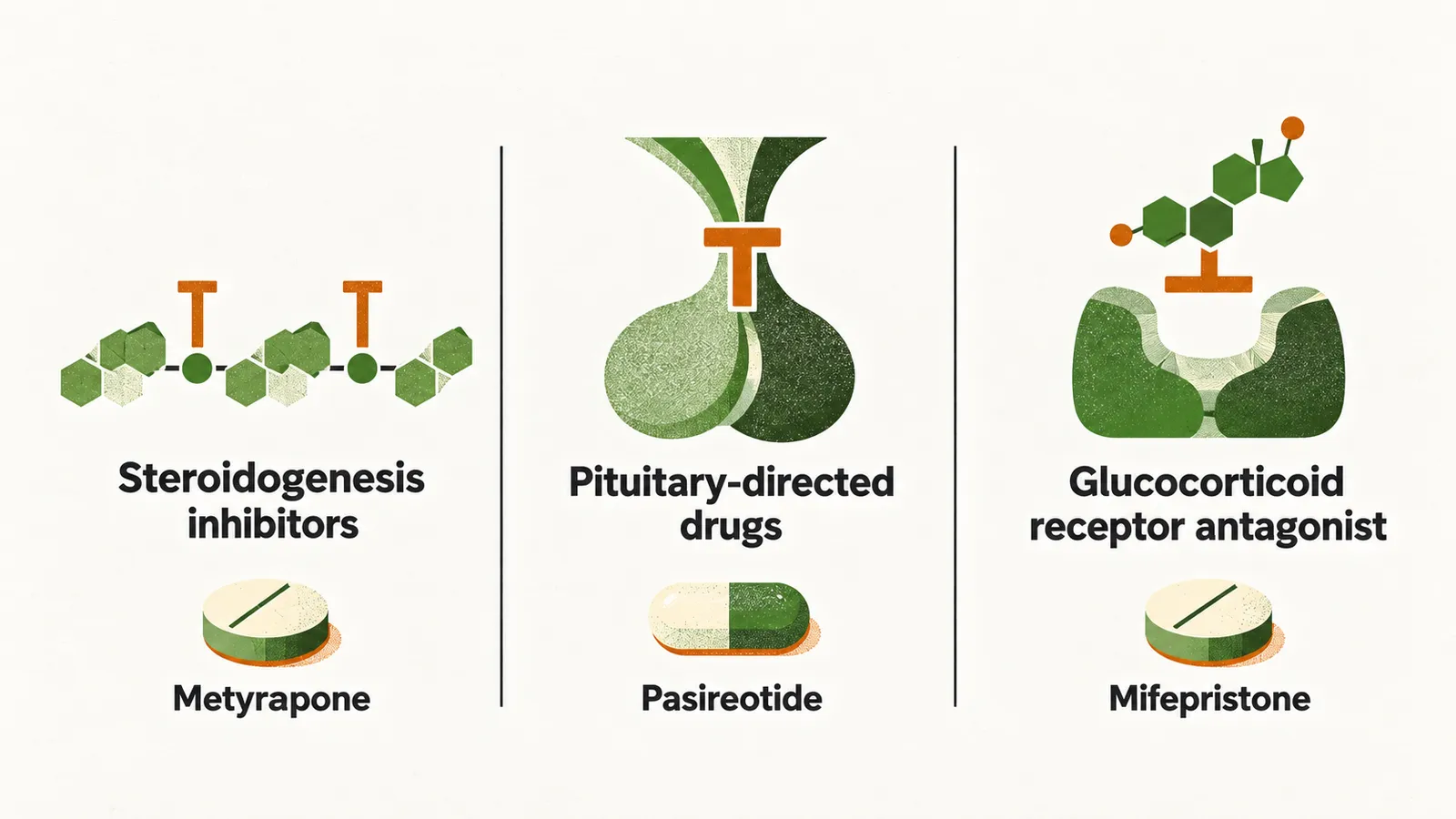
Steroidogenesis inhibitors block the enzymes that make cortisol: metyrapone and osilodrostat act on 11β-hydroxylase, ketoconazole on several steps including side-chain cleavage and 17-hydroxylase, and mitotane on 11β-hydroxylase and cholesterol side-chain cleavage with an additional cytotoxic effect. As single agents they normalise cortisol in about half of patients, and combinations are used in severe hypercortisolism.
Pituitary-directed drugs reduce ACTH production: the somatostatin analogue pasireotide and the dopamine agonist cabergoline each normalise urinary free cortisol in about 40% of patients with Cushing’s disease, with better results in milder disease.
The glucocorticoid receptor antagonist mifepristone blocks cortisol action at the receptor and is used particularly when diabetes or glucose intolerance is present.
Two non-drug approaches remain. Radiotherapy or radiosurgery is used for Cushing’s disease after failed or recurrent transsphenoidal surgery, with medical therapy continued while it takes effect. Bilateral adrenalectomy is used for occult or metastatic ectopic ACTH secretion and as a life-preserving measure in very severe ACTH-dependent disease that medical therapy cannot control promptly; because the pituitary tumour is left in place, it must be monitored.
Prognosis
Before effective treatment was available, patients with Cushing’s syndrome had a median survival of about 4.6 years. Even now, people with active disease have a standardised mortality rate 1.7 to 4.8 times that of the general population, and those with persistent or recurrent hypercortisolism remain at high risk; cardiovascular disease, venous thrombosis, and infections are the leading causes of the excess deaths. Successful treatment improves survival, but some complications — including cardiovascular risk, bone fragility, muscle weakness, and cognitive and mood changes — can persist after cortisol normalises, which is why they are followed and treated lifelong.