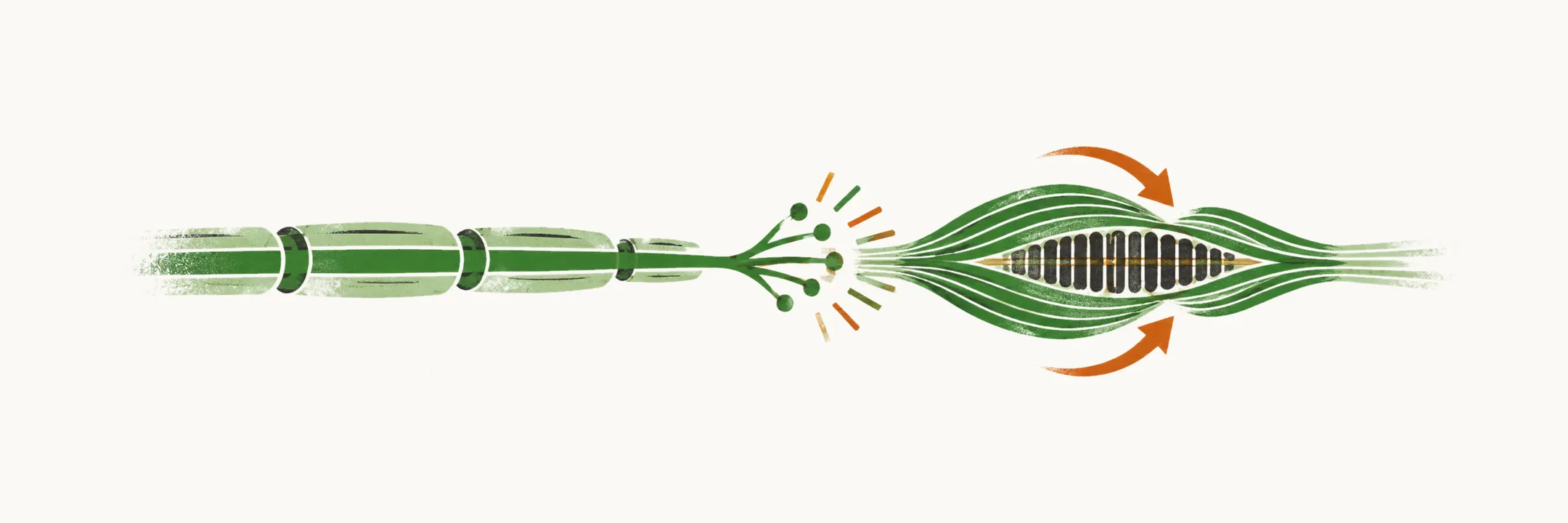
Hypocalcemia makes nerve and muscle more excitable, so its symptoms are those of neuromuscular irritability (tetany, meaning sustained involuntary muscle contraction, is the most familiar), together with effects on the heart and, when the calcium stays low for a long time, on the skin, the brain and smooth muscle. What the patient feels depends on both the absolute calcium level and the rate at which it has fallen: the same value produces little in a slow decline and severe symptoms in a rapid one.
Acute hypocalcemia
The main hallmark of acute hypocalcemia is neuromuscular irritability, which can range from local tingling of the fingertips and the peri-oral region to paresthesias of the extremities. Apart from neuromuscular irritability, the other common manifestation of acute hypocalcemia is cardiac involvement.
Spasm attacks can happen in acute hypocalcemia, and some of these, laryngospasm and bronchospasm, are a medical emergency.
Chronic hypocalcemia
Acute hypocalcemia declares itself quickly, through neuromuscular irritability and cardiac involvement. In chronic hypocalcemia the picture is shaped instead by calcium deposited in tissue over time. The neurological signs and symptoms include calcification of the basal ganglia and other areas of the brain. The ectodermal changes are dry skin, coarse hair, brittle nails, alopecia (mostly in surgically induced hypoparathyroidism and the autoimmune forms), atopic eczema and psoriasis, among others. Smooth muscle is involved through the irritability of the autonomic ganglia that hypocalcemia causes, which produces dysphagia, abdominal pain, biliary colic and wheezing.
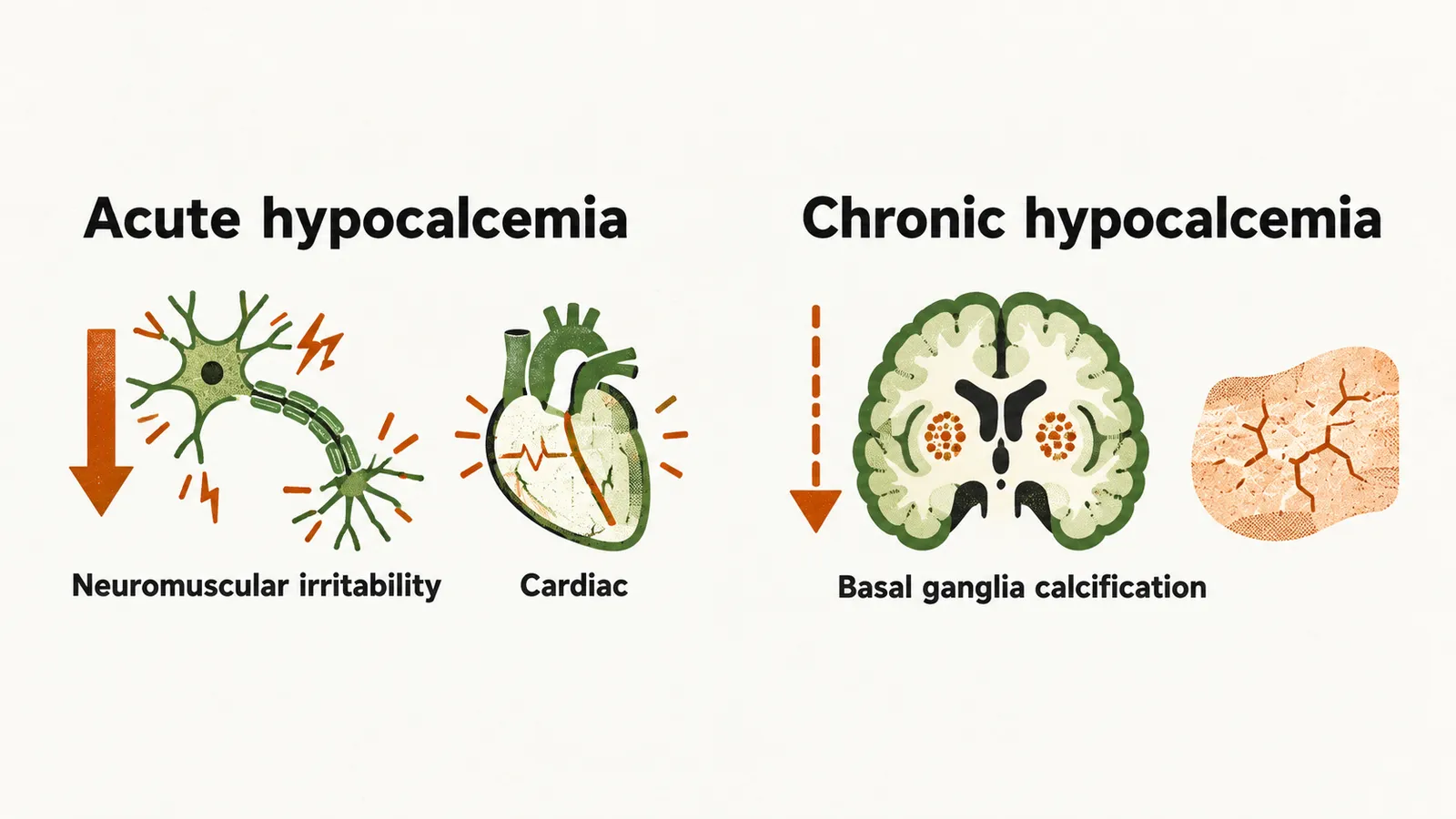
The features by system
Acute and chronic hypocalcemia together produce a wide range of features, which are easier to find when grouped by system:
- Neuromuscular irritability: Chvostek’s sign, Trousseau’s sign, paresthesias, tetany, seizures (focal, absence, generalised), muscle cramps, muscle weakness, laryngospasm, bronchospasm.
- Cardiac: prolonged QT interval on the electrocardiogram (ECG), congestive heart failure, cardiomyopathy.
- Neurological signs and symptoms: extrapyramidal signs from calcification of the basal ganglia, calcification of the cerebral cortex or cerebellum, personality disturbance, irritability, impaired intellectual ability, nonspecific EEG changes, increased intracranial pressure, parkinsonism, choreoathetosis, dystonic spasms.
- Ectodermal changes: dry skin, coarse hair, brittle nails, alopecia, enamel hypoplasia, shortened premolar roots, thickened lamina dura, delayed tooth eruption, increased dental caries, atopic eczema, exfoliative dermatitis, psoriasis, impetigo herpetiformis.
- Smooth muscle involvement: dysphagia, abdominal pain, biliary colic, dyspnea, wheezing.
- Mental status: confusion, disorientation, psychosis, fatigue, anxiety, poor memory, reduced concentration.
- Ophthalmologic manifestations: subcapsular cataracts, papilledema.
Bedside signs of neuromuscular irritability
Two bedside tests bring out the increased excitability of hypocalcemia.
Chvostek’s sign uses the hyper-responsiveness of muscle to a trigger: the facial nerve is tapped just anterior to the ear, at the angle of the jaw, and the sign is positive if the patient’s ipsilateral facial muscles twitch or contract on tapping.
Trousseau’s sign uses the same increase in the excitability of peripheral nerves: an inflation cuff is placed on the arm and kept inflated at least 20 mmHg above the patient’s systolic blood pressure for at least 3 minutes; involuntary contraction of the metacarpophalangeal, thumb and wrist muscles is a positive result, called the carpal spasm. Trousseau’s sign has a higher sensitivity and specificity than Chvostek’s sign for the diagnosis of hypocalcemia.