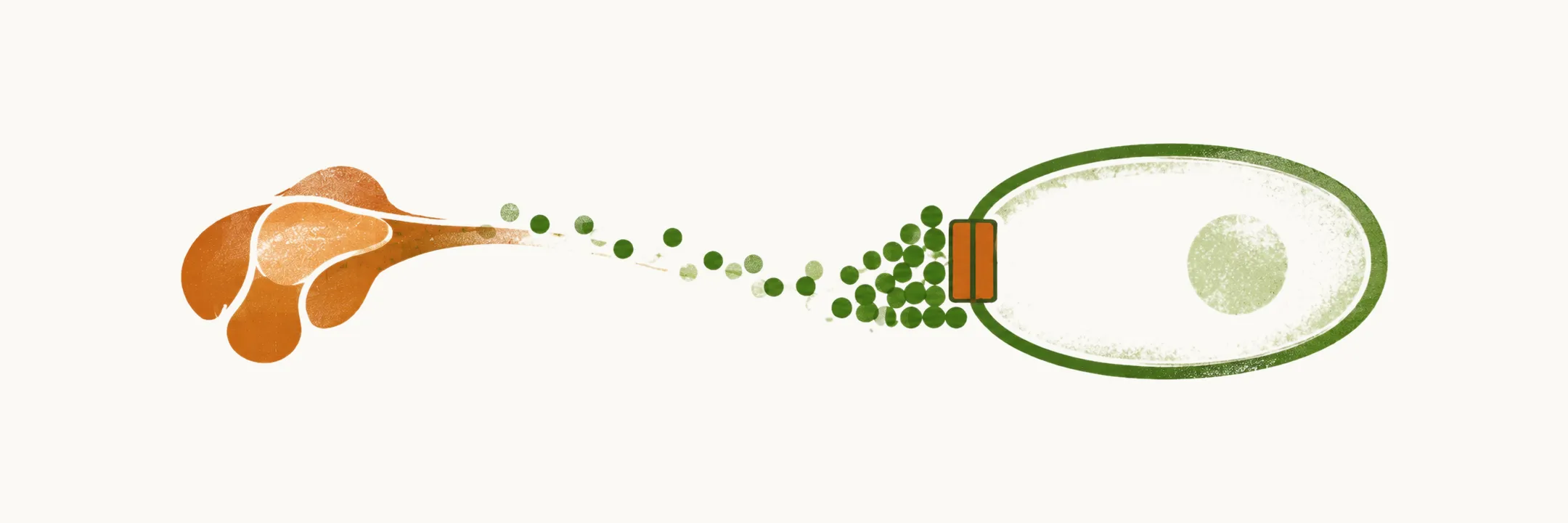
Pseudohypoparathyroidism is a state of biological resistance to parathyroid hormone: the parathyroid gland is present and can make PTH, but the tissues do not answer it, so the serum calcium stays low while the PTH level is high. Dr. Albright introduced the condition in 1942, and the classical demonstration is that an injection of PTH produces no rise in serum calcium and no fall in serum phosphate.
Why the tissues do not answer PTH
The PTH receptor, mainly PTH1R, is a G protein-coupled receptor coupled to a Gs subunit that activates protein kinase A and so increases the formation of cyclic AMP (cAMP) inside the cell. Resistance arises when this signalling chain is interrupted, most often by a defect in the gene for the Gs alpha subunit, GNAS, rather than in the receptor itself.
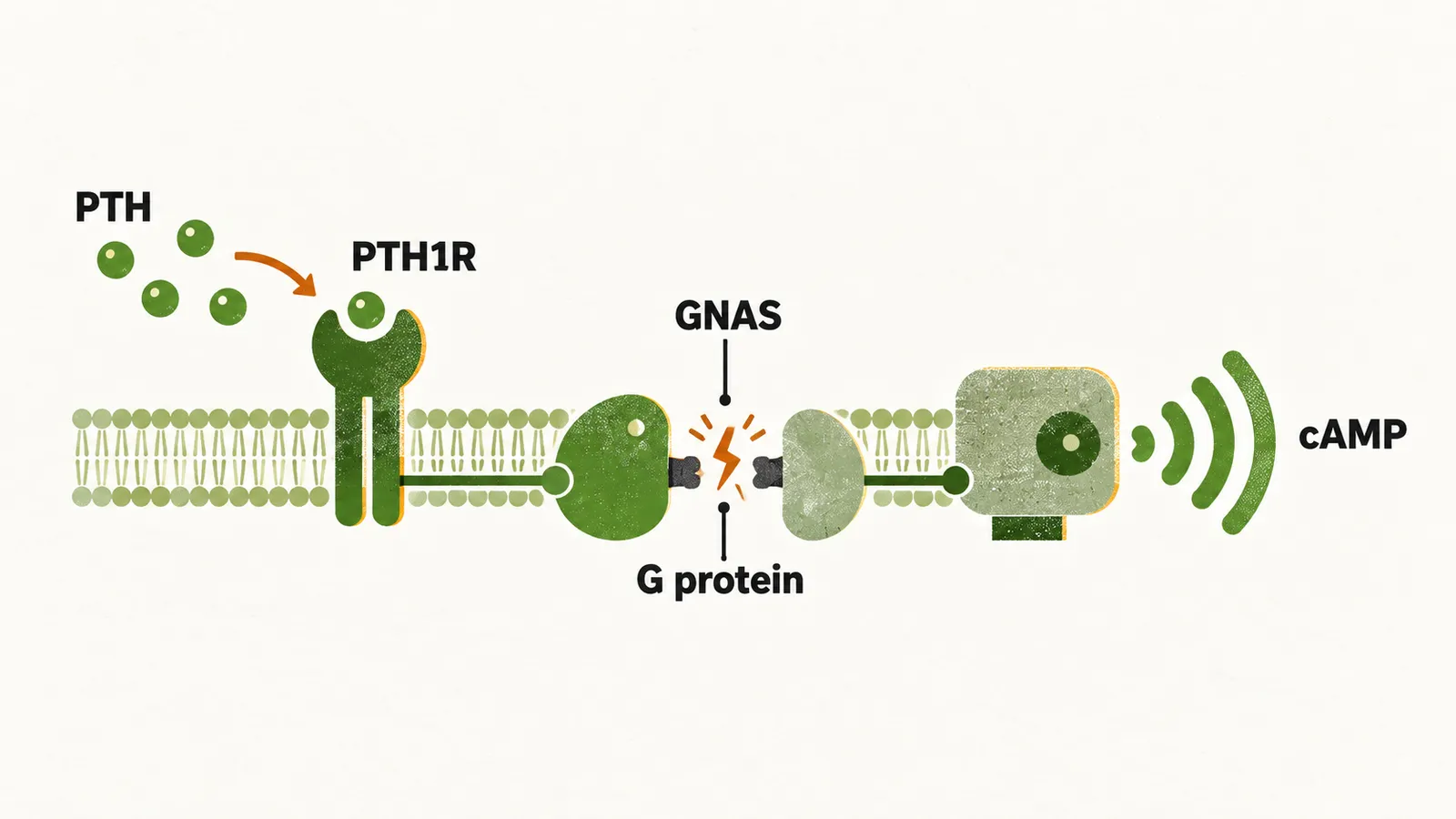
GNAS is an imprinted gene, which means that its expression depends on which parent the copy came from. It is expressed from both alleles in most tissues, but in a few tissues, including the proximal renal tubule, the thyroid, the gonads and the pituitary, paternal Gs alpha expression is silenced, so only the maternal copy is read. A mutation inherited from the mother therefore removes the only working copy in those tissues and produces hormone resistance, while the same mutation inherited from the father leaves the maternal copy active and produces no resistance. The physical features of Albright hereditary osteodystrophy follow instead from having only one working copy of Gs alpha in tissues that express both alleles, so they appear whichever parent transmitted the mutation. Inactivating GNAS mutations are transmitted in an autosomal dominant pattern; which parent transmits them decides the phenotype.
This is why the forms of pseudohypoparathyroidism have different biochemistry despite sharing the same gene.
Pseudohypoparathyroidism 1a
In PHP 1a the mutation comes from the mother, so resistance is present in every tissue that depends on the maternal copy: serum calcium is low, serum phosphate is high, serum PTH is high, and the patient shows features of Albright hereditary osteodystrophy (AHO).
AHO is a constellation of developmental and somatic defects, characterised by short stature, round facies, brachydactyly, obesity and subcutaneous calcification. Because Gs alpha also carries the signal of other hormones, patients with PHP 1a can show resistance to them as well, which may appear as hypothyroidism, short stature, hypogonadism or intellectual disability.
Pseudopseudohypoparathyroidism
When the same mutation is inherited from the father, the normal maternal copy is still expressed in the kidney and the other imprinted tissues, so serum calcium and serum phosphate remain normal. The patient nevertheless has AHO, because the loss of one working copy acts in the tissues that do not imprint. This picture, pseudopseudohypoparathyroidism (PPHP), is therefore AHO without hormone resistance.
Pseudohypoparathyroidism 1b
In PHP 1b the defect is epigenetic: the methylation of the GNAS locus is lost and the gene is not transcribed normally. These patients have hypocalcemia, hyperphosphatemia and a high PTH level, but they do not have the features of AHO.
Pseudohypoparathyroidism 2
The exact pathophysiology of PHP 2 is not yet known. Unlike PHP 1a and PHP 1b, in which the cAMP response to PTH is reduced, the cAMP response is normal here. Its defining feature is the lack of a phosphaturic response even though cAMP increases normally after exogenous PTH, which places the defect downstream of cAMP generation.
Comparing the forms
The forms can be told apart by whether AHO is present, by the serum calcium, and by the cAMP and phosphate response to PTH. In the table, NL means normal.
| PHP 1a | PHP 1b | PHP 2 | PPHP | |
|---|---|---|---|---|
| AHO | + | − | − | + |
| Serum calcium | ↓ | ↓ | ↓ | NL |
| cAMP response to PTH | ↓ | ↓ | NL | NL |
| Urinary phosphate | ↓ | ↓ | low or normal | NL |
| Hormone resistance | PTH, TSH and other Gs-alpha coupled hormones | PTH target tissues only | PTH target tissues only | None |
| Molecular defect | Reduced functional Gs-alpha levels, mutation on the maternal allele | Abnormalities in Gs-alpha gene transcription (loss of methylation) | Unknown | Reduced functional Gs-alpha levels, mutation on the paternal allele |
These patterns are what is looked for when a patient with hypocalcemia and a high PTH level is investigated for PTH resistance.