
Calcium that has fallen far enough to cause symptoms is replaced through a vein, with the patient monitored while it is given. Calcium that is low but stable is corrected more slowly by mouth, together with an activated form of vitamin D such as calcitriol, and the cause of the fall is treated at the same time. Two problems run through both situations: magnesium depletion, without which the calcium will not stay corrected, and hypercalciuria (excess calcium in the urine), which limits how far the calcium can be corrected.
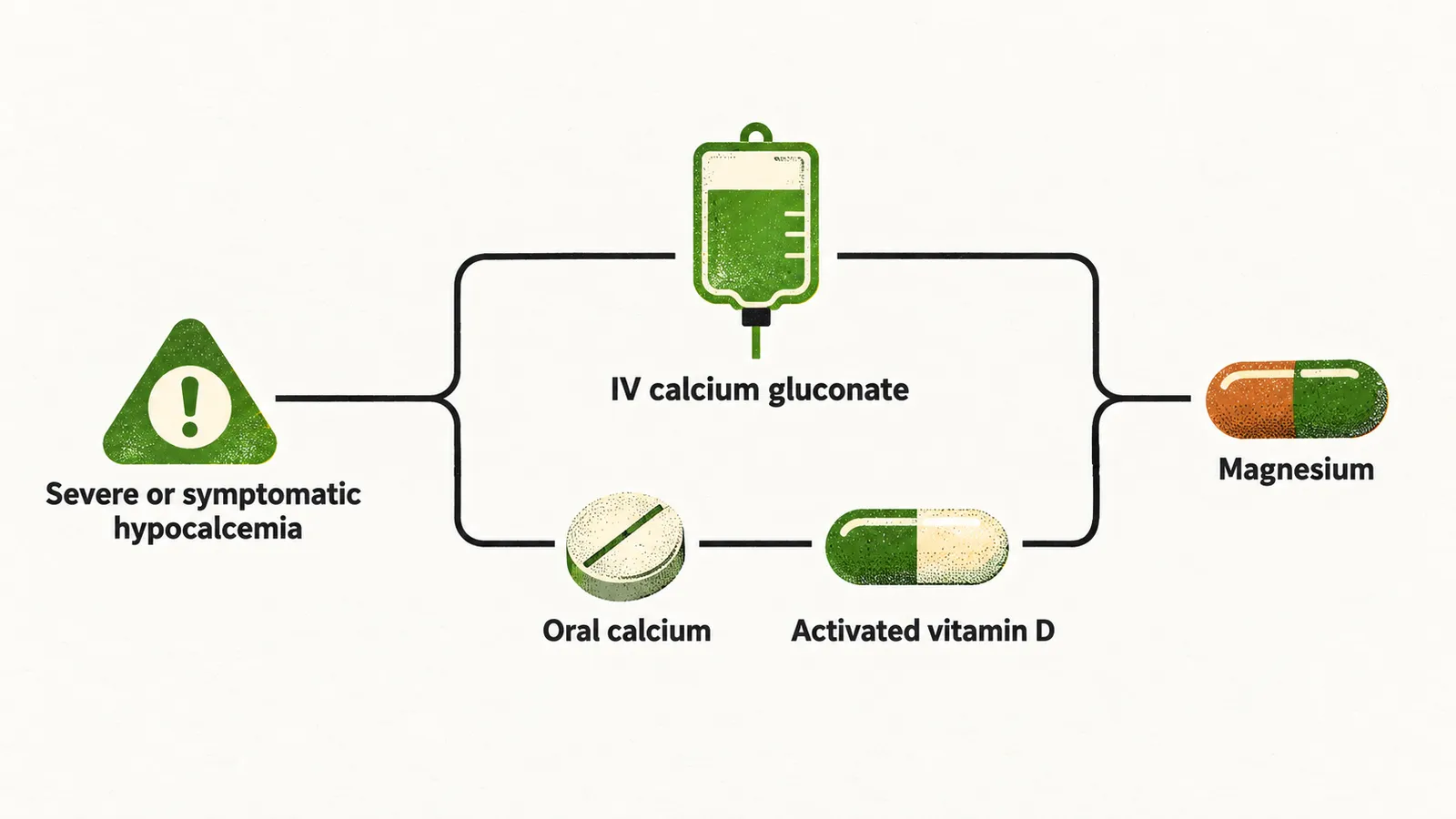
Severe or symptomatic hypocalcemia
Hypocalcemia can be an endocrine emergency. Intravenous calcium is given without delay to patients with severe hypocalcemia, usually a total calcium below 7.5 mg/dl, and to patients with neurological manifestations such as seizures, coma or altered mental status, or with stridor from laryngospasm or bronchospasm.
The usual preparation is calcium gluconate, which contains 90 mg of elemental calcium per 10 ml. It is given as slow intravenous pushes, generally one vial over 10 minutes, repeated once, with continuous electrocardiographic monitoring. A continuous intravenous drip is then started if the patient is still symptomatic and oral treatment cannot act quickly enough; the rate is guided by signs, symptoms and calcium measurements checked every 1 to 2 hours, preferably as ionised calcium. Patients taking cardiac drugs, especially digoxin, are predisposed to cardiotoxicity from an infusion of calcium, which is the reason for the monitoring.
Oral calcium, for example 1 to 2 g of elemental calcium (the calcium content of the salt used), with a rapidly acting vitamin D preparation such as 0.5 to 1.0 micrograms of calcitriol in divided doses, is started as soon as practical. After recent neck surgery this is often delayed, and intravenous calcium can be continued until oral therapy is possible or has taken effect.
Magnesium
Magnesium deficiency should always be considered as a contributor to hypocalcemia, especially in post-operative and hospitalised patients. It acts in two directions: magnesium depletion reduces the secretion of PTH and also blunts the action of PTH on the kidney, so calcium and vitamin D alone will not correct the calcium level while the magnesium is low. The serum magnesium can be normal or low-normal, because magnesium is mainly an intracellular ion and the serum level does not reflect the body’s stores, so a therapeutic trial of magnesium may be needed to reveal the deficiency. Oral magnesium, for example 200 to 300 mg daily, treats mild chronic deficiency, while parenteral magnesium is used for severe hypomagnesemia; several days of treatment are usually required to replete the stores.
Chronic hypocalcemia
The aim of chronic treatment is to keep the patient free of symptoms and to hold the total calcium at about 8.0 to 9.0 mg/dl, or the ionised calcium above 1.0 mmol/L, which is the lower part of the normal reference range. The target sits deliberately at the lower end, because with calcium in the upper normal range there may be significant hypercalciuria, especially in hypoparathyroidism, where the hypocalciuric effect of PTH has been lost, and it predisposes to nephrolithiasis, nephrocalcinosis and renal damage. When the calcium times phosphate product rises to near or above 55 mg²/dl², as it can in hypoparathyroidism with a chronically high serum phosphate, ectopic calcification can appear in soft tissues such as the brain (especially the basal ganglia), blood vessels and eyes.
Most causes of chronic hypocalcemia are treated with oral calcium salts together with vitamin D or an activated vitamin D analogue. Vitamin D deficiency itself is treated with cholecalciferol or ergocalciferol. For hypoparathyroidism the activated analogues calcitriol or alfacalcidol are preferred, because they act rapidly and have short half-lives; calcitriol is started at 0.25 to 0.5 micrograms once daily and uptitrated, often to twice-daily dosing, until the calcium is in the target range. Calcium carbonate and calcium citrate are the commonest salts, and 2.5 g of calcium carbonate or 5.0 g of calcium citrate provides 1 g of elemental calcium. At follow-up the vitamin D analogue dose is held constant and the oral calcium is adjusted against the symptoms and the calcium level.
Hypercalciuria and PTH replacement
When hypercalciuria persists on conventional treatment, the measures used to lower urinary calcium are a lower dose of calcium supplement and of activated vitamin D, a low sodium chloride intake, and a thiazide diuretic. If the calcium or the urinary calcium still cannot be controlled, recombinant human PTH (1-34) replacement is an option for chronic hypoparathyroidism.