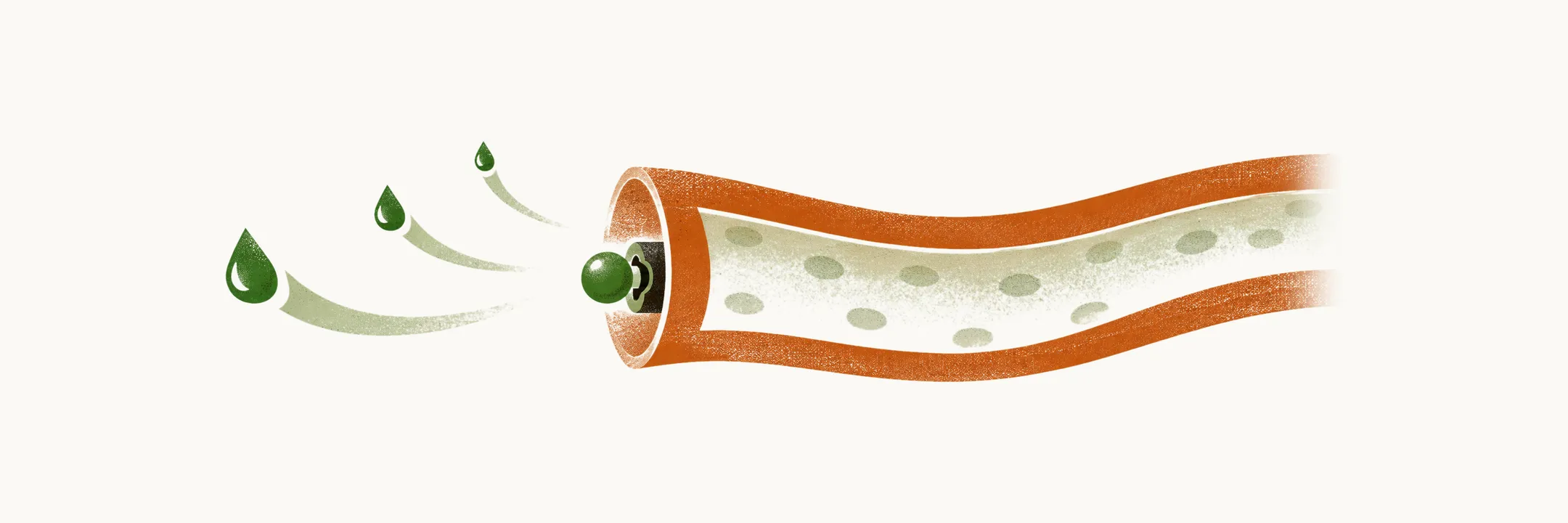
The tonicity of the extracellular fluid is held within a narrow range, and the hormone that does most of this work is antidiuretic hormone (ADH), also called vasopressin. Tonicity is the effective osmolality, the part of osmolality that determines water movement across cell membranes. Across vertebrates the tonicity of the extracellular fluid varies only slightly, a legacy of the marine environment their ancestors left; invertebrate animals, especially those living in water, tolerate much wider differences in extracellular osmolality.
In humans, the tonicity of the plasma — or better said, of the extracellular fluid — ranges between 275 and 295 mOsmol/kg, with an average of about 285 mOsmol/kg. Two factors hold it there. The first is thirst, with a threshold of 295 mOsmol/kg. The second is water retention or excretion by the kidneys, which is controlled by ADH through the V2 receptors of the cortical collecting ducts, the part of the nephron where ADH acts to make the urine concentrated or dilute.
When blood tonicity rises, ADH is secreted and the cortical collecting ducts retain water. The most concentrated urine the kidney can produce is about 1200 mOsmol/kg. It is reached once ADH secretion exceeds about 5 pg/ml, and the maximal renal concentrating potential is reached when plasma tonicity sits at the upper limit of normal, about 290–300 mOsmol/kg. When blood tonicity falls, ADH release is suppressed and the kidney loses water; with no detectable ADH, the most diluted urine is about 40–50 mOsmol/kg.
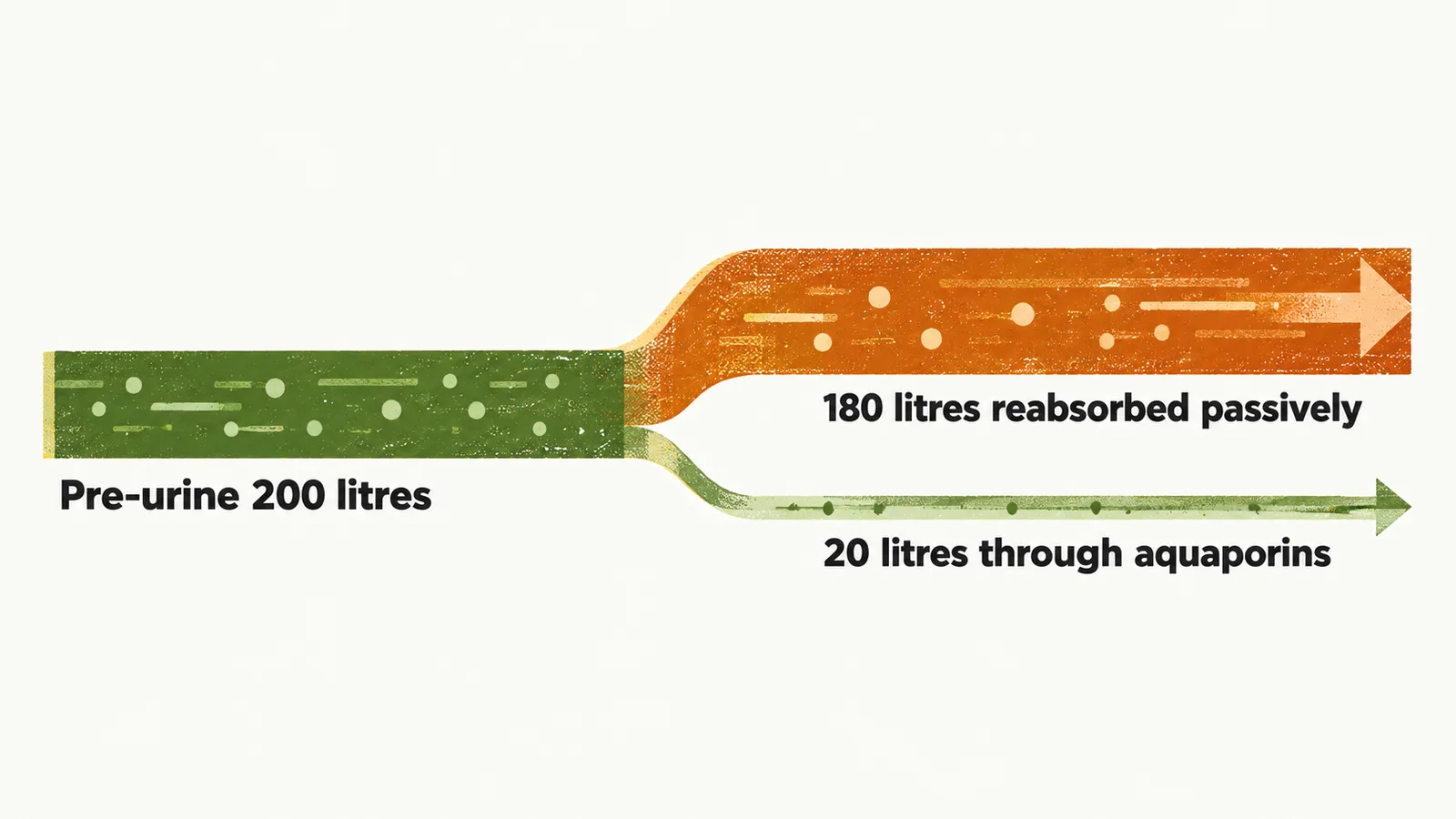
The water that ADH governs is a small part of what the kidney handles in a day. Of about 200 litres of pre-urine (the fluid filtered from the blood before the tubules modify it) formed daily, 90%, or 180 litres, is reabsorbed passively and isotonically. The remaining 10%, about 20 litres, is reabsorbed through the aquaporins (water channels) of the collecting duct that ADH activates. ADH therefore decides the final concentration of the urine far more than its volume.
ADH reaches the systemic circulation from two regions. The magnocellular neurons of the paraventricular nuclei (PVN) and supraoptic nuclei (SON) of the hypothalamus project to the posterior pituitary gland and supply ADH to the blood. The parvocellular neurons of the PVN and the suprachiasmatic regions project to the portal plexus of the pituitary gland, the vascular network that carries hypothalamic signals to the anterior pituitary. They supply ADH that stimulates secretion of ACTH (adrenocorticotropic hormone) from the anterior pituitary.
What triggers or suppresses ADH release is where the physiology becomes clinically useful. Two mechanisms control it.
The first depends on osmosensors in the hypothalamus, cells that detect the tonicity of the extracellular fluid. They are sensitive to tonicity, or effective osmolality, not osmolality: adding a large amount of a hyper-osmolar solution that does not contribute to tonicity will not activate them. A change in tonicity of even less than 1% of the total osmolality of the blood, about a 3 mOsmol/kg difference from the extracellular fluid tonicity, will stimulate them.
Plasma ADH that can be detected rises in a linear relation to plasma osmolality: as osmolality rises, ADH secretion rises with it. Measurement is limited by the assay, whose sensitivity is about 0.3 pg/ml. The kidney’s side of the axis behaves differently: the kidney’s response to ADH in the collecting duct is saturable, meaning it reaches a ceiling, and no further effect on water reabsorption is added above about 5 pg/ml of ADH.
Osmolality is the first and most potent stimulus to ADH secretion, but it is not the only one. The second mechanism rests on baroreceptors, pressure sensors that respond to the stretch of the vessel wall. The most potent baroreceptor for this purpose is in the carotid sinus: in response to hypotension, of the kind that occurs critically in patients in shock, ADH release can be augmented up to 500-fold.
This sets up a question that decides many clinical cases: in a patient who is both hypovolemic and hypotonic, does the hypovolemia raise ADH secretion or does the low tonicity suppress it? Hypovolemia wins.