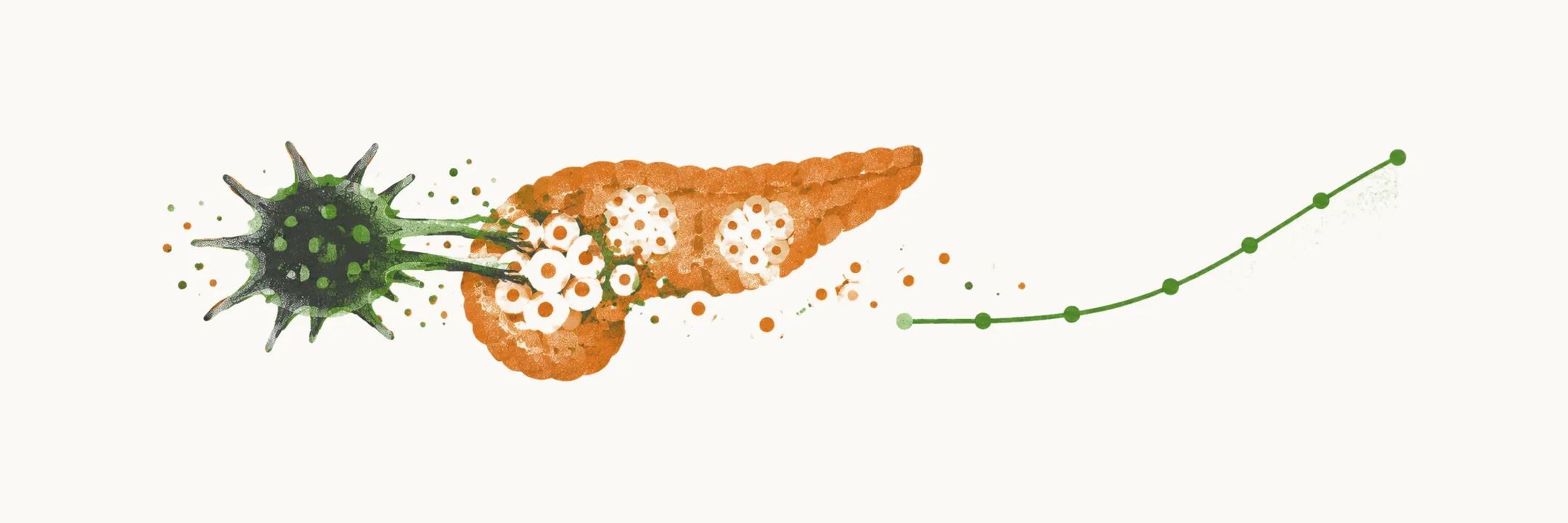
Type 1 diabetes mellitus (T1D), also called autoimmune diabetes mellitus, is an autoimmune disease in which the immune system destroys the insulin-producing beta cells of the pancreas. Insulin secretion fails, and because insulin is what moves glucose into cells, blood glucose rises.
The idea that organises the topic is that T1D is a process rather than a sudden event. Susceptibility is inherited, but something in the environment sets the autoimmune attack going, the beta cells are lost in steps over months to years, and the clinical disease appears only when that loss is far advanced. That single process explains why T1D can be detected before any symptoms, why it is staged, and why insulin replacement is needed for life once it appears.
Choose a route through this topic
Start with who develops the disease and why, then follow the process forward.
- Epidemiology and burden of type 1 diabetes: how common T1D is, how its incidence is changing, who is diagnosed and when, the burden it places on patients and families, and its geographical pattern.
- Environmental and early-life factors in type 1 diabetes: the early-life exposures, including nutrition, microbial contact and infections, that may influence whether T1D develops.
- Pathogenesis of type 1 diabetes: how family history and high-risk HLA genotypes make a person susceptible, and how environmental factors drive the damage to the beta cells.
Then follow the disease before symptoms appear.
- Natural history and staging of type 1 diabetes: the stepwise course of beta-cell loss, the autoantibodies that mark and predict it, and the staging model.
- Screening for type 1 diabetes: the autoantibodies used to detect islet autoimmunity before clinical disease, and the current status of screening programs.
Finally, the clinical disease itself: how it appears, how it is confirmed, how it is treated, and what it does over time.
- Presentation of type 1 diabetes: the symptoms of hyperglycemia, the ketoacidosis that can be its first appearance, and the ages at which it begins.
- Diagnosis of type 1 diabetes: how diabetes is confirmed, and how islet autoantibodies, C-peptide and the clinical picture separate T1D from type 2 diabetes and from LADA.
- Treatment of type 1 diabetes: insulin replacement with basal-bolus regimens, glucose monitoring, and the trade-off between control and hypoglycemia.
- Complications of type 1 diabetes: the acute emergencies, the microvascular and macrovascular damage, the associated autoimmune conditions, and what determines long-term outcome.