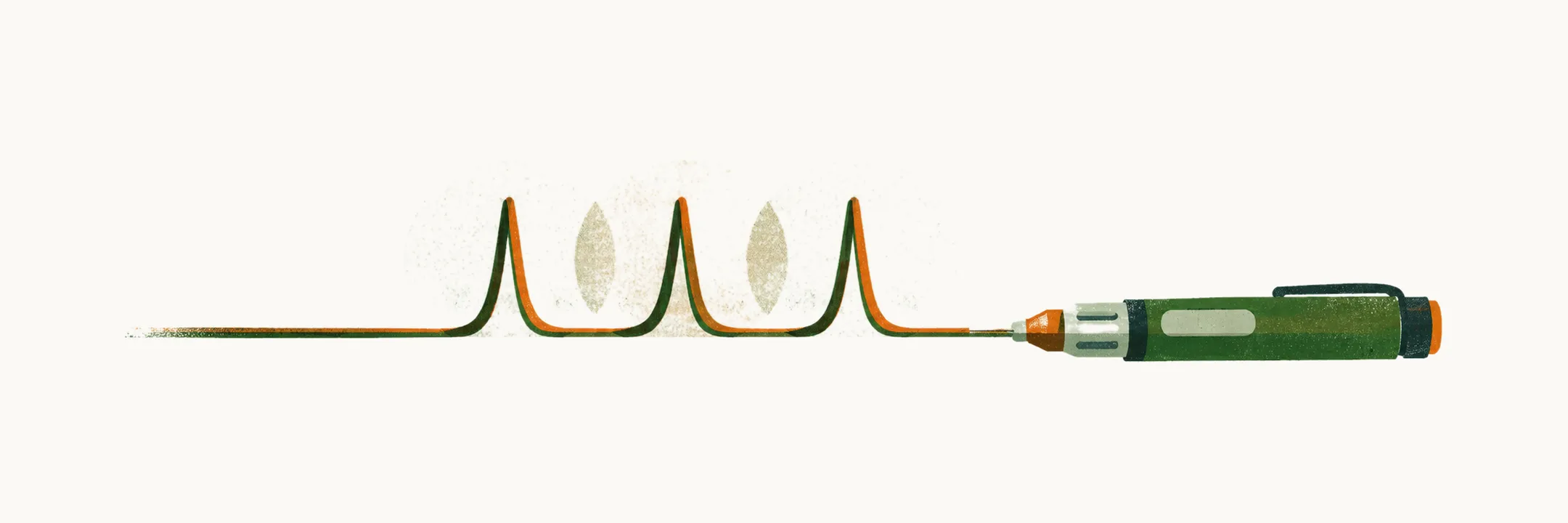
In type 1 diabetes (T1D) the beta cells are destroyed, so the body cannot make insulin at all. Treatment is therefore insulin given from outside, and the whole task is to match that insulin to what the body needs across the day.
Insulin is the treatment
Because the deficiency is absolute, everyone with T1D needs insulin for life; no diet, exercise programme or tablet that lowers glucose by another mechanism can replace it. Without insulin, the patient returns to the ketoacidosis that untreated T1D produces.
Basal-bolus regimens
Normal insulin secretion has two parts: a low background level between meals and overnight, called basal insulin, and sharp surges at meals, called boluses. Treatment copies this pattern. A long-acting insulin analogue provides the background, and a rapid-acting analogue is given before meals to cover the carbohydrate eaten, with extra doses to correct a high glucose. There are two ways to deliver it:
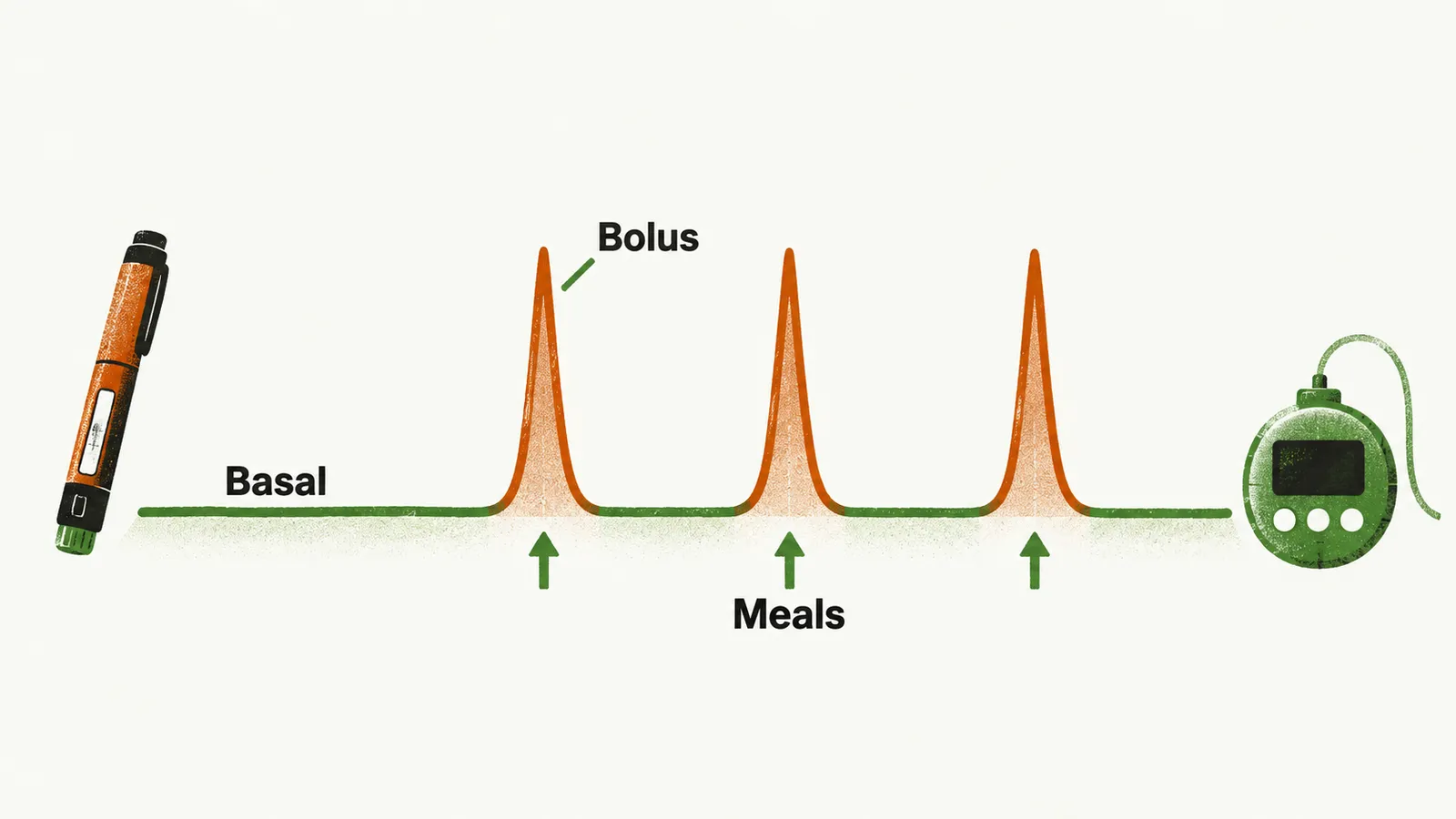
- Multiple daily injections (MDI) — several injections a day using a pen or syringe.
- Continuous subcutaneous insulin infusion (an insulin pump) — a small device delivers rapid-acting insulin as a continuous basal rate and as on-demand boluses.
Because the dose has to follow carbohydrate intake, activity and illness, patients are taught to count carbohydrate and adjust their insulin, rather than taking a fixed dose.
Monitoring and targets
Glucose is measured by capillary fingerstick testing and, increasingly, by continuous glucose monitoring (CGM), which measures glucose in the interstitial fluid and shows trends and alarms between tests. HbA1c summarises average glucose over the previous two to three months, and for many non-pregnant adults the target is less than 7% (53 mmol/mol); it is set individually, because a lower target brings a higher risk of hypoglycemia. Time spent in the target glucose range is now used alongside HbA1c as a measure of control.
The balance the treatment has to strike
Lower average glucose lowers the risk of the long-term complications of diabetes, which is why intensive control is the aim. The limit on how tight that control can be is hypoglycemia, the low-glucose emergency that comes from having too much insulin on board. Treatment is therefore always a balance between the protection that tight control gives over years and the low-glucose risk it creates day to day.