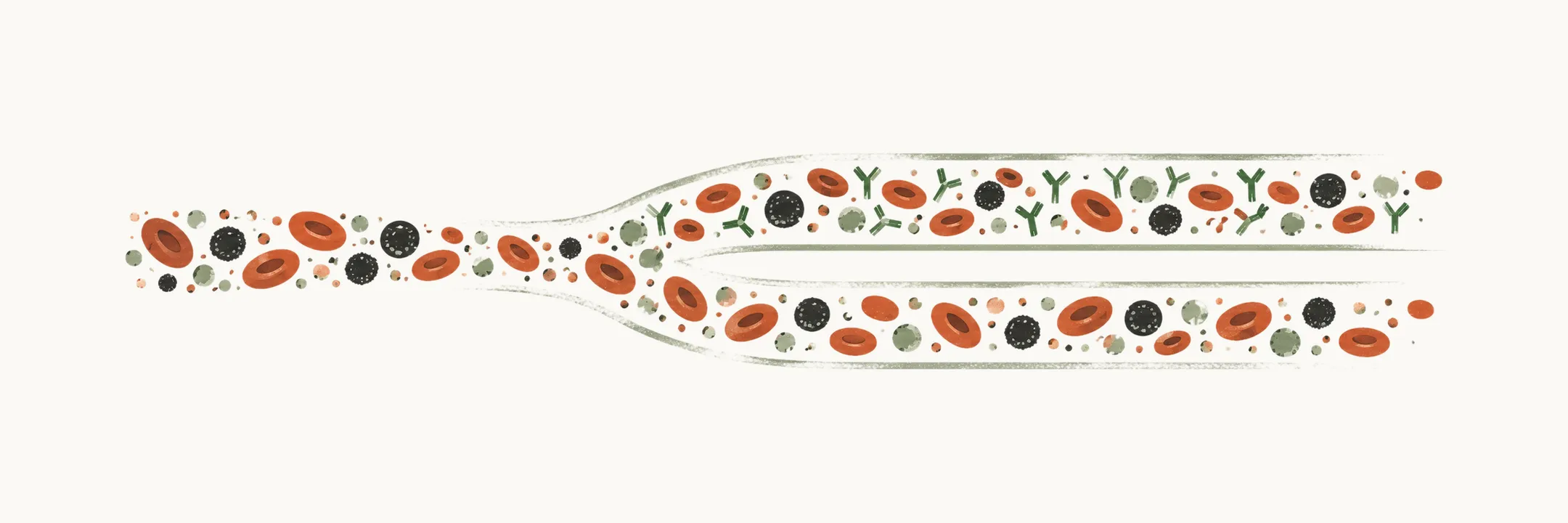
Diagnosing type 1 diabetes (T1D) has two steps. The first shows that the patient has diabetes at all, using the same glucose thresholds that define every form of the disease. The second shows that the cause is autoimmune destruction of the pancreatic beta cells, which is what separates T1D from type 2 diabetes and from its slower adult variant.
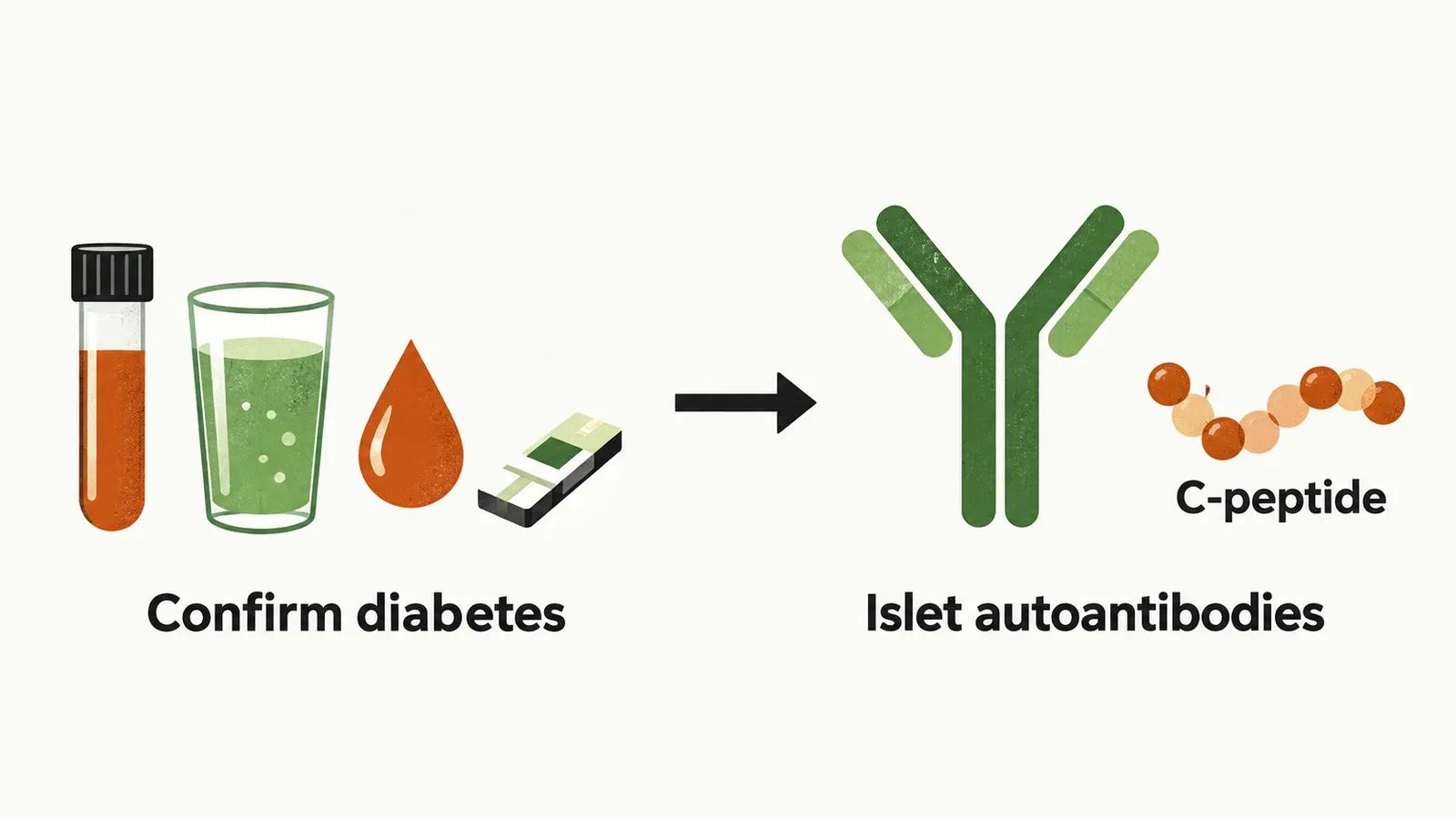
Confirming that diabetes is present
The American Diabetes Association (ADA) criteria define diabetes by any one of four measurements:
- fasting plasma glucose of 126 mg/dL (7.0 mmol/L) or more;
- 2-hour plasma glucose of 200 mg/dL (11.1 mmol/L) or more during a 75-gram oral glucose tolerance test;
- HbA1c of 6.5% or more;
- random plasma glucose of 200 mg/dL (11.1 mmol/L) or more in a person with classic symptoms of hyperglycemia or a hyperglycemic crisis.
In a clearly symptomatic patient, a single random glucose at or above 200 mg/dL is enough to confirm diabetes. When hyperglycemia is not unequivocal, the diagnosis is confirmed by a second abnormal result, either from the same sample or from a repeat sample on another day. The values behind these thresholds are set out in detail in Diagnostic Criteria for Diabetes and Prediabetes.
Why the type of diabetes matters
Once diabetes is confirmed, the next question is which kind, because the treatment differs. T1D is defined as diabetes caused by autoimmune beta-cell destruction that usually leads to absolute insulin deficiency. The first and most important difference between T1D and type 2 diabetes is that in T1D the insulin secretion deficiency is absolute, while in type 2 diabetes it is relative: in type 2 diabetes the beta cells still secrete insulin, just not enough for the degree of insulin resistance. Absolute deficiency means that insulin will eventually be needed to survive, and often from the start.
The tests that identify autoimmune diabetes
Two laboratory markers do most of the separating.
Islet autoantibodies show that the immune system is attacking the beta cells. The main ones are antibodies to glutamic acid decarboxylase (GAD), the most commonly found, to tyrosine phosphatase (IA-2), to a zinc transporter (ZnT8), to insulin (IAA), and islet cell antibodies (ICA). At least one is present in the great majority of people with newly diagnosed T1D, but a small group has none of them and still has the disease, so their absence does not exclude it.
C-peptide is a fragment released together with insulin when the pancreas makes it, so it measures the patient’s own insulin output rather than injected insulin. A low or undetectable C-peptide level documents absolute insulin deficiency and supports T1D over type 2 diabetes.
Ketones in blood or urine, or a frank ketoacidosis at presentation, point the same way.
Latent autoimmune diabetes in adults
Latent autoimmune diabetes in adults (LADA) is an autoimmune form of diabetes that occurs in adults, but with a slower progression of beta-cell destruction than classic T1D. Patients may not need insulin for months or years and are easily mistaken for having type 2 diabetes; because the cause is autoimmune, it is recognised by islet autoantibodies, most often GAD antibodies.