
In the United States, about 1 million people live with a diagnosis of type 1 diabetes (T1D), and the yearly incidence approaches 30,000 new cases there alone. Here incidence means the number of new cases arising over a period of time, and prevalence means the number of people living with the disease at a given time. Type 1 diabetes is the less common form of diabetes, accounting for about 5-10% of all cases of diabetes, although its treatment is lifelong.
How the numbers are changing
The annual incidence of T1D is rising by about 3-4% each year, and the rise is steepest in younger children. In European youth under 15 years of age, this trend was projected to produce a 70% increase in T1D prevalence between 2005 and 2020. The peak age of diagnosis in children is about 10-14 years.
Who is diagnosed, and when
Because the disease is so strongly associated with childhood, it is often assumed that only children develop it. This is a misconception, as is the belief that T1D affects only adolescence and early childhood: estimates place about 25-50% of cases of T1D in adults, and up to 40% of adults older than 30 with T1D may first be misdiagnosed with type 2 diabetes.
The burden of the disease
Control is hard in practice. Most patients do not keep their glucose well controlled, and a study of young children and adolescents found that their glycated hemoglobin (HbA1c), the laboratory measure of average glucose over the previous months, exceeded 9.5%. Beyond the metabolic consequences, the disease imposes a financial and emotional burden on the person and their family.
Why the incidence is rising
The rise is hard to explain by genetics alone, because genetic changes do not happen on this timescale. The increase therefore points to environmental factors in the pathogenesis of T1D. The clearest evidence is geographic: the incidence of T1D is close to six times higher in Finland than in neighbouring Russian Karelia, even though the predisposing HLA-DQ genotypes (variants of immune-system genes that raise susceptibility to T1D) are equally frequent in the two populations. Identical risk genes with very different disease rates leave the environment as the likely explanation.
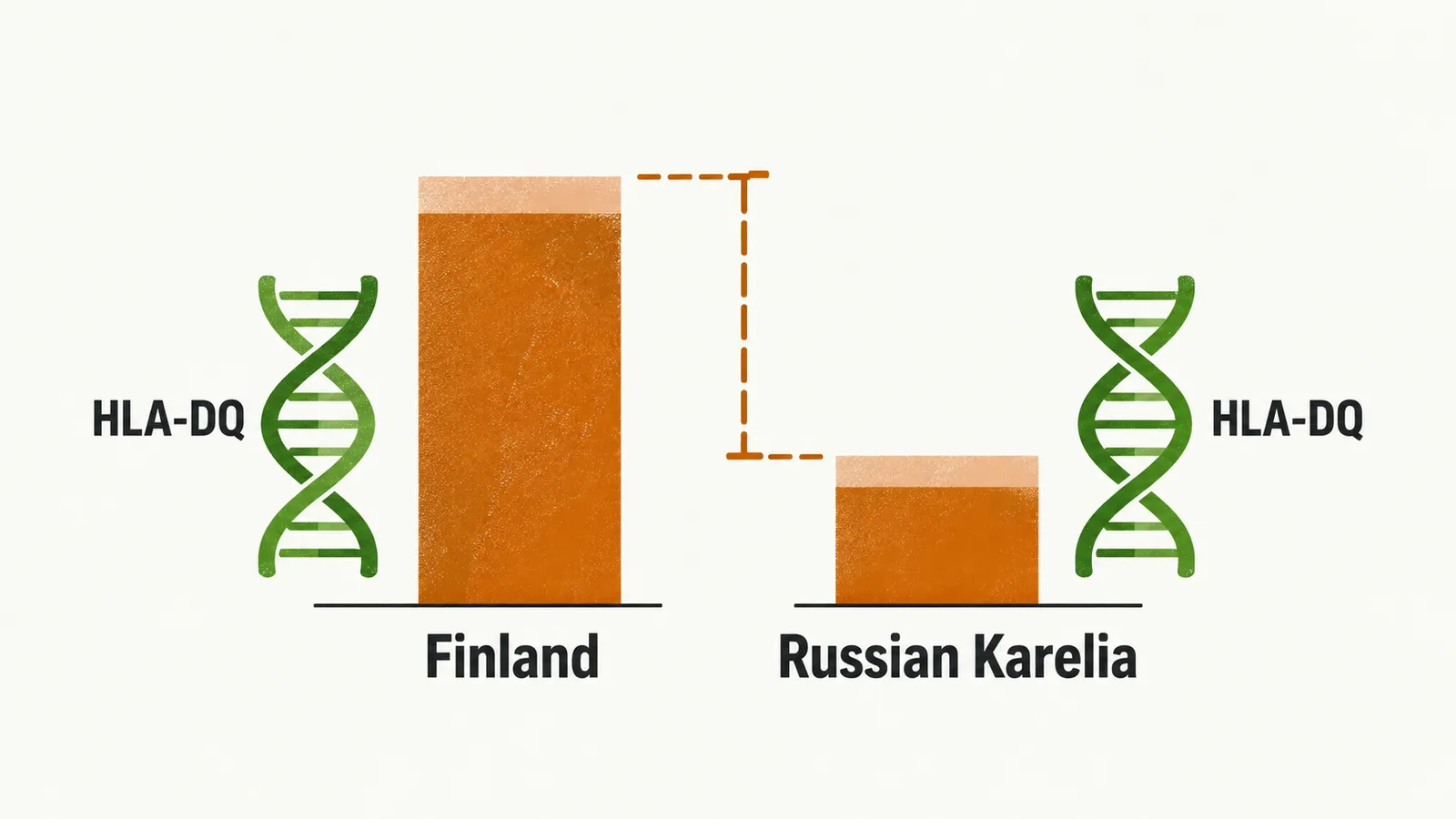
The same geographic theme appears on a wider scale: T1D is more common in countries farther from the equator, with the lowest incidence near the tropics and the highest in Northern Europe.
A widespread but untrue belief is that T1D is purely genetic. Genetics are necessary for susceptibility, but on their own they do not determine who becomes ill, which is why environmental factors receive so much attention.