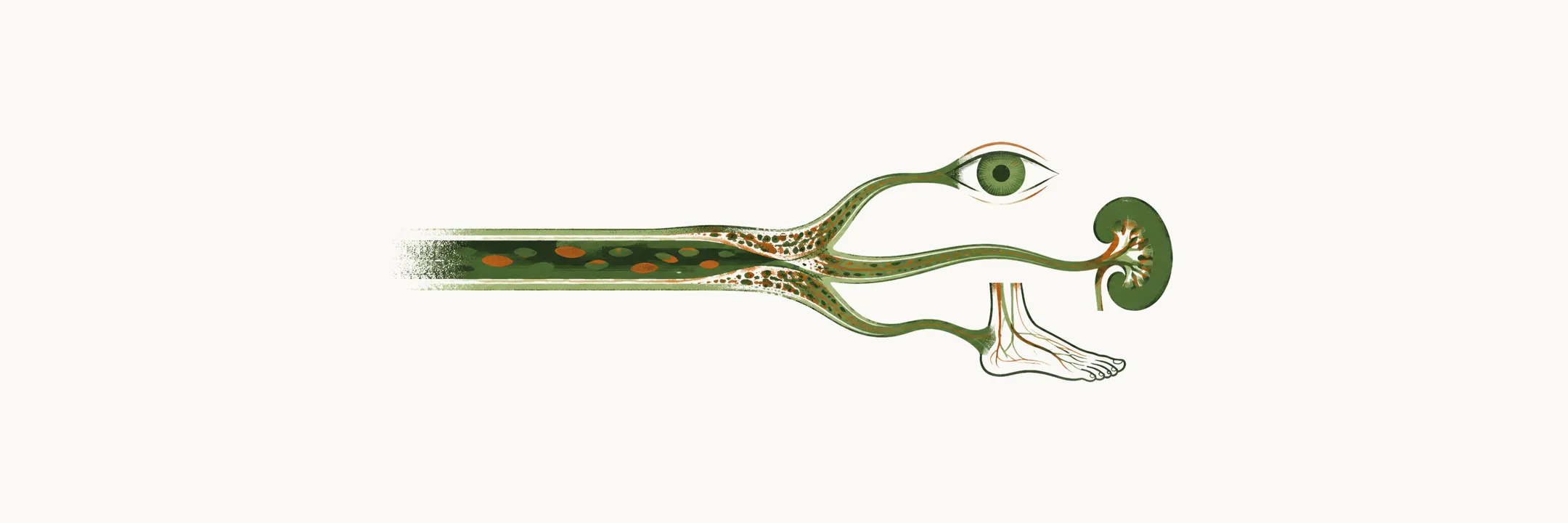
The complications of type 1 diabetes (T1D) fall into three groups: the acute problems that come from insulin treatment itself and from its absence, the chronic damage that years of high glucose do to blood vessels and nerves, and the other autoimmune diseases that cluster with T1D. Which of the first two a patient faces depends largely on how well glucose has been controlled.
Acute complications
Two acute emergencies lie at opposite ends of the insulin supply: too much insulin causes hypoglycemia, and too little causes ketoacidosis.
Hypoglycemia, a dangerously low blood glucose, is the most common acute complication of insulin therapy. Too much insulin, a missed or delayed meal, or exercise without a dose adjustment drives glucose too low. Mild episodes cause sweating, tremor, palpitations and hunger and are treated with fast-acting carbohydrate; severe episodes cause confusion, seizures or coma and need glucagon or intravenous glucose. Because it is the immediate danger of tight control, hypoglycemia is the main factor that limits how low the average glucose can be taken.
Diabetic ketoacidosis (DKA) is the opposite failure. When insulin is missing — at a new diagnosis, or because doses are omitted — and the counter-regulatory stress hormones (the hormones that oppose insulin’s action) rise, fat is broken down and the liver makes ketone bodies, producing a high-anion-gap metabolic acidosis, an acidosis in which unmeasured acids accumulate in the blood. Infection is a common trigger. DKA is treated with fluids, insulin and careful replacement of electrolytes, and in children its most feared complication, cerebral edema, is the leading diabetes-related cause of death.
Chronic microvascular complications
Persistent hyperglycemia damages the small blood vessels and the nerves over years, producing three classic microvascular complications:
- Retinopathy — damage to the vessels of the retina, and a leading cause of vision loss in working-age adults.
- Nephropathy (diabetic kidney disease) — damage to the glomerular capillaries that can progress to chronic kidney disease and end-stage renal disease.
- Neuropathy — peripheral neuropathy causes loss of sensation and pain in the feet and predisposes to foot ulcers, while autonomic neuropathy affects the stomach (gastroparesis), the bladder and the heart.
The Diabetes Control and Complications Trial (DCCT), which compared intensive with conventional insulin treatment, showed that intensive control reduced these microvascular complications by 35% to 90%, and long-term follow-up showed the benefit persisted after the trial ended.
Macrovascular complications
Type 1 diabetes also accelerates disease of the large arteries, raising the risk of myocardial infarction, stroke and peripheral arterial disease. Cardiovascular disease is the leading cause of death in people with T1D, and its risk reflects chronic hyperglycemia together with the usual factors of blood pressure, lipids and smoking.
Associated autoimmune conditions
Because the immune attack is not confined to the pancreas, other autoimmune diseases cluster with T1D. Autoimmune thyroid disease — Hashimoto’s thyroiditis and Graves’ disease — is the most common of these, and celiac disease is also increased. Thyroid function is checked soon after diagnosis, and celiac disease is looked for especially in children and in anyone with suggestive symptoms, because untreated thyroid or celiac disease can worsen glucose control.
What determines the outcome
Modern care has greatly improved survival, but type 1 diabetes still shortens life expectancy compared with the general population, and cardiovascular disease remains the main cause of death. Glycemic control is the strongest modifiable factor: the lower the average glucose, the lower the risk of both the microvascular and the macrovascular complications.