
Confirming that the sodium reflects the tonicity
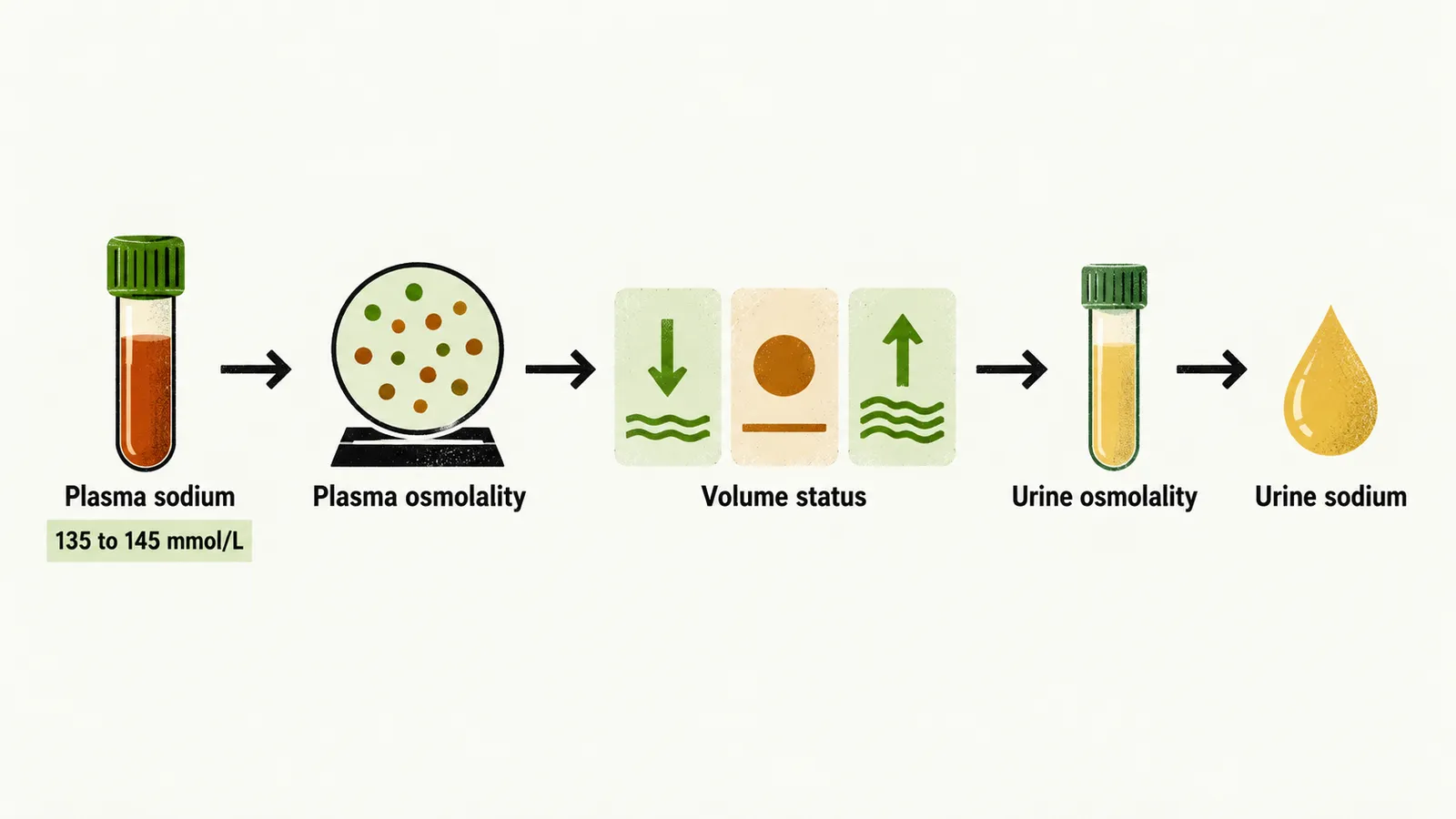
A plasma sodium below 135 or above 145 mmol/L starts the search, but not every abnormal number means the tonicity of the body fluids has changed. In hyponatremia the first step is therefore to separate true hypotonic hyponatremia, a low sodium that reflects low tonicity, from the situations in which the reported sodium is misleading.
Pseudohyponatremia is a normal plasma osmolality with a falsely low reported sodium. It occurs with hyperglycemia, hyperproteinemia (as in multiple myeloma), hyperlipidemia, or a laboratory error, and these patients are usually euvolemic, meaning they have a normal volume of body fluid. In hyperglycemia the measured sodium is low because water has moved out of the cells into the plasma, and the value must be corrected for the raised glucose. Measuring plasma osmolality separates the true disorder from these artifacts.
Hypernatremia is different, because it always reflects a deficit of total body water relative to sodium. Its cause is usually clear from the history: water intake that is too low, or water lost through the gut, the skin, or the kidney, or, less often, sodium gained from hypertonic fluids.
Classifying hyponatremia by volume status
Once the hyponatremia is confirmed as true, volume status, the amount of fluid the patient holds, sorts it into three groups and points to different causes:
- hypovolemic — loss of sodium and water, with a proportionally greater sodium loss, as in vomiting, diarrhea, or diuretic use;
- euvolemic — most often SIADH, but also hypothyroidism and adrenal (glucocorticoid) deficiency;
- hypervolemic — water retention in heart failure, cirrhosis, or kidney injury.
Clinical assessment of volume status is unreliable, so it is combined with laboratory markers rather than trusted on its own.
Urine osmolality and urine sodium
Two measurements on a urine sample supply the laboratory markers that localise the problem.
Urine osmolality shows whether antidiuretic hormone (ADH) is acting. In hyponatremia, a urine osmolality above 100 mOsm/kg means ADH is present, and it is inappropriate to the dilute plasma; a dilute urine instead points to excess water intake or a very low solute intake.
Urine sodium is a surrogate for how the kidney handles sodium, and so for the effective intravascular volume. A value below 20 mmol/L suggests that the kidney is conserving sodium, as in gastrointestinal losses; a value above 20 mmol/L suggests renal sodium loss or diuretic use, and in a euvolemic patient it fits SIADH.
Finding the cause of hypernatremia
The history usually identifies the cause. When it does not, or when hypernatremia recurs despite free access to water, the urine volume and osmolality are measured. A large volume of dilute urine, with an osmolality below 300 mOsm/kg, that stays dilute after water deprivation or desmopressin points to diabetes insipidus, central or nephrogenic. When the losses are extrarenal, the urine is usually concentrated and the urinary sodium is low.