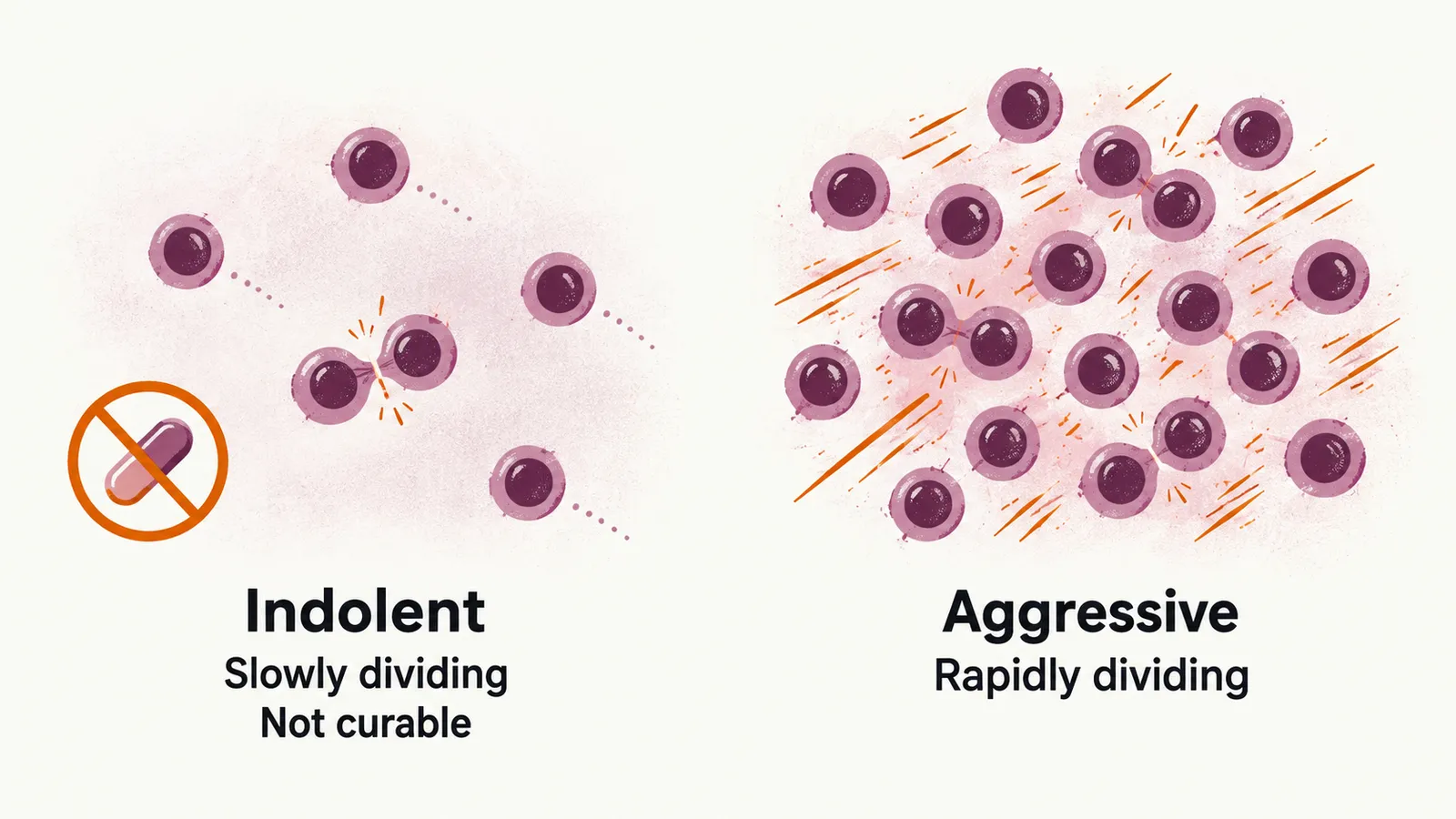
B-cell lymphomas are the group of non-Hodgkin lymphomas (NHLs) that arise from mature B cells. They are sorted by how aggressive they are, and that one decision — indolent or aggressive — shapes how the disease behaves and how urgently it is treated.
Why the two groups behave differently
The dividing line is the growth fraction, the proportion of tumour cells that are dividing at a given time. Indolent lymphomas are built of cells that divide infrequently, and a slowly dividing tumour is protected from chemotherapy, which kills cells as they divide. These lymphomas respond to treatment but recur, and they are not curable with standard therapy, so treatment is usually started only once the disease causes organ compromise:
- follicular lymphoma
- MALToma (mucosa-associated lymphoid tissue lymphoma)
- marginal zone lymphoma
- small lymphocytic lymphoma
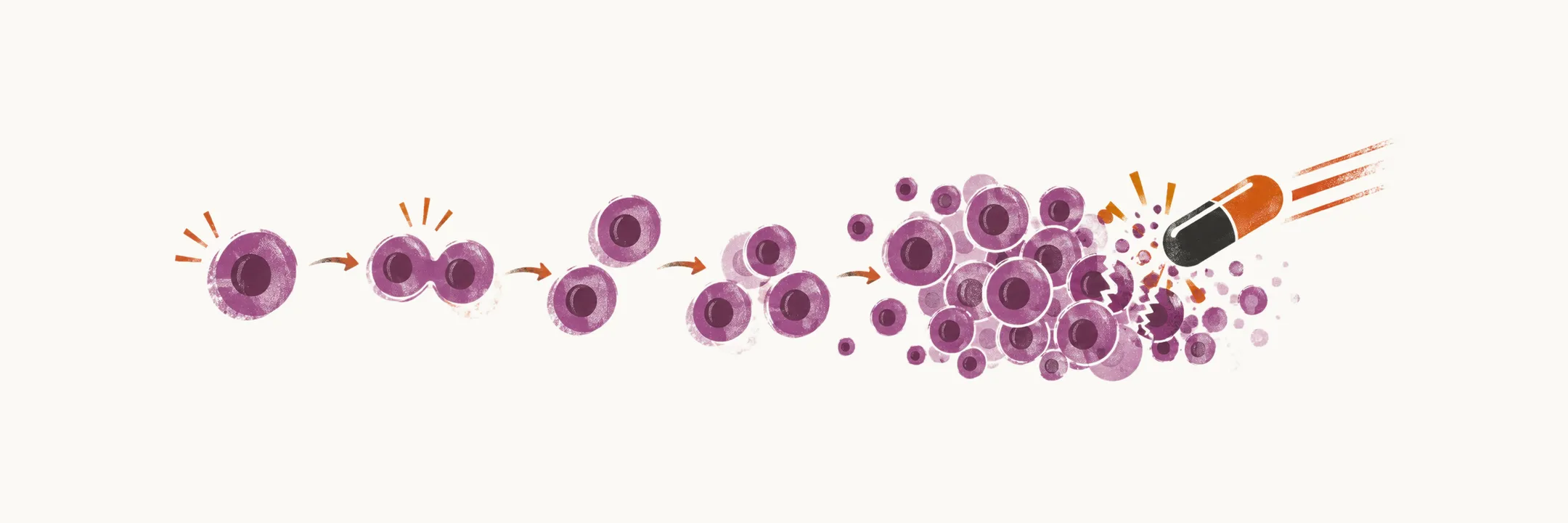
Aggressive lymphomas are built of cells that divide rapidly. Because they divide so often, they are vulnerable to chemotherapy, and intensive treatment can eliminate the malignant cells and cure the disease — but the same rapid growth means the disease can harm the patient quickly, so treatment has to start urgently:
- diffuse large B-cell lymphoma
- Burkitt lymphoma
- mantle cell lymphoma
- primary mediastinal B-cell lymphoma