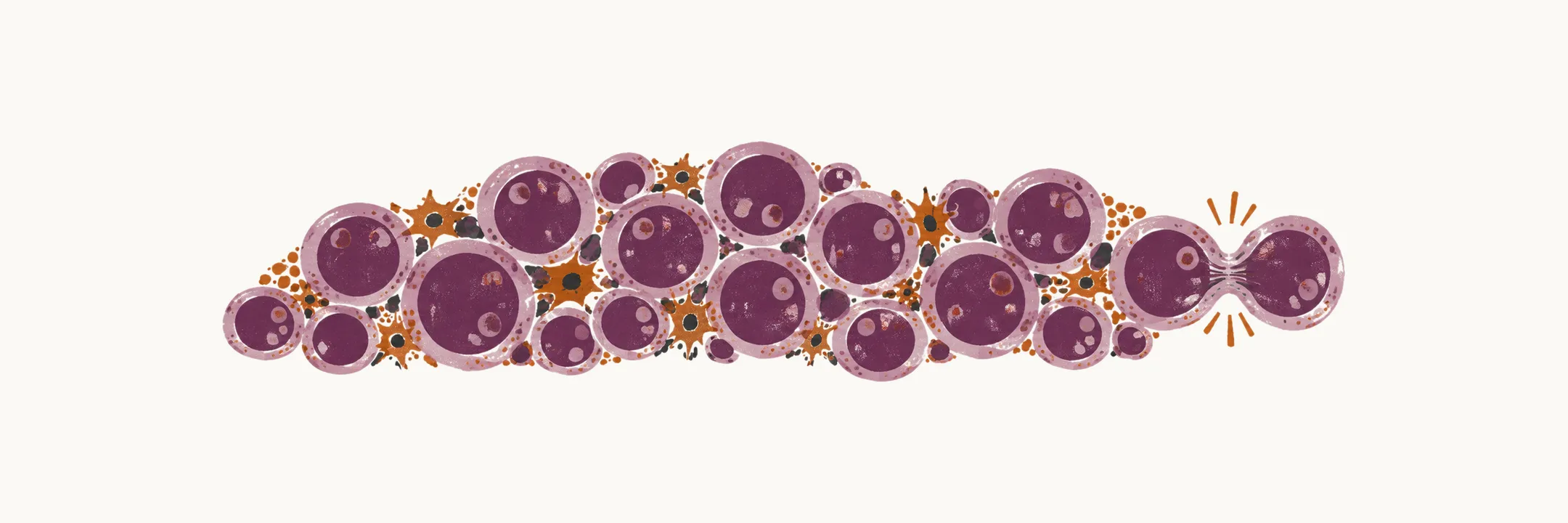
Burkitt lymphoma (BL) is the most aggressive of the non-Hodgkin lymphomas (NHLs), and the speed of its growth is what shapes its clinical behaviour.
BL is very rare in the United States, where it makes up less than 1% of NHLs, but it accounts for about 30% of childhood NHLs. Its doubling rate (the time the tumour takes to double in size) is less than 24 hours, the fastest of any lymphoma, and that growth rate is why treatment has to start very urgently.
Clinical presentations
BL is one disease that arises in different settings, and three presentations are recognised. They differ in where the disease appears and in the setting in which it occurs:
- Endemic BL — occurs mainly in central Africa, where it is found regularly in the population, and involves the jaw bone together with the ovary, testis, central nervous system (CNS), bone marrow, breast and kidney.
- Sporadic (non-endemic) BL — the form seen in the United States, with massive abdominal involvement together with the ovary, testis, CNS, bone marrow and kidney.
- Immunodeficiency-related BL — mostly involves the lymph nodes.
Histology, markers and translocation
The histological finding of BL is characteristic and is called starry sky: the “sky” is the sheet of tumour cells and the “stars” are the large macrophages (scavenger cells) that have ingested apoptotic tumour cells. In the peripheral blood smear, the tumour cells are large and contain prominent vacuoles.
The most common translocation in BL is t(8;14), which places the MYC oncogene beside the immunoglobulin heavy-chain locus. The main surface markers are CD19+, CD20+, CD10+, BCL6+ and BCL2−; the absence of BCL2 is one feature that separates BL from follicular lymphoma, which is BCL2+.
Treatment
Because BL grows so fast, it needs urgent treatment, and it is very curable with the right regimen, such as R-EPOCH (dose-adjusted EPOCH with rituximab), together with intrathecal methotrexate (methotrexate given into the cerebrospinal fluid) to prevent involvement of the CNS.