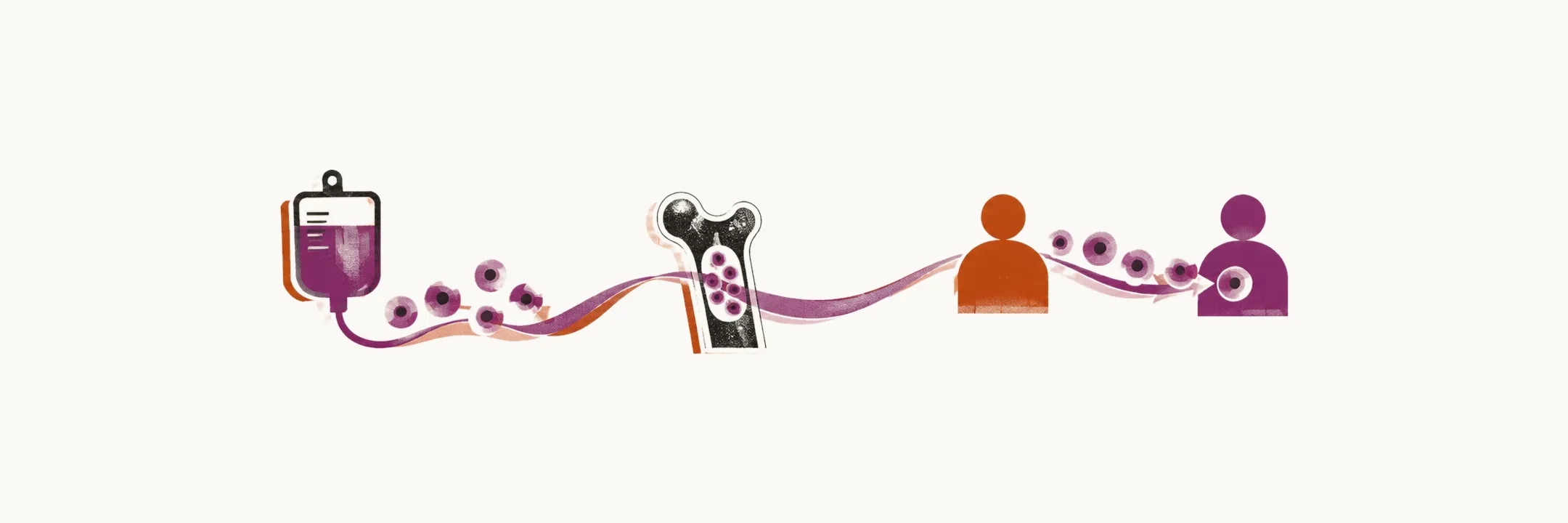
How non-Hodgkin lymphoma (NHL) is treated depends on how aggressive it is and on how adverse its prognostic features are, because those two things decide how intensive the treatment must be.
Prognosis and the IPI
Prognosis rests on the patient’s age and performance status (how well the patient can carry out daily activities), on disease-related factors such as tumour burden, and on the histology and biology of the tumour. The International Prognostic Index (IPI) gathers the strongest of these into five adverse risk factors, remembered as APLES:
- Age over 60 years
- Performance score ≥ 2
- Lactate dehydrogenase (LDH) above the normal value
- Extranodal sites ≥ 2
- Stage III or IV
The more of these a patient has, the worse the expected outcome and the more intensive the treatment needs to be.
Treatment
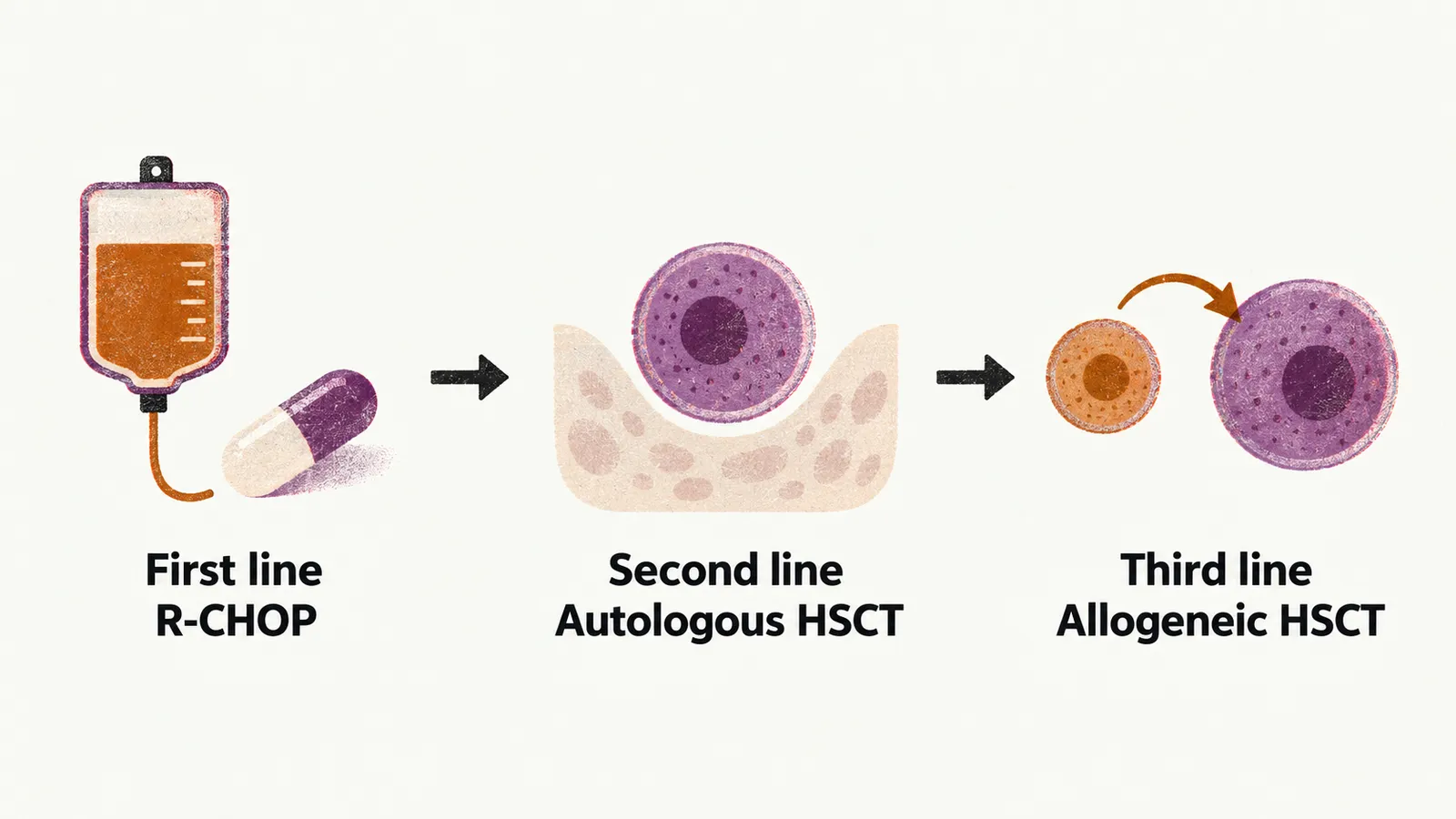
Alongside the IPI, treatment follows a stepwise plan:
- First line — R-CHOP (rituximab, cyclophosphamide, doxorubicin, vincristine and prednisone), with radiotherapy where it is needed.
- Second line — high-dose chemotherapy followed by an autologous haematopoietic stem cell transplant (HSCT), in which the patient’s own stem cells are used to rescue the marrow after the high-dose treatment.
- Third line — immunotherapy combined with an allogeneic HSCT, in which the stem cells come from a donor.
The urgency differs between the aggressive and indolent groups. Aggressive lymphomas need treatment to start promptly, whereas indolent lymphomas are watched and treated only once they cause organ compromise.