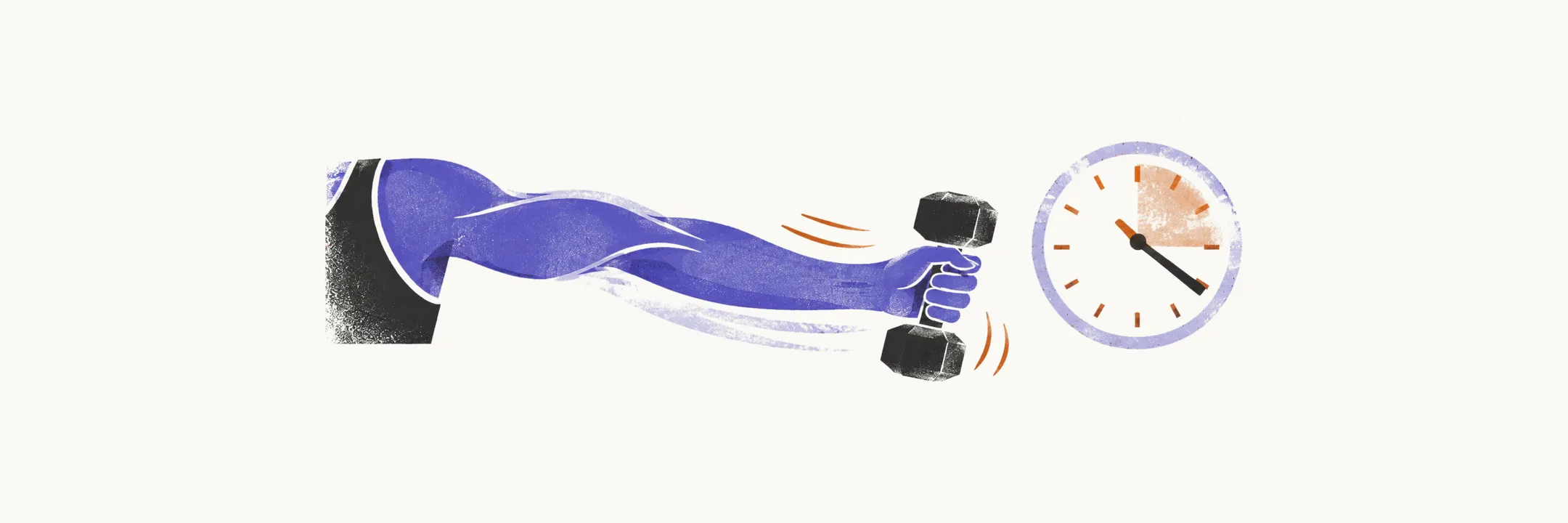
Myasthenia gravis produces fatigable weakness: strength falls with sustained activity and returns after rest, and it commonly fluctuates through the day. It is an autoimmune disorder of the neuromuscular junction, where antibodies reduce the working receptors on the muscle side of the synapse. The disease can begin at any age, but its distribution is bimodal, with a first peak in younger adults, where women are affected more often, and a second peak in later life, where men predominate.
The pattern of weakness
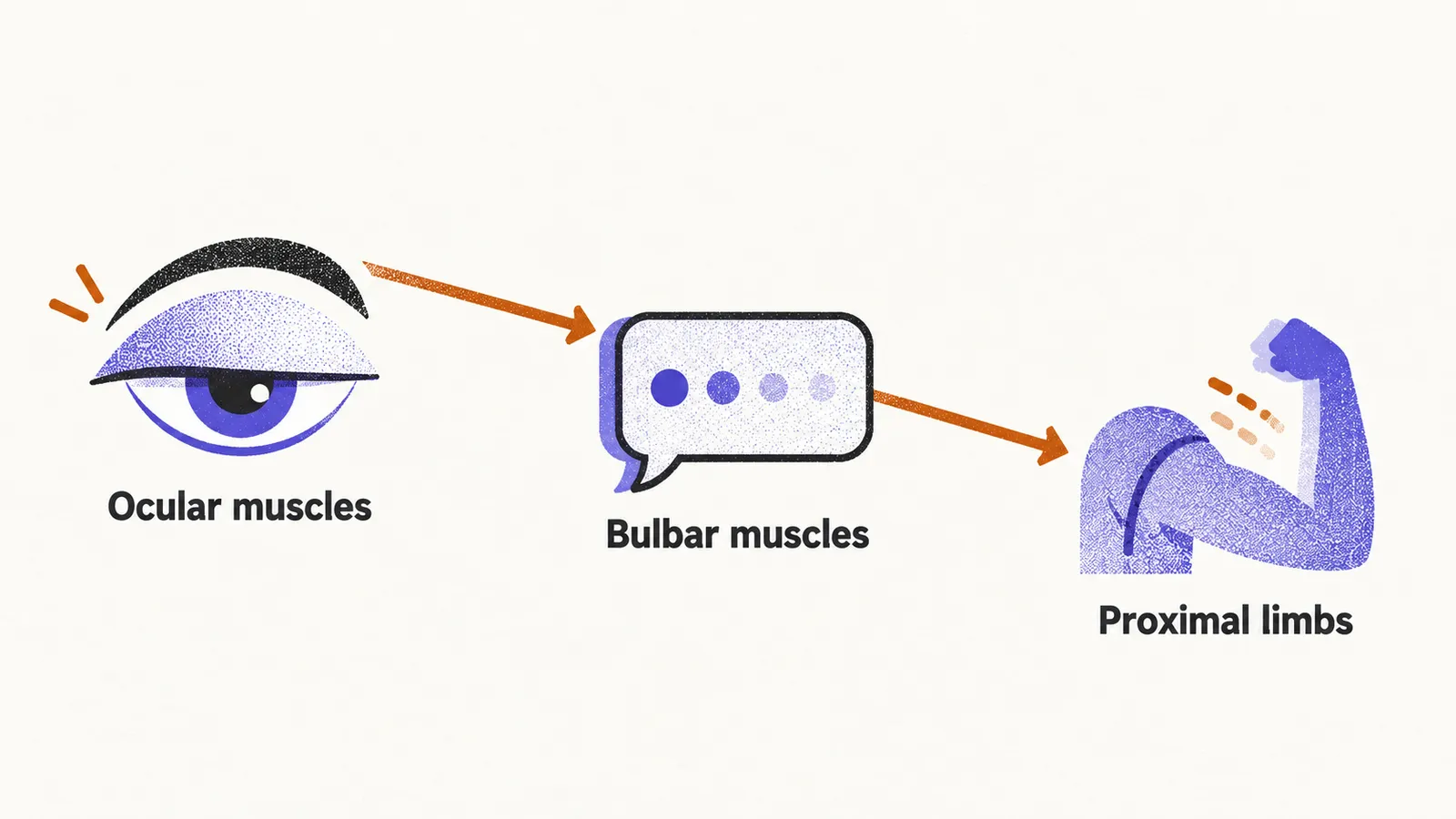
Weakness usually appears in a descending order: the ocular muscles first, then the bulbar muscles that serve speech and swallowing, then the proximal limb muscles, the ones nearest the trunk. Ptosis (a drooping eyelid) is often asymmetric, and diplopia (double vision) comes from extraocular fatigue, meaning fatigue of the muscles that move the eye. Speech and swallowing fade through sustained use, so counting aloud or finishing a meal exposes what a brief examination misses. Limb weakness is proximal more than distal, with finger extensors disproportionately affected. Respiratory muscles are the life-threatening dimension, and infections commonly precipitate decline.
Timing changes what the examination shows: symptoms are typically mildest in the morning and worst in the evening.
Severity and course
Because the weakness ranges from a drooping eyelid to failure of breathing, clinicians grade it. The Myasthenia Gravis Foundation of America classification grades the disease from purely ocular (class I) through mild, moderate, and severe generalised weakness (classes II–IV, with class IVb marking predominant bulbar or respiratory involvement) to crisis requiring intubation (class V). Ocular disease that has not generalised within about 2 years is statistically unlikely to do so later, but late generalisation remains possible, so the 2-year mark is a tendency rather than a guarantee.
The findings that stay normal
Three findings stay normal and help separate the disease from its mimics: muscle bulk is preserved early, tendon reflexes remain intact, and sensation is entirely unaffected. All three follow from where the disease sits. The antibodies act only at the endplate, so sensory nerves are unaffected and muscle fibres keep their bulk. Transmission also retains enough reserve at rest for a single reflex to fire normally; weakness emerges only when a muscle has to keep working.