
Diarrhea is common enough in early childhood that prevention cannot mean its elimination: the incidence in Europe is estimated at 0.5 to 2 episodes per child per year in children under 3 years, and gastroenteritis is a major reason for hospital admission at that age. Prevention therefore has two targets, and they need different measures. The first is the infection itself — how often children are infected, and how severe the infection is. The second is the fluid loss that follows it, which is what turns an ordinary illness into a dangerous one.
Reducing how often and how severely children are infected
Rotavirus vaccination is the one measure that targets a named cause. The European evidence-based recommendations for rotavirus vaccination, from ESPID and ESPGHAN (the European paediatric infectious diseases and gastroenterology societies), state that it should be offered to all healthy infants:
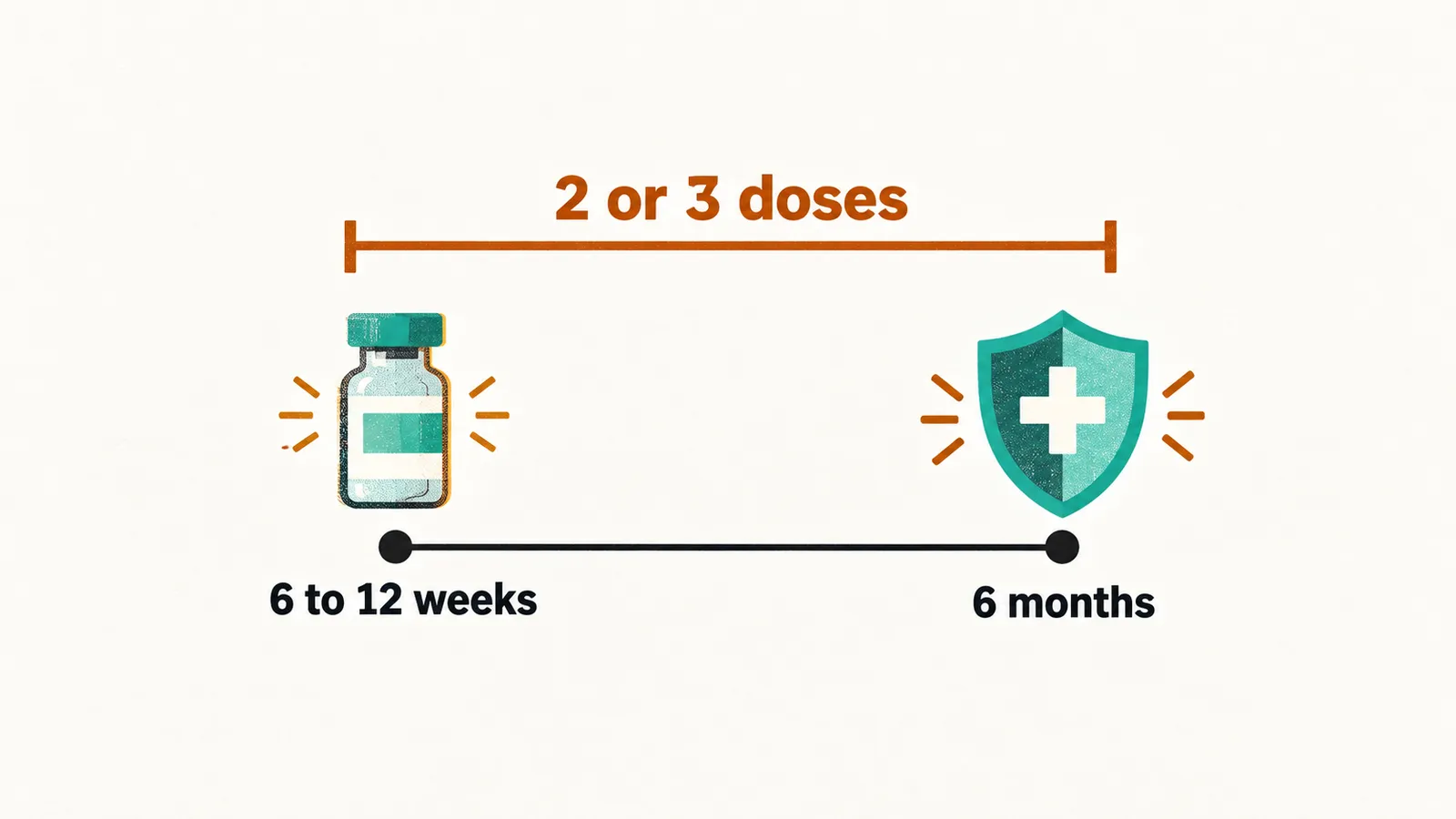
- the first dose is given between 6 and 12 weeks of age;
- the schedule is completed by 6 months: 2 doses of the monovalent (single-strain) vaccine or 3 doses of the pentavalent (multi-strain) vaccine;
- it is not recommended for infants with severe immunodeficiency;
- it may be considered in preterm infants and those with HIV infection at the physician’s discretion.
The World Health Organization recommends that rotavirus vaccine be included in all national immunization programs, with the first dose as soon as possible after 6 weeks of age and no vaccination after 24 months. Where routine programs exist, admissions for rotavirus gastroenteritis have fallen: in a hospital-based case-control study in Belgium, two doses prevented about 90% of admissions for laboratory-confirmed rotavirus gastroenteritis (95% confidence interval 81 to 95).
Rotavirus is not the only cause, and it is not even the leading cause of medically attended gastroenteritis wherever vaccine coverage is high, where norovirus has taken its place. Those infections are spread the same way, so hygiene keeps its importance alongside vaccination.
Hand hygiene is the measure that covers the rest. Hospital-acquired gastroenteritis can be prevented by adherence to hand-hygiene measures, and in day care stringent hygiene — diaper changes, hand washing, alcohol-based hand rub and clean food-preparation equipment — reduces transmission. A Cochrane review of hand-washing promotion programs found around 30% fewer diarrheal episodes in children at day-care centers and schools in high-income countries (rate ratio 0.70, 95% CI 0.58 to 0.85; high-certainty evidence), with the effect larger where soap was supplied.
In practice the advice is ordinary and specific:
- wash hands with soap and dry them carefully, especially after diaper changes or using the toilet and before preparing or eating food;
- do not share towels used by an infected child;
- keep the child away from school or childcare while there is diarrhea or vomiting and until at least 48 hours after the last episode;
- stay out of swimming pools for 2 weeks after the last episode of diarrhea.
Breastfeeding protects the youngest children. Predominant breastfeeding — breast milk as the main source of nutrition — for the first 4 to 6 months reduces the risk of gastroenteritis in European infants, which carries a strong recommendation on moderate-quality evidence. Exclusive breastfeeding for 6 months is one of the World Health Organization’s core prevention measures, along with safe drinking water, sanitation and food hygiene.
Those last three carry most of the weight where water and sanitation cannot be assumed. In Europe, person-to-person spread, day care and hospital exposure account for more of the burden, which is why vaccination and hygiene are the measures a clinician is most likely to use.
Keeping a mild episode from becoming a severe one
Once the illness has started, prevention means replacing fluid earlier than the child’s appearance seems to demand. Caregivers should have oral rehydration solution — a measured solution of salts and glucose — at home and start giving it as soon as symptoms begin. This reduces complications and the need for a medical visit, and it is the reason a telephone assessment can often manage an uncomplicated case. Three measures work with it:
- Fluids continue. Breastfeeding and the usual milk feeds continue during the illness, and a child who is not dehydrated should be encouraged to drink. Fruit juices and carbonated drinks are the exception: their sugar adds to the osmotic load rather than relieving it, which is set out in Refeeding and Drug Therapy in Acute Diarrhea.
- Food is not withheld. Feeding resumes during or shortly after rehydration rather than waiting for the diarrhea to stop, and interrupting breastfeeding is itself a risk factor for severe dehydration rather than a treatment for it.
- Review is sought early. The point at which home management stops being appropriate is defined by age, by the number of stools and vomits, and by the family’s report of dehydration, and those criteria are set out in Admission and Shock Management in Acute Diarrhea.
Zinc is part of the same logic where it applies: it shortens the episode in children over 6 months in populations where zinc deficiency is common, which is why it belongs to the World Health Organization’s treatment package. In regions where deficiency is rare no benefit is expected, and it is not a European recommendation; the reasoning is in Refeeding and Drug Therapy in Acute Diarrhea.
What prevention does not change
Even with vaccination and hygiene, gastroenteritis remains one of the most common reasons a young child is brought to a doctor, and a small number of children still arrive with a deficit that replacement cannot keep up with. The measures that stop a mild episode from becoming a severe one are therefore worth as much as the measures that prevent infection: a caregiver who starts oral rehydration solution on the first day, continues feeding, and seeks review when the child stops improving does most of the work before a clinician is involved.