The cardiovascular system is the site of the most significant clinical impact of growth hormone (GH) hypersecretion, and cardiovascular disease is the leading cause of death in acromegaly: more than 60% of the causes of death in acromegaly patients are cardiac diseases, and cardiovascular-related comorbidities occur in about 70–90% of acromegalic patients.
Why the heart is involved
The changes that occur in the cardiovascular system in acromegalic patients are based on the fact that cardiomyocytes express receptors for GH and insulin-like growth factor 1 (IGF-1); therefore an excess of these two hormones is directly related to the cardiac pathology and modification. In the early stages of the disease the cardiac modification affects only the heart rate and cardiac output; then, in later stages, there is cardiac modification such as congestive heart failure, cardiac hypertrophy and diastolic heart failure.
Acromegalic cardiomyopathy
The pathophysiology of the cardiac hypertrophy is the direct effect of GH and IGF-1 on cardiac myocyte gene expression, leading to hypertrophy and increased fibrosis. It is described that in the first phase of cardiac hypertrophy in acromegaly there is eccentric hypertrophy of both ventricles, in which the ventricular chamber enlarges along with its wall.
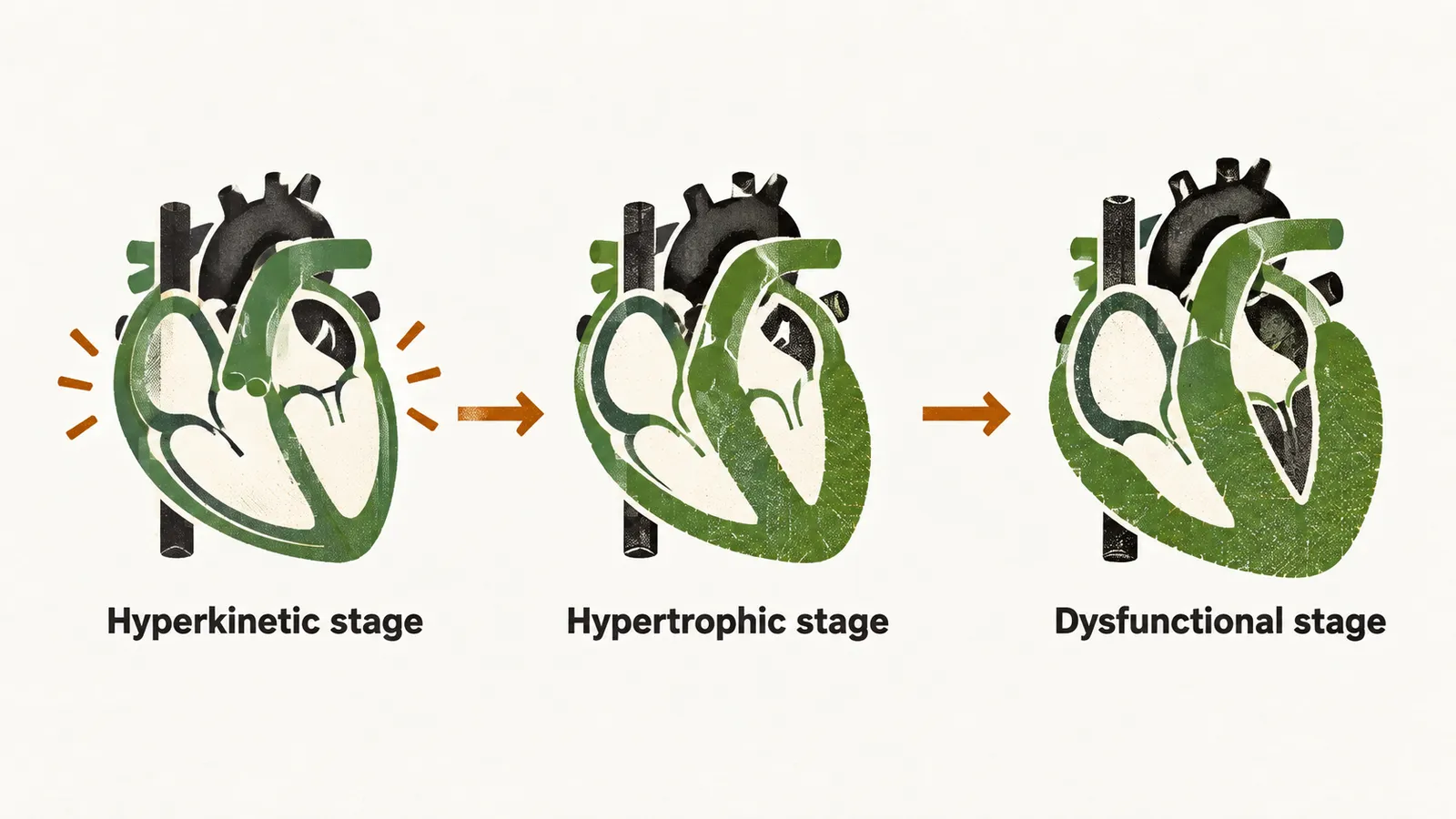
Acromegalic cardiomyopathy has three main stages:
- early stage, the hyperkinetic stage — increased heart rate and cardiac output due to the initial cardiac hypertrophy
- intermediate stage, the hypertrophic stage — systolic and diastolic dysfunction
- final stage, the dysfunctional stage — congestive heart failure and dilated cardiomyopathy
Hypertension
Blood pressure is raised as well: hypertension is present in 22% of the cases, and its pathophysiological basis in acromegaly is severalfold. GH acts on the ENaC (epithelial sodium channel) channels of the renal system, causing sodium retention that leads to volume expansion. Peripheral resistance is increased and endothelial function is decreased, and sleep apnea syndrome, which is common in acromegaly, is a further contributor.
Other cardiovascular abnormalities
In order of prevalence, the cardiovascular abnormalities that can be found in acromegaly are hypertension, cardiac hypertrophy, arrhythmia, coronary artery disease, systolic heart failure and valvular heart disease. Bilateral ventricular hypertrophy and septal hypertrophy, valvular diseases such as mitral valve disease, and decreased diastolic function are also described.
Arrhythmia and cardiomyopathies are reversible after treatment; valvular heart disease, in contrast, is irreversible.