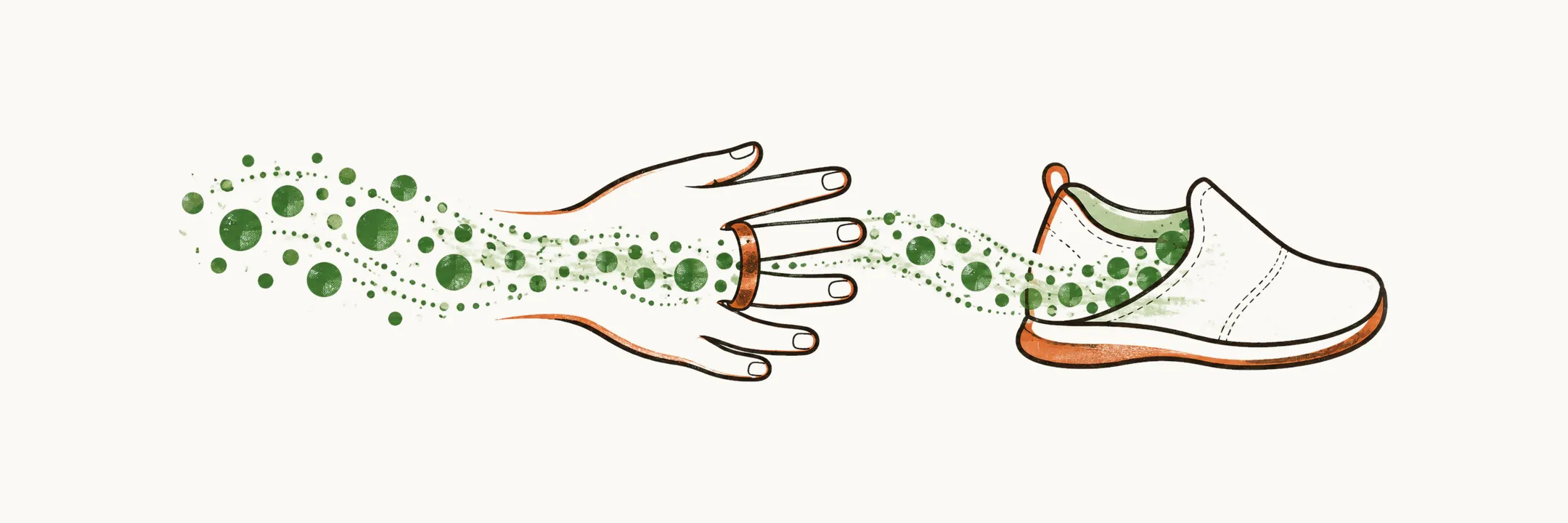
The tumor that secretes GH produces local effects of its own, while the chronic high level of GH, and of insulin-like growth factor 1 (IGF-1), affects many different organs. This is why the clinical picture of acromegaly is broad and why early diagnosis matters.
Tumor-related manifestations
In most of the cases, at the time of diagnosis of acromegaly, there is a macroadenoma, an adenoma with a size of greater than 10 mm, which makes local mass effects common:
- headache
- visual disturbances
- hydrocephalus
- ophthalmoplegia
- cranial nerve palsies
The same lesions can also cause other anterior pituitary hormone insufficiency:
- hypothyroidism, in 40% of the cases
- adrenal insufficiency
- hypogonadism, which can occur due to either hyperprolactinemia or gonadotropin deficiency, and presents with oligo/amenorrhea, decreased libido and infertility
Soft tissue and skeletal changes
The most characteristic changes, and the ones that mostly lead to the diagnosis of acromegaly, are soft tissue and skeletal changes that cause a change in appearance. These include coarsening of facial features (frontal bossing), broadening of the nose, thickening of the lips, prominence of the superior ridge of the orbits, interdental separation and temporomandibular joint pain. Macroglossia can extend to the vocal cords and make the voice hollow and deep. The hands and feet enlarge as well, so patients notice a change in ring size or shoe size.
Skin manifestations in acromegaly are due to increased GAG (glycosaminoglycan) deposition in dermal tissue and increased proliferation of fibroblast cells due to the high level of GH and IGF-1. They include oily skin, which is one of the most sensitive signs of GH excess, hypertrichosis, psoriasis, and in severe cases acanthosis nigricans and cutis verticis gyrata.
The skeletal changes in acromegaly are made not only by the direct effect of GH and IGF-1, but also by the diabetes caused by acromegaly, and even hypogonadism can contribute to the bone changes. The effect of GH on the bone is mediated by IGF-1, and the main effect is bone resorption; therefore it is common to see a reduction of bone density, most commonly seen as vertebral fracture, in as many as 60% of the cases.
Gigantism
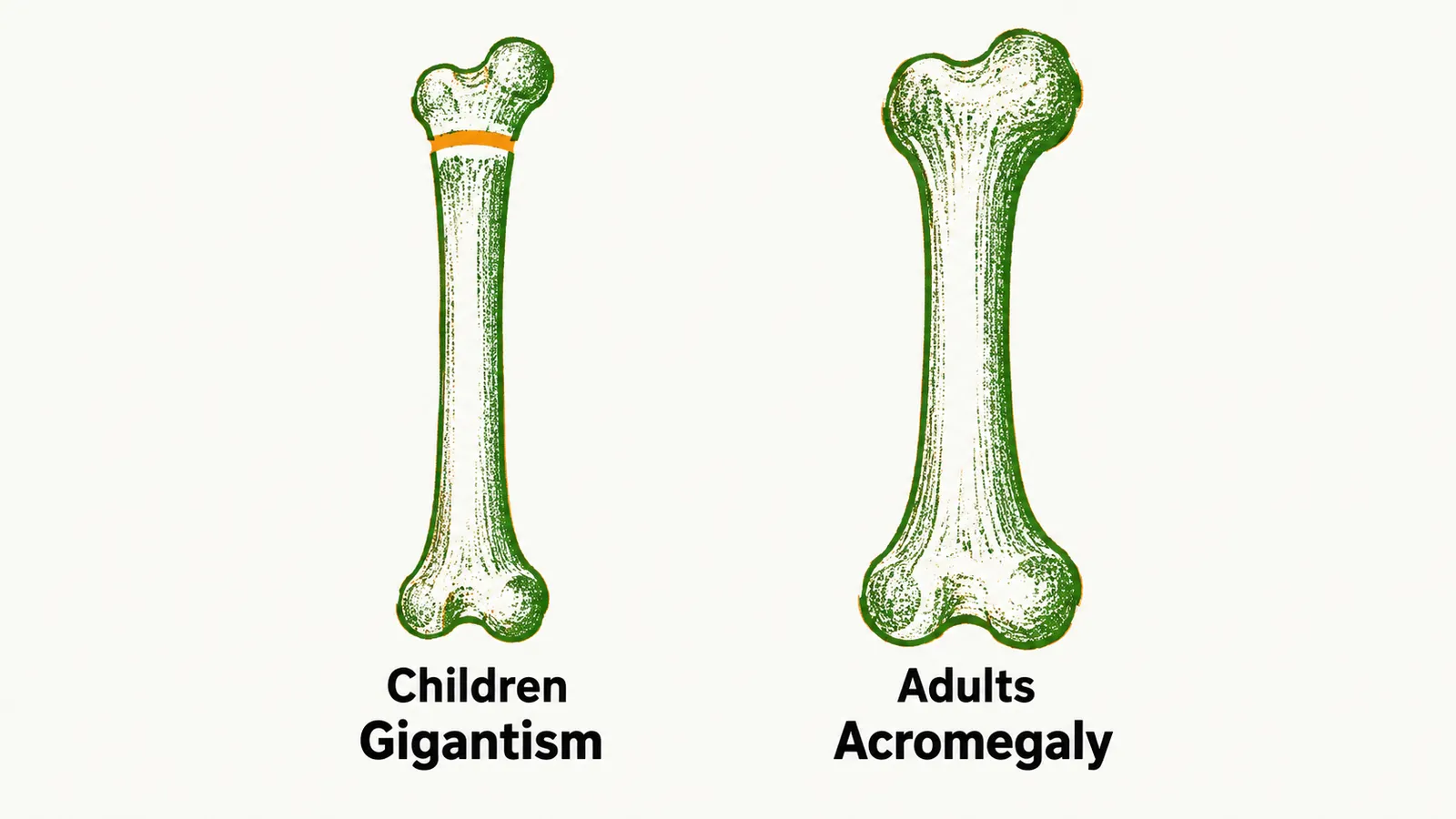
The skeletal changes above are those of adult acromegaly. When the excess begins earlier, the result depends on the growth plates: in children, GH or IGF-1 hypersecretion before the closure of the epiphyseal plates can lead to gigantism; in adults the same excess is called acromegaly. Studies show that microduplications in the Xq26 chromosome are related to the presence of gigantism with early onset before the age of 5 years. There is a gene called GPR101, a G protein-coupled receptor (GPCR) that is encoded in the GH-secreting cells of the pituitary gland; some mutations are identified in this gene which increase the production of GH in patients with acromegaly.
Sleep apnea syndrome
Sleep apnea syndrome (SAS) is very common in patients with acromegaly, with a prevalence of about 40–80% of these patients. Both the pathological changes of the craniofacial skeleton and the thickening of the soft tissues of the pharynx play a role in the formation of SAS, but the main cause is soft tissue thickening. Unfortunately, persistent SAS after treatment is reported in more than 40% of the cases.
Musculoskeletal pain
In more than 90% of the patients, during the course of the acromegaly, muscle pain is reported as the dominant symptom. Studies show that GH excess mainly causes hypertrophy of the type 1 muscle fiber (slow-twitching fibers), with a variable amount of effect on type 2 fibers, so these patients have faster muscle fatigue, especially during fast movements. Old studies report proximal muscle weakness in acromegaly patients.
Another important complaint is arthropathy (joint disease), which can be either arthralgia or arthritis, and which changes chronologically over the course of the disease: chronic excess of GH and the local effect of IGF-1 on the articular spaces first lead to joint limitation caused by soft tissue expansion, followed by joint damage.
Neurological abnormalities
There is no evidence of involvement of the central nervous system (CNS), but there is involvement of the peripheral nervous system (PNS). Carpal tunnel syndrome is reported in more than 60% of the cases, and in acromegaly patients it is caused by swelling of the nerve itself, not by compression exerted by other contents of the carpal tunnel. More than 80% of acromegaly patients suffer from median nerve neuropathy. Altered cardiac autonomic function and restless leg syndrome, in 20% of the cases, are also described.
Metabolic abnormalities
GH is a potent antagonist of insulin, and excess GH is not only able to potently antagonize insulin but also able to increase the resistance to insulin in the cells. In line with this, frank diabetes is present in 50% of acromegaly cases. GH also has an effect on the lipid profile: it decreases HDL, increases LDL and increases triglycerides.
Organomegaly
Several organs enlarge in acromegaly. The thyroid is affected most commonly, with multinodular goiter (an enlarged thyroid containing several nodules) reported, in some studies, in up to 80% of the cases. The goiter is mostly non-toxic, toxic in only 15% of the cases, and the nodules are mostly benign, with carcinoma in only 3% of the cases. There is a correlation between the duration of acromegaly in an individual and the incidence rate of goiter, and also the volume of goiter. The prostate, salivary glands, heart, liver and spleen can also enlarge, and renal cyst formation and polycystic ovaries can occur.
Neoplastic abnormalities
It is observed that in acromegalic patients there is an increase in the incidence of neoplastic tumors. It is not proved whether this follows the same trend of increase as neoplastic disorders in general, or whether it is due to the effect of GH hypersecretion; the trend of increase is very similar to the trend of increase of cancer in the general population with increasing age.
Colon polyps and cancer are the most discussed. Colon adenoma in the acromegaly population is different from the general population: it tends to be more in the ascending colon, and the adenomas have more dysplasia. Patients with acromegaly are considered a high-risk population for colon cancer, and therefore frequent colonoscopy screening is suggested; the gastrointestinal tumors include colon polyps along with colon and gastric adenocarcinoma. Breast cancer, bronchial tumors, multiple myeloma, thyroid cancer and renal cancer are also described.
Reported manifestations and complications
The table summarises the manifestations and complications reported with acromegaly across organ systems. In its abbreviations, HT is hypertension, DM diabetes mellitus, TMJ the temporomandibular joint, PCOS polycystic ovary syndrome and GFR glomerular filtration rate. The cardiac group belongs to the system in which GH hypersecretion has its most significant clinical impact.
| Clinical Manifestations and Complications Reported with Acromegaly | |||
|---|---|---|---|
| Tumor-related local effects | Headache; visual field defects; cranial nerve abnormalities; hydrocephalus; temporal lobe epilepsy; hyperprolactinemia; hypopituitarism | ||
| Systemic effects | |||
| Skin changes | Hyperhidrosis; oily skin; skin tags; hypertrichosis; acanthosis; cutis verticis gyrata | Cardiac | HT; cardiomyopathy; valvular heart disease; arrhythmia; heart failure |
| Soft tissue changes | Acral enlargement; change in voice quality (larynx hypertrophy); visceromegaly (thyroid, prostate, liver, salivary glands) | Neurological | Peripheral nerve abnormalities; autonomic dysregulation; lumbar canal stenosis; narcolepsy; restless leg syndrome |
| Orofacial changes | Prognathism; frontal prominence; dental malocclusion (interdental diathesis); TMJ pain; gingival enlargement; macroglossia; parotid hypertrophy | Pulmonary | Sleep apnea; restrictive lung disease; subclinical hypoxemia |
| Musculoskeletal | Vertebral deformities; kyphosis; arthralgia and arthritis; myopathy; degenerative arthropathy; calcific discopathy; hypermobility | Neoplastic | Colon polyps; thyroid cancer; breast cancer |
| Endocrine and metabolic | Hypogonadism; PCOS; DM, insulin resistance; hypertriglyceridemia; erectile dysfunction | Renal | Increased GFR; hypercalciuria; glomerulosclerosis |
| Hematological | Increased thrombosis risk | Psychiatric | Depression |
| Ocular | Increased risk of diabetic retinopathy; extraocular myopathy; glaucoma; epiphora |