
Acromegaly, the disease of chronic growth hormone (GH) excess, is a very rare condition. Its incidence (new cases) is 3–11 per million per year and its prevalence (all existing cases) is about 60 per million of population. It occurs equally in both genders, and the diagnosis is mostly made during the 40–60 years of age.
Course and diagnostic delay
The course of acromegaly is quite elongated. GH excess develops slowly, and the changes it produces, especially the gradual enlargement of the hands, feet and facial features, are easy to accept as normal, so patients often adapt to them rather than report them. For this reason there is usually a lag time of 5–10 years between onset and diagnosis. Some cases are found earlier, mostly because a secondary manifestation, such as those caused by hyperprolactinemia (excess prolactin), brings the patient to medical attention sooner.
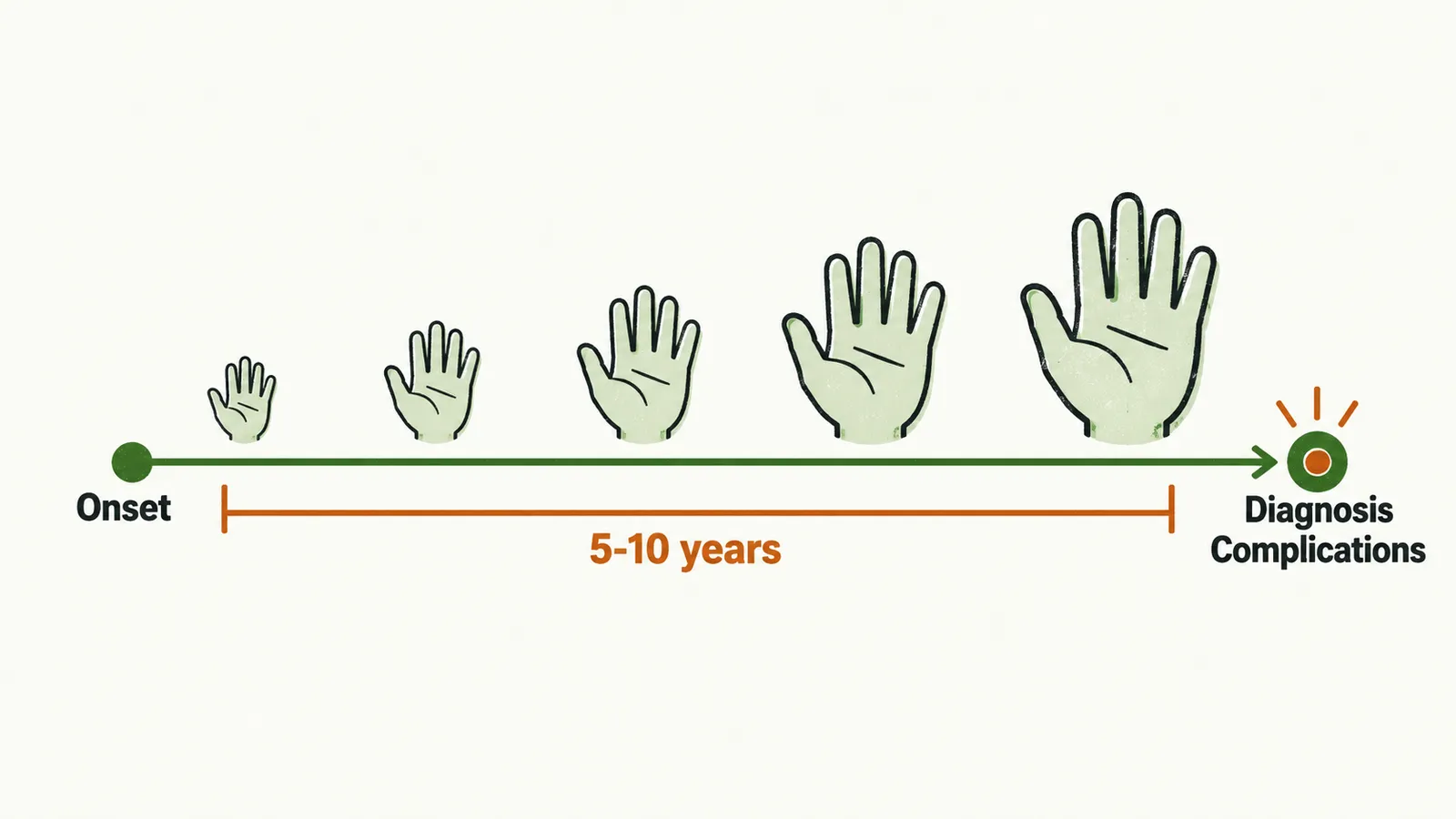
This delay is why early diagnosis matters: by the time the disease is recognized, many of its complications are already present, and chronic GH excess is the cause of morbidity and mortality that earlier treatment could prevent.
Mortality and long-term outcome
Untreated, or persistently active, acromegaly shortens life expectancy. Pooled data from several studies give a standardized mortality ratio (observed deaths compared with those expected in the general population) of about 1.7, and the excess is driven mainly by cardiovascular, cerebrovascular and respiratory disease rather than by cancer. When GH and insulin-like growth factor 1 (IGF-1) are brought under control, mortality falls toward that of the general population, which is why biochemical control is the aim of treatment.