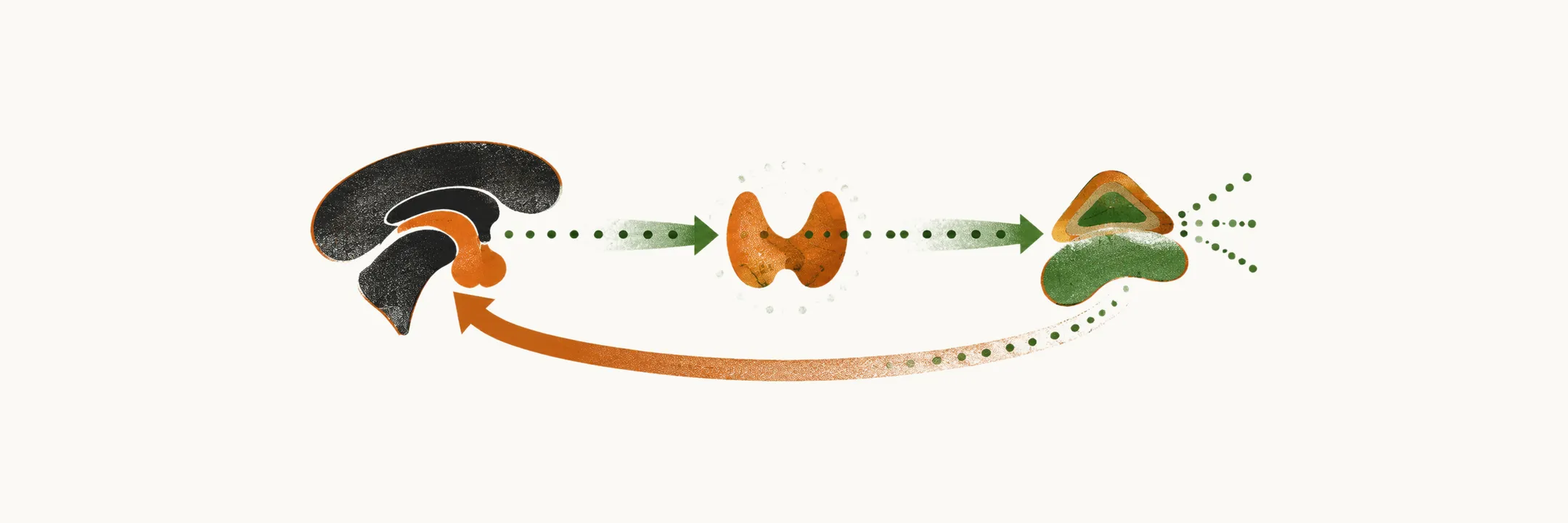
The hypothalamus-pituitary-adrenal (HPA) axis is the control system for glucocorticoid production, the hormones of the adrenal cortex of which cortisol is the main one. Three features together set the level of cortisol: a stress-driven feedforward limb, a circadian rhythm, and negative feedback.
Two axes for two hormone families
Production of glucocorticoids is under the control of the hypothalamus-pituitary-adrenal (HPA) axis, while the production of mineralocorticoids is mainly controlled by the renin-angiotensin-aldosterone system (RAAS). The two families are therefore regulated by separate signals, which is why the amount of one can change without the other.
CRH release and ACTH formation
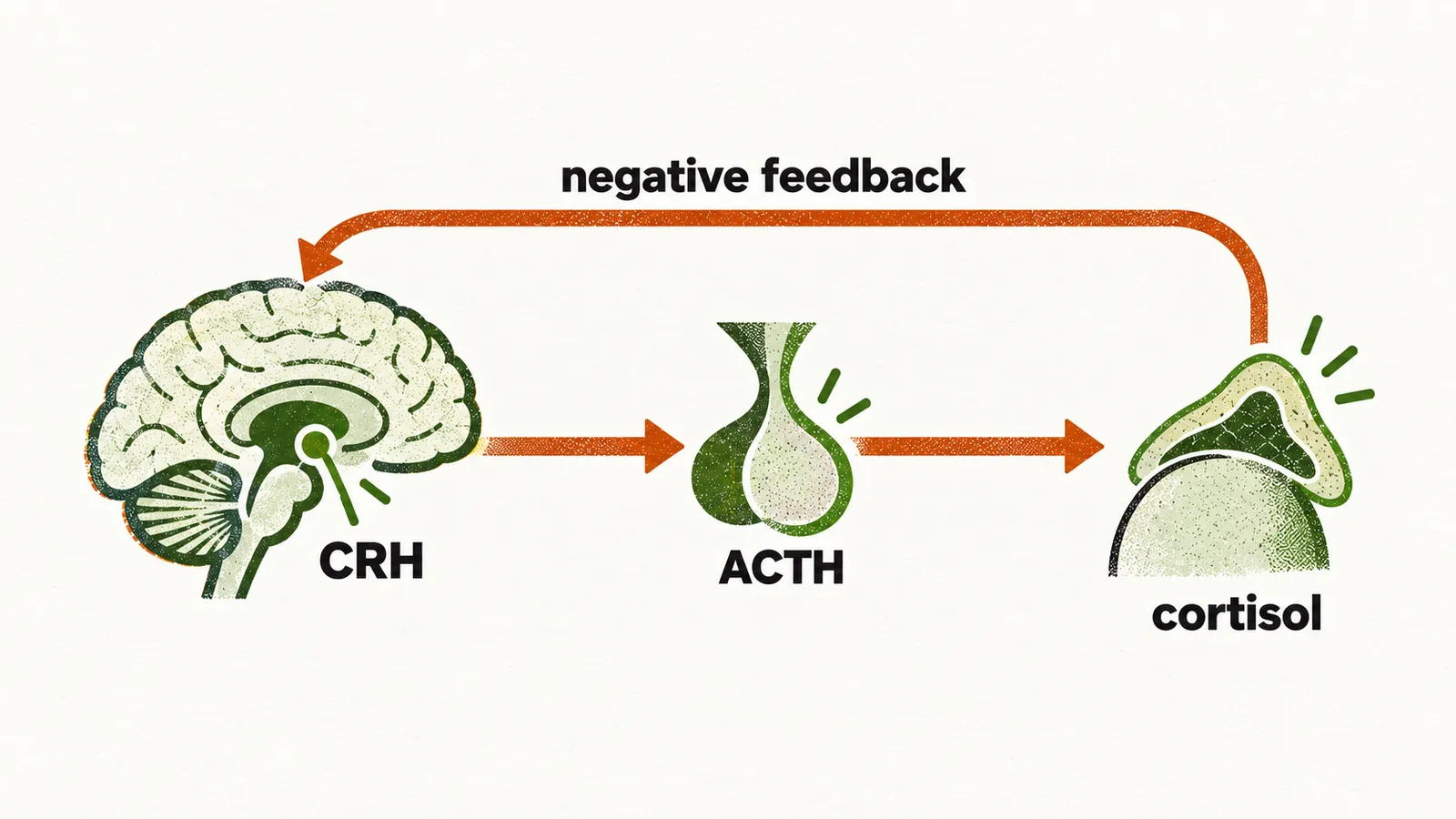
In response to any kind of endogenous or exogenous stress, the hypothalamus releases corticotropin-releasing hormone (CRH). CRH acts on the anterior pituitary gland to activate an enzyme called pituitary pro-hormone convertase 1 (PC1), which cleaves proopiomelanocortin (POMC) into several peptide products, including adrenocorticotropic hormone (ACTH), the 39-amino-acid peptide that drives the adrenal cortex.
The hypothalamus does not release CRH only in response to stress. There is also a circadian rhythm of CRH production, set by the suprachiasmatic nucleus of the hypothalamus. Release peaks before waking and falls to its lowest level during the evening, and cortisol follows the same pattern a short time later.
Negative feedback
Glucocorticoids restrain their own production through negative feedback. Circulating cortisol acts on the hypothalamus and the anterior pituitary to suppress the release of CRH and ACTH, so a rise in cortisol limits further ACTH secretion, and a fall in cortisol releases that brake. The result is a self-regulating loop that keeps cortisol within its working range, whether the glucocorticoid in the blood is the body’s own or one given as treatment. The same loop is what makes the axis testable: a glucocorticoid supplied from outside the body suppresses ACTH in the same way, so whether ACTH can be suppressed reveals where in the axis an abnormality lies.
Once ACTH reaches the adrenal cortex, what it sets in motion inside the cell is the biochemistry of steroid synthesis.