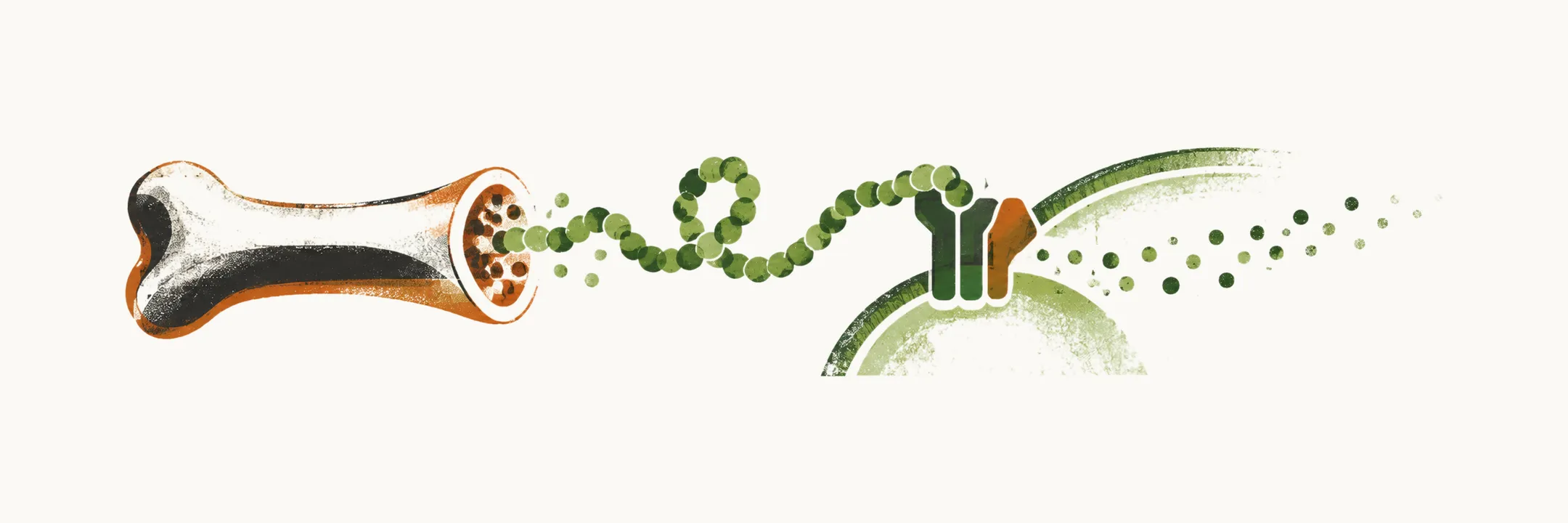
Fibroblast growth factor 23, or FGF23, is a hormone of the FGF19 family that is mainly produced by bone cells, in particular osteoblasts and osteocytes. Its main job is to lower phosphate, and it also restrains calcitriol, the active form of vitamin D.
Effects
The main effects of FGF23 are:
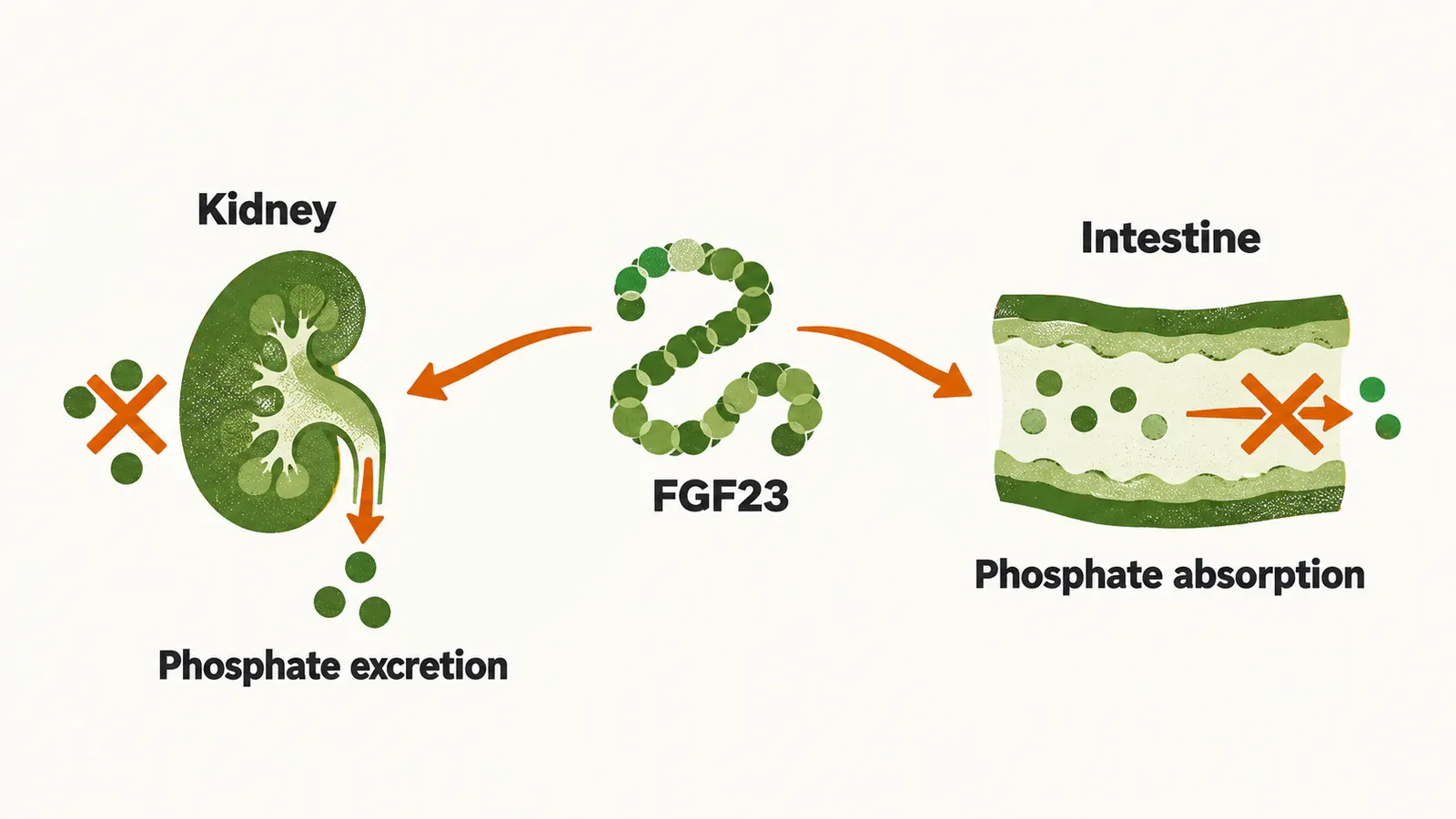
- at the kidney: promotion of phosphorus excretion and inhibition of calcitriol formation; the mechanism behind the increase of phosphorus excretion is down-regulation of the phosphorus transporters located in the proximal convoluted tubule (PCT)
- at the intestine: reduction of phosphorus absorption by the intestine, largely because the fall in calcitriol removes the signal that drives intestinal phosphate absorption
Because it removes phosphate through the urine at the same time as it reduces the phosphate taken up from the gut, FGF23 moves phosphate in the same direction at both ends of the balance.
Receptor and Klotho
The receptor of FGF23 is an IG-like domain-containing receptor that has three IG-like parts; the FGFR (fibroblast growth factor receptor) is a tyrosine kinase receptor. An important co-receptor for the FGFR is the Klotho domain, which plays an important role in the activation and signal transduction of FGF23.
Processing of the hormone
The first protein product of FGF23 is a pre-protein of 251 amino acids that is cleaved into an N-terminal core and a smaller C-terminal part, which together make the active FGF23. Active FGF23 is extensively O-glycosylated, which makes it resistant to proteolysis. The fragments that are made by the proteolysis of FGF23 are the physiological antagonists of the active molecule.
What releases FGF23
FGF23 is released in response to:
- high phosphate
- high PTH
- high calcitriol
In iron deficiency the level of FGF23 expression is increased, which is mostly devoted to the carboxy-terminal FGF23, or cFGF23.
Since calcitriol both drives FGF23 release and is restrained by it, the way calcitriol is made, activated and regulated is the remaining piece of the axis.